

3.3
Some Technical Consequences of Surface Energy
From the Clausius–Clapeyron law, it is possible to derive the vapor pressure of a
particle as a function of the diameter d. This formula, which is known as the Kelvin
formula (also called the Thomson formula; William Thomson, ennobled as Lord
Kelvin), connects the vapor pressure with surface energy and particle size:
ln
p
p 1
¼
4cV
dRT
or p ¼ p 1 exp
4cV
dRT
ð3:11aÞ
where p 1 is the vapor pressure over a flat plane, V is the molar volume, R is the gas
constant, and T is the temperature. Assuming constant temperature, the vapor
pressure over a curved surface shows the proportionality:
p / exp
1
d
ð3:11bÞ
Equations (3.11a) and (3.11b) state that the vapor pressure in equilibrium with a
particle of diameter d increases drastically with decreasing particle diameter. This is
demonstrated in Figure 3.17, using zinc and gold as examples.
The graph in Figure 3.17 displays the ratio of the vapor pressure for nanosized
droplets at the melting point of the bulk material over the vapor pressure of a flat
surface. It is interesting to realize that the difference between the metals with very
different properties (c Au ¼ 1.13 J m
À2 , c Zn ¼ 0.77 J m
À2 ) does not vary by much,
although it is important to recognize the severe increase in vapor pressure over
droplets below approximately 3 nm. The values for the surface energy are taken from
6
8
10
12
14
16
18
20
particle diameter [nm]
0
0.5
1
1.5
2
2.5
3
3.5
volume
expansion
[%]
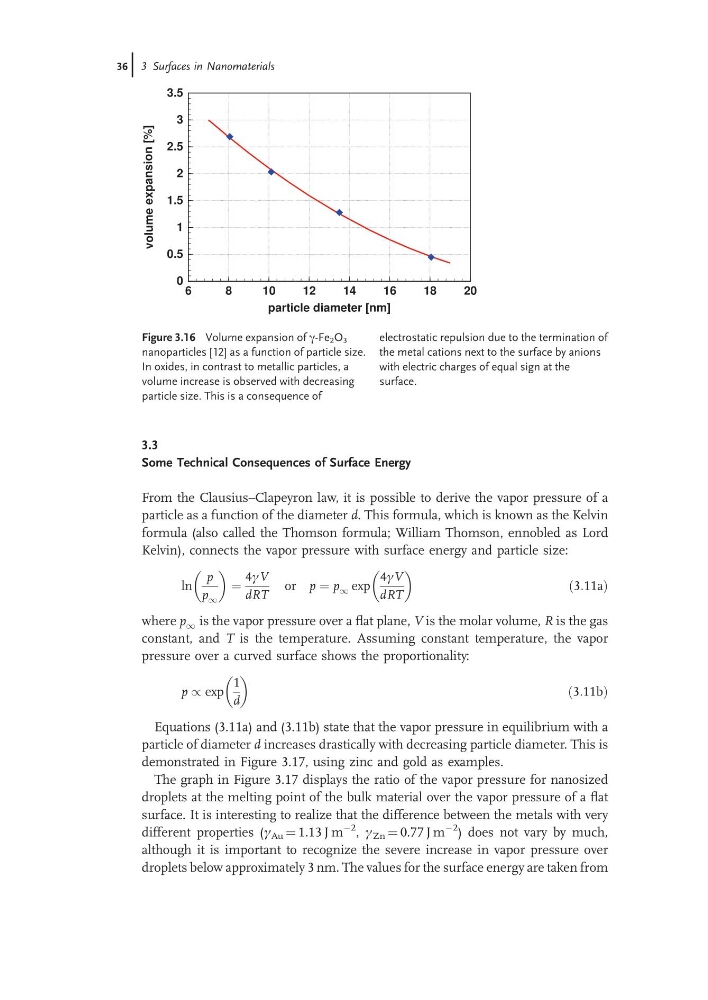
Figure 3.16 Volume expansion of c-Fe 2 O 3
nanoparticles [12] as a function of particle size.
In oxides, in contrast to metallic particles, a
volume increase is observed with decreasing
particle size. This is a consequence of
electrostatic repulsion due to the termination of
the metal cations next to the surface by anions
with electric charges of equal sign at the
surface.
36j 3 Surfaces in Nanomaterials
Some Technical Consequences of Surface Energy
From the Clausius–Clapeyron law, it is possible to derive the vapor pressure of a
particle as a function of the diameter d. This formula, which is known as the Kelvin
formula (also called the Thomson formula; William Thomson, ennobled as Lord
Kelvin), connects the vapor pressure with surface energy and particle size:
ln
p
p 1
¼
4cV
dRT
or p ¼ p 1 exp
4cV
dRT
ð3:11aÞ
where p 1 is the vapor pressure over a flat plane, V is the molar volume, R is the gas
constant, and T is the temperature. Assuming constant temperature, the vapor
pressure over a curved surface shows the proportionality:
p / exp
1
d
ð3:11bÞ
Equations (3.11a) and (3.11b) state that the vapor pressure in equilibrium with a
particle of diameter d increases drastically with decreasing particle diameter. This is
demonstrated in Figure 3.17, using zinc and gold as examples.
The graph in Figure 3.17 displays the ratio of the vapor pressure for nanosized
droplets at the melting point of the bulk material over the vapor pressure of a flat
surface. It is interesting to realize that the difference between the metals with very
different properties (c Au ¼ 1.13 J m
À2 , c Zn ¼ 0.77 J m
À2 ) does not vary by much,
although it is important to recognize the severe increase in vapor pressure over
droplets below approximately 3 nm. The values for the surface energy are taken from
6
8
10
12
14
16
18
20
particle diameter [nm]
0
0.5
1
1.5
2
2.5
3
3.5
volume
expansion
[%]
Figure 3.16 Volume expansion of c-Fe 2 O 3
nanoparticles [12] as a function of particle size.
In oxides, in contrast to metallic particles, a
volume increase is observed with decreasing
particle size. This is a consequence of
electrostatic repulsion due to the termination of
the metal cations next to the surface by anions
with electric charges of equal sign at the
surface.
36j 3 Surfaces in Nanomaterials