

small particles difficult as they tend to agglomerate when they come into contact with
each other. The process of agglomeration may also be observed in the electron
microscope; a series of excellent electron micrographs showing coagulation between
two gold particles are shown in Figure 3.9. The sequence starts with two particles, with
one oriented such that lattice fringes are visible. The particles are moving, as indicated
by the change in the lattice fringes. When the particles touch each other, they rotate
until their orientation is equal, at which moment the coagulation begins as the larger
particles engulf their smaller counterparts. For such a process to occur, significant
thermal mobility of the atoms is essential, while the required energy is provided via a
reduction of the surface.
0
1
2
3
4
5
6
7
8
9 10
particle diameter [nm]
0
100
200
300
temperature
flash
[K]
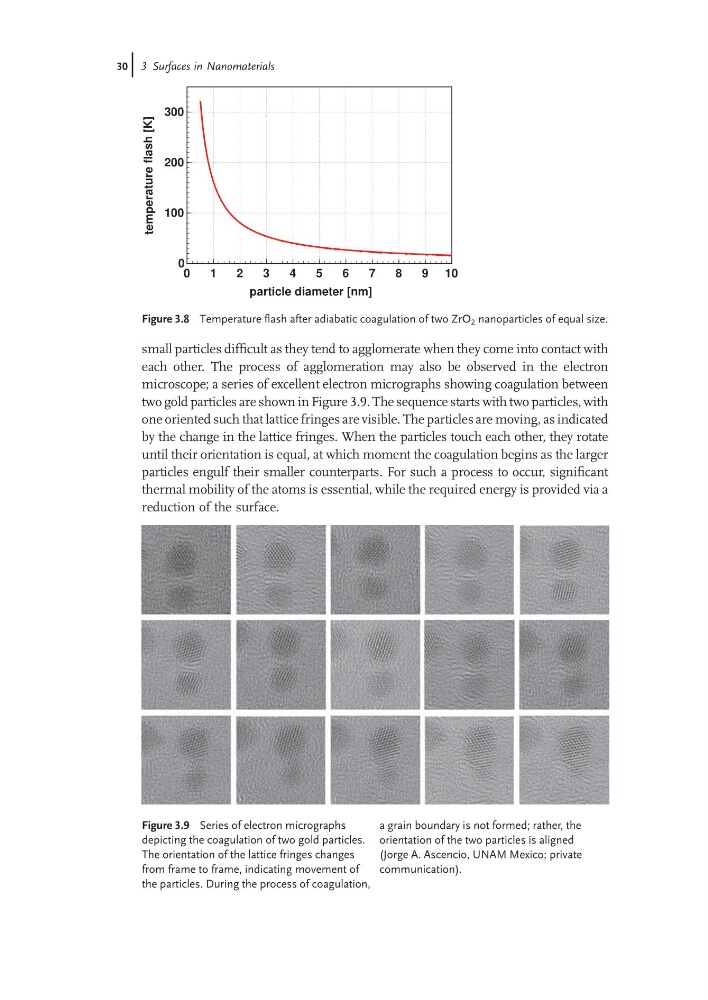
Figure 3.8 Temperature flash after adiabatic coagulation of two ZrO 2 nanoparticles of equal size.
Figure 3.9 Series of electron micrographs
depicting the coagulation of two gold particles.
The orientation of the lattice fringes changes
from frame to frame, indicating movement of
the particles. During the process of coagulation,
a grain boundary is not formed; rather, the
orientation of the two particles is aligned
(Jorge A. Ascencio, UNAM Mexico; private
communication).
30j 3 Surfaces in Nanomaterials
each other. The process of agglomeration may also be observed in the electron
microscope; a series of excellent electron micrographs showing coagulation between
two gold particles are shown in Figure 3.9. The sequence starts with two particles, with
one oriented such that lattice fringes are visible. The particles are moving, as indicated
by the change in the lattice fringes. When the particles touch each other, they rotate
until their orientation is equal, at which moment the coagulation begins as the larger
particles engulf their smaller counterparts. For such a process to occur, significant
thermal mobility of the atoms is essential, while the required energy is provided via a
reduction of the surface.
0
1
2
3
4
5
6
7
8
9 10
particle diameter [nm]
0
100
200
300
temperature
flash
[K]
Figure 3.8 Temperature flash after adiabatic coagulation of two ZrO 2 nanoparticles of equal size.
Figure 3.9 Series of electron micrographs
depicting the coagulation of two gold particles.
The orientation of the lattice fringes changes
from frame to frame, indicating movement of
the particles. During the process of coagulation,
a grain boundary is not formed; rather, the
orientation of the two particles is aligned
(Jorge A. Ascencio, UNAM Mexico; private
communication).
30j 3 Surfaces in Nanomaterials