

is formed by dipole–dipole interaction; the process is shown schematically, and
greatly simplified, in Figure 9.46.
Coupling of two dipoles to form a dimer changes the energy levels; this depends
on the new intermediate configuration. In extreme cases, the dipoles may be
arranged either in parallel or as chain, when the energy level depends on the
orientation of the two dipoles. As a general rule, it can be said that the configurations
leading to higher energy levels are quite improbable. Additionally, some of the
emission transfers are forbidden by quantum selection rules. Most probable are
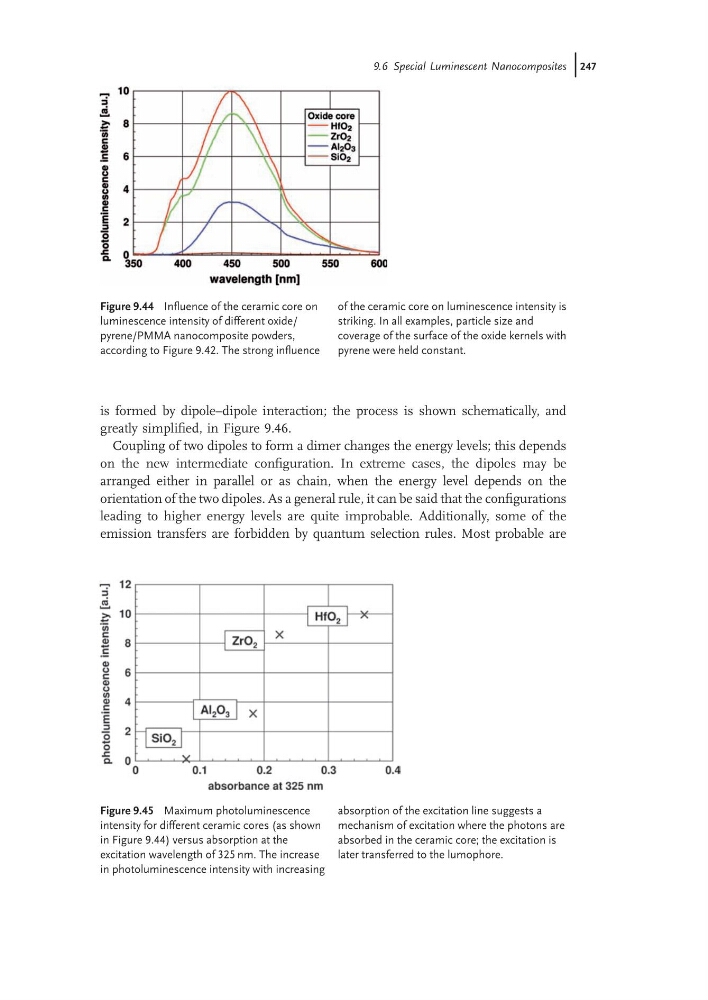
Figure 9.44 Influence of the ceramic core on
luminescence intensity of different oxide/
pyrene/PMMA nanocomposite powders,
according to Figure 9.42. The strong influence
of the ceramic core on luminescence intensity is
striking. In all examples, particle size and
coverage of the surface of the oxide kernels with
pyrene were held constant.
Figure 9.45 Maximum photoluminescence
intensity for different ceramic cores (as shown
in Figure 9.44) versus absorption at the
excitation wavelength of 325 nm. The increase
in photoluminescence intensity with increasing
absorption of the excitation line suggests a
mechanism of excitation where the photons are
absorbed in the ceramic core; the excitation is
later transferred to the lumophore.
9.6 Special Luminescent Nanocomposites j247
greatly simplified, in Figure 9.46.
Coupling of two dipoles to form a dimer changes the energy levels; this depends
on the new intermediate configuration. In extreme cases, the dipoles may be
arranged either in parallel or as chain, when the energy level depends on the
orientation of the two dipoles. As a general rule, it can be said that the configurations
leading to higher energy levels are quite improbable. Additionally, some of the
emission transfers are forbidden by quantum selection rules. Most probable are
Figure 9.44 Influence of the ceramic core on
luminescence intensity of different oxide/
pyrene/PMMA nanocomposite powders,
according to Figure 9.42. The strong influence
of the ceramic core on luminescence intensity is
striking. In all examples, particle size and
coverage of the surface of the oxide kernels with
pyrene were held constant.
Figure 9.45 Maximum photoluminescence
intensity for different ceramic cores (as shown
in Figure 9.44) versus absorption at the
excitation wavelength of 325 nm. The increase
in photoluminescence intensity with increasing
absorption of the excitation line suggests a
mechanism of excitation where the photons are
absorbed in the ceramic core; the excitation is
later transferred to the lumophore.
9.6 Special Luminescent Nanocomposites j247