

be explained by the difference in lattice and surface energy between the sphalerite
and wurtzite phases.
The absorbance of a series of solid solutions in the system CdSe–CdTe dispersed
in silicate glass is shown in Figure 9.39a, where the concentration of nanoparticles in
the glass was 0.75 wt%. Although Figure 9.39a shows clearly the red shift with
increasing tellurium content in the nanoparticles, this process is not straightforward. Pure CdTe shows a maximum of absorption at about 570 nm, but this
maximum does not appear with the particle composition CdSe 0.2 Te 0.8 , even
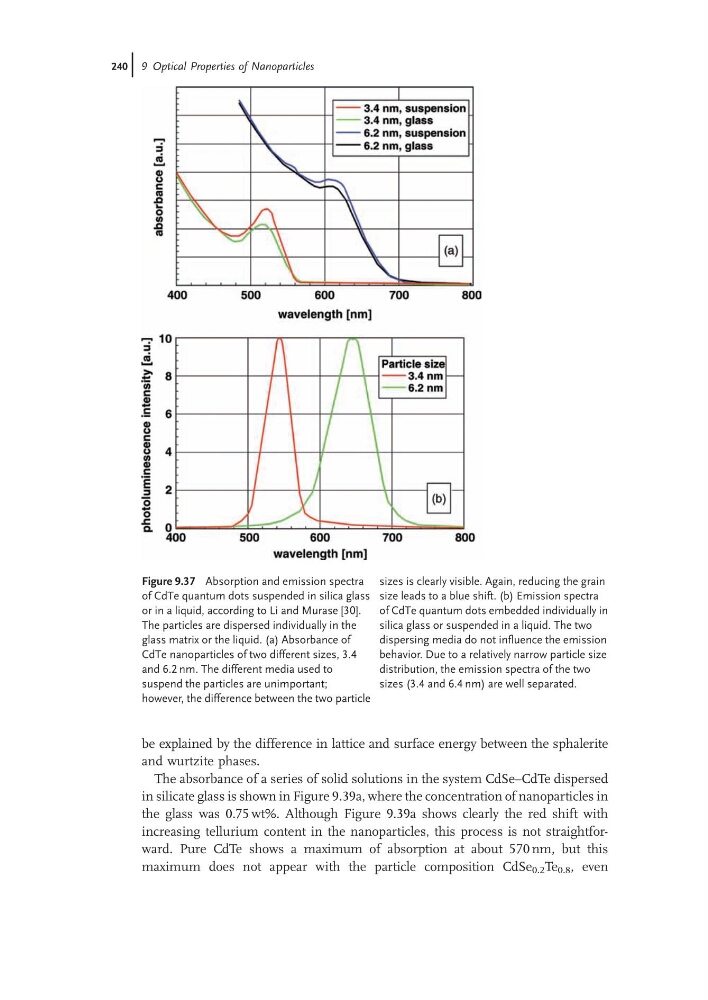
Figure 9.37 Absorption and emission spectra
of CdTe quantum dots suspended in silica glass
or in a liquid, according to Li and Murase [30].
The particles are dispersed individually in the
glass matrix or the liquid. (a) Absorbance of
CdTe nanoparticles of two different sizes, 3.4
and 6.2 nm. The different media used to
suspend the particles are unimportant;
however, the difference between the two particle
sizes is clearly visible. Again, reducing the grain
size leads to a blue shift. (b) Emission spectra
of CdTe quantum dots embedded individually in
silica glass or suspended in a liquid. The two
dispersing media do not influence the emission
behavior. Due to a relatively narrow particle size
distribution, the emission spectra of the two
sizes (3.4 and 6.4 nm) are well separated.
240j 9 Optical Properties of Nanoparticles
and wurtzite phases.
The absorbance of a series of solid solutions in the system CdSe–CdTe dispersed
in silicate glass is shown in Figure 9.39a, where the concentration of nanoparticles in
the glass was 0.75 wt%. Although Figure 9.39a shows clearly the red shift with
increasing tellurium content in the nanoparticles, this process is not straightforward. Pure CdTe shows a maximum of absorption at about 570 nm, but this
maximum does not appear with the particle composition CdSe 0.2 Te 0.8 , even
Figure 9.37 Absorption and emission spectra
of CdTe quantum dots suspended in silica glass
or in a liquid, according to Li and Murase [30].
The particles are dispersed individually in the
glass matrix or the liquid. (a) Absorbance of
CdTe nanoparticles of two different sizes, 3.4
and 6.2 nm. The different media used to
suspend the particles are unimportant;
however, the difference between the two particle
sizes is clearly visible. Again, reducing the grain
size leads to a blue shift. (b) Emission spectra
of CdTe quantum dots embedded individually in
silica glass or suspended in a liquid. The two
dispersing media do not influence the emission
behavior. Due to a relatively narrow particle size
distribution, the emission spectra of the two
sizes (3.4 and 6.4 nm) are well separated.
240j 9 Optical Properties of Nanoparticles