

The superparamagnetic particles or beads consist of a magnetic core, a coupling
layer, and the proteins in question anchored at the surface (see Section 2.1 and
Figure 2.10). As mentioned previously, the proteins attached at the surface are celltype specific, from either cancer cells or well-defined organs.
In general, both designs of particle may be applied to magnetic cell separation
techniques. When suspended in water, the magnetic particles attach specifically at
the surface of one type of cell, as determined by the surface proteins present.
When an external magnetic field is applied, one type of cell attached to the
nanoparticles is removed from the suspension. To date, and based on practical
experience, the design using superparamagnetic beads has proved to be the more
successful.
With respect to applications in medical diagnostics and biological applications,
bifunctional particles or beads are in use. These materials exhibit a combination of
superparamagnetic kernels with a luminescent coating or these particles in a
luminescent matrix keeping the beads together [15]. As mentioned before, at the
outside, a functionalization with, for example, proteins is necessary.
A further successful application is related to medical diagnostics. Superparamagnetic nanoparticles are used to enhance the contrast in nuclear magnetic
resonance (NMR) imaging (see Figure 8.28a and b). NMR imaging functions by
measuring the concentration of protons that, in living structures, are quite low.
However, the introduction of superparamagnetic particles into the region of
interest changes the magnetic field locally and this leads to local variations in
the conditions for magnetic resonance; the result is a major improvement in
imaging contrast. This phenomenon is shown in Figure 8.28, where the image is
seen with and without enhanced contrast; the significant improvement in contrast
is clearly visible. It is envisaged that, in time, superparamagnetic nanoparticles will
replace the gadolinium salts currently used in this technique (an additional
example is provided in Section 6.3).
One further potentially important application of superparamagnetic nanoparticles is that of magnetic refrigeration where, instead of using ozone-depleting
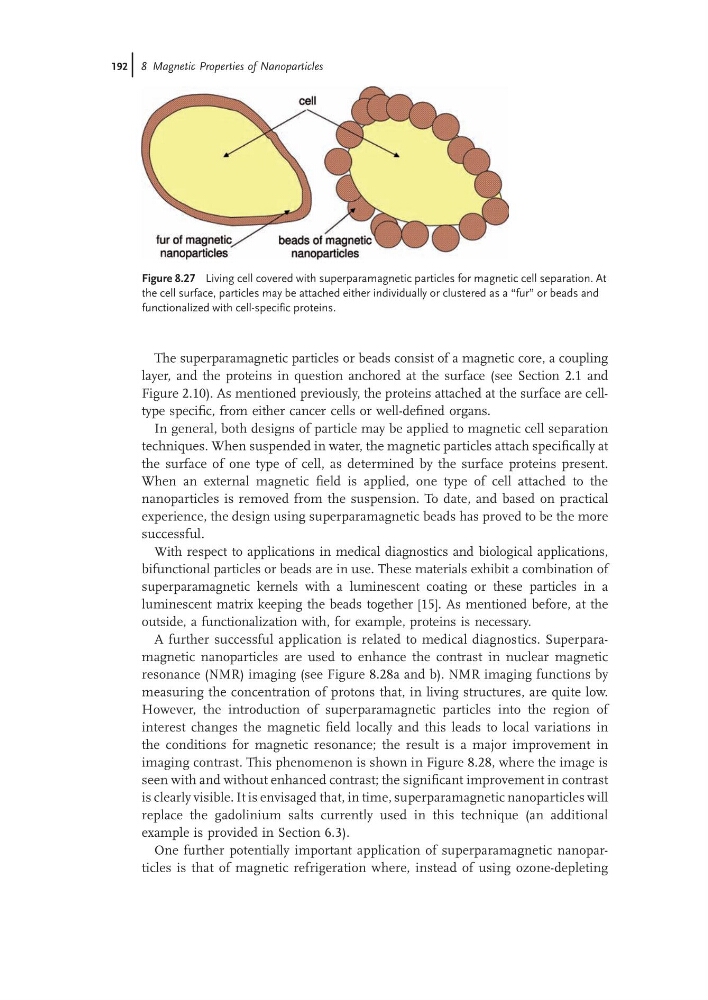
Figure 8.27 Living cell covered with superparamagnetic particles for magnetic cell separation. At
the cell surface, particles may be attached either individually or clustered as a “fur” or beads and
functionalized with cell-specific proteins.
192j 8 Magnetic Properties of Nanoparticles
layer, and the proteins in question anchored at the surface (see Section 2.1 and
Figure 2.10). As mentioned previously, the proteins attached at the surface are celltype specific, from either cancer cells or well-defined organs.
In general, both designs of particle may be applied to magnetic cell separation
techniques. When suspended in water, the magnetic particles attach specifically at
the surface of one type of cell, as determined by the surface proteins present.
When an external magnetic field is applied, one type of cell attached to the
nanoparticles is removed from the suspension. To date, and based on practical
experience, the design using superparamagnetic beads has proved to be the more
successful.
With respect to applications in medical diagnostics and biological applications,
bifunctional particles or beads are in use. These materials exhibit a combination of
superparamagnetic kernels with a luminescent coating or these particles in a
luminescent matrix keeping the beads together [15]. As mentioned before, at the
outside, a functionalization with, for example, proteins is necessary.
A further successful application is related to medical diagnostics. Superparamagnetic nanoparticles are used to enhance the contrast in nuclear magnetic
resonance (NMR) imaging (see Figure 8.28a and b). NMR imaging functions by
measuring the concentration of protons that, in living structures, are quite low.
However, the introduction of superparamagnetic particles into the region of
interest changes the magnetic field locally and this leads to local variations in
the conditions for magnetic resonance; the result is a major improvement in
imaging contrast. This phenomenon is shown in Figure 8.28, where the image is
seen with and without enhanced contrast; the significant improvement in contrast
is clearly visible. It is envisaged that, in time, superparamagnetic nanoparticles will
replace the gadolinium salts currently used in this technique (an additional
example is provided in Section 6.3).
One further potentially important application of superparamagnetic nanoparticles is that of magnetic refrigeration where, instead of using ozone-depleting
Figure 8.27 Living cell covered with superparamagnetic particles for magnetic cell separation. At
the cell surface, particles may be attached either individually or clustered as a “fur” or beads and
functionalized with cell-specific proteins.
192j 8 Magnetic Properties of Nanoparticles