

paramagnetic and below which it is antiferrimagnetic. In the situation where the
magnetic moments of the two magnetic sublattices are (except for the antiparallel
orientation) not equal, a magnetic net moment is observed. These materials, which
are depicted in Figure 8.4b, are known as ferrimagnets. Ferrimagnetic materials
consist either of two different metal ions or of metal ions of the same element with
different valencies. An example of a compound with different metal ions is
MnFe 2 O 4 ¼ MnOÁFe 2 O 3 , while an example of a compound where the metal ion
appears in two different valencies is Fe 3 O 4 ¼ Fe
2þ OÁFe 2
3þ O 3 .
When considering the dependency of coercivity or remanence as a function of
particle size, the behavior of one single isolated particle is as shown graphically in
Figure 8.5. As mentioned above, large magnetic particles are subdivided by Bloch
walls into magnetic domains, and the size of the Bloch walls and magnetic domains
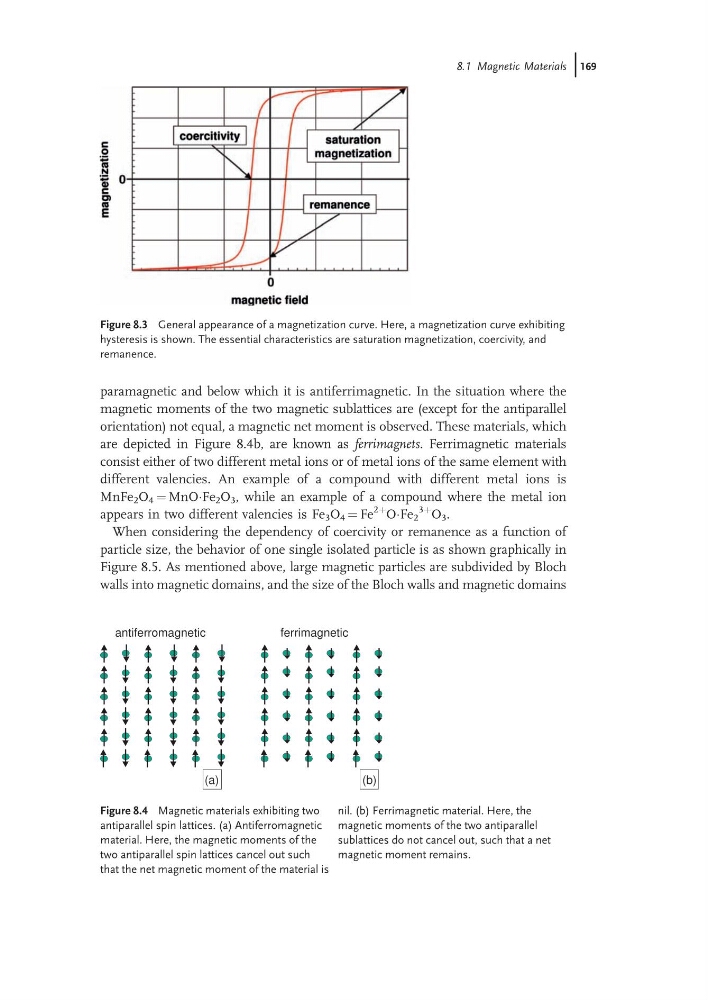
Figure 8.3 General appearance of a magnetization curve. Here, a magnetization curve exhibiting
hysteresis is shown. The essential characteristics are saturation magnetization, coercivity, and
remanence.
(a)
antiferromagnetic
ferrimagnetic
(b)
Figure 8.4 Magnetic materials exhibiting two
antiparallel spin lattices. (a) Antiferromagnetic
material. Here, the magnetic moments of the
two antiparallel spin lattices cancel out such
that the net magnetic moment of the material is
nil. (b) Ferrimagnetic material. Here, the
magnetic moments of the two antiparallel
sublattices do not cancel out, such that a net
magnetic moment remains.
8.1 Magnetic Materials j169
magnetic moments of the two magnetic sublattices are (except for the antiparallel
orientation) not equal, a magnetic net moment is observed. These materials, which
are depicted in Figure 8.4b, are known as ferrimagnets. Ferrimagnetic materials
consist either of two different metal ions or of metal ions of the same element with
different valencies. An example of a compound with different metal ions is
MnFe 2 O 4 ¼ MnOÁFe 2 O 3 , while an example of a compound where the metal ion
appears in two different valencies is Fe 3 O 4 ¼ Fe
2þ OÁFe 2
3þ O 3 .
When considering the dependency of coercivity or remanence as a function of
particle size, the behavior of one single isolated particle is as shown graphically in
Figure 8.5. As mentioned above, large magnetic particles are subdivided by Bloch
walls into magnetic domains, and the size of the Bloch walls and magnetic domains
Figure 8.3 General appearance of a magnetization curve. Here, a magnetization curve exhibiting
hysteresis is shown. The essential characteristics are saturation magnetization, coercivity, and
remanence.
(a)
antiferromagnetic
ferrimagnetic
(b)
Figure 8.4 Magnetic materials exhibiting two
antiparallel spin lattices. (a) Antiferromagnetic
material. Here, the magnetic moments of the
two antiparallel spin lattices cancel out such
that the net magnetic moment of the material is
nil. (b) Ferrimagnetic material. Here, the
magnetic moments of the two antiparallel
sublattices do not cancel out, such that a net
magnetic moment remains.
8.1 Magnetic Materials j169