

external magnetic field; this effect is known as remanence. In general, the tendency for
a material to remember its magnetic history is called hysteresis and the magnetic field to
compensate the remanence is called coercivity. A schematic magnetization curve
indicating the most characteristic points is shown in Figure 8.3. An additional
important property of a magnetic material is the energy product, this being the product
coercivity  remanence. The maximum temperature at which the ferromagnetic
property exists is the Curie temperature, at which the thermal energy is larger
than the energy coupling the atomic dipoles.
In case of ferrimagnetic compounds, the situation is somewhat more complicated. In substances such as MnO, FeO, and a-Fe 2 O 3 , an equal number of spins are
arranged in two different sublattices exhibiting spontaneous antiparallel orientation.
Therefore, the magnetic moment cancels out; these materials do not show net
magnetic moments. This situation, which is depicted in Figure 8.4a, is referred to as
antiferromagnetic.
It should be noted that antiferrimagnetic metals are also known to exist (typical
examples are manganese and chromium), although this phenomenon is of greater
importance in the case of compounds. As with ferromagnetic materials, a characteristic temperature – the N eel temperature – exists above which the material is
paramagnetic
ferromagnetic
(a)
(b)
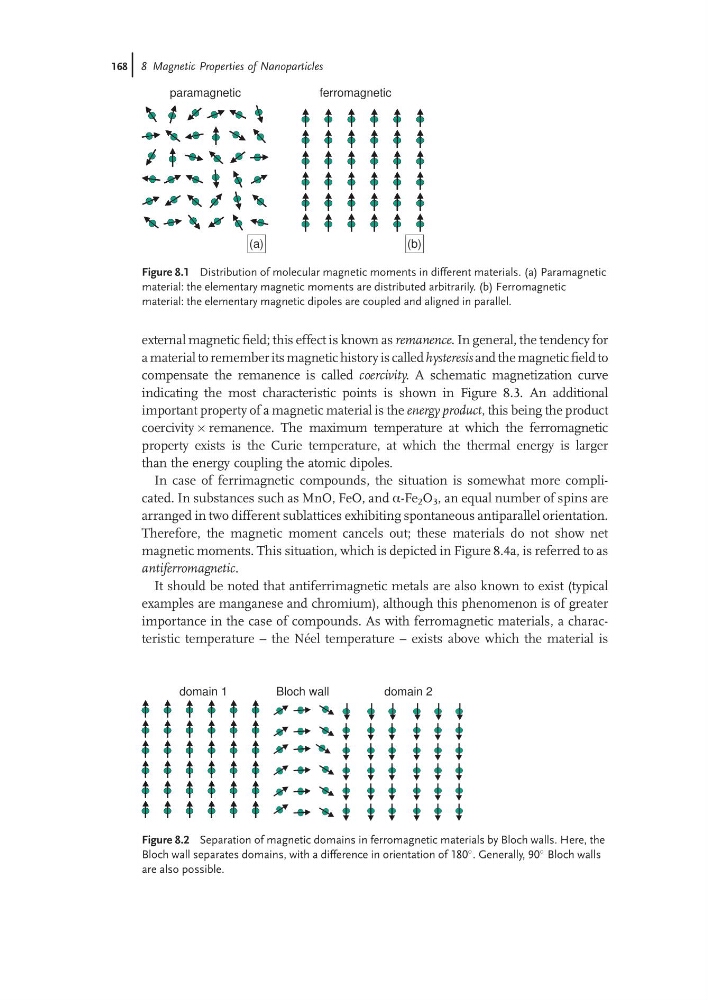
Figure 8.1 Distribution of molecular magnetic moments in different materials. (a) Paramagnetic
material: the elementary magnetic moments are distributed arbitrarily. (b) Ferromagnetic
material: the elementary magnetic dipoles are coupled and aligned in parallel.
domain 1
Bloch wall
domain 2
Figure 8.2 Separation of magnetic domains in ferromagnetic materials by Bloch walls. Here, the
Bloch wall separates domains, with a difference in orientation of 180
. Generally, 90
Bloch walls
are also possible.
168j 8 Magnetic Properties of Nanoparticles
a material to remember its magnetic history is called hysteresis and the magnetic field to
compensate the remanence is called coercivity. A schematic magnetization curve
indicating the most characteristic points is shown in Figure 8.3. An additional
important property of a magnetic material is the energy product, this being the product
coercivity  remanence. The maximum temperature at which the ferromagnetic
property exists is the Curie temperature, at which the thermal energy is larger
than the energy coupling the atomic dipoles.
In case of ferrimagnetic compounds, the situation is somewhat more complicated. In substances such as MnO, FeO, and a-Fe 2 O 3 , an equal number of spins are
arranged in two different sublattices exhibiting spontaneous antiparallel orientation.
Therefore, the magnetic moment cancels out; these materials do not show net
magnetic moments. This situation, which is depicted in Figure 8.4a, is referred to as
antiferromagnetic.
It should be noted that antiferrimagnetic metals are also known to exist (typical
examples are manganese and chromium), although this phenomenon is of greater
importance in the case of compounds. As with ferromagnetic materials, a characteristic temperature – the N eel temperature – exists above which the material is
paramagnetic
ferromagnetic
(a)
(b)
Figure 8.1 Distribution of molecular magnetic moments in different materials. (a) Paramagnetic
material: the elementary magnetic moments are distributed arbitrarily. (b) Ferromagnetic
material: the elementary magnetic dipoles are coupled and aligned in parallel.
domain 1
Bloch wall
domain 2
Figure 8.2 Separation of magnetic domains in ferromagnetic materials by Bloch walls. Here, the
Bloch wall separates domains, with a difference in orientation of 180
. Generally, 90
Bloch walls
are also possible.
168j 8 Magnetic Properties of Nanoparticles