

2.2 Two-Dimensional Form
Using one-dimensional input CNN for classification will greatly reduce the computational complexity of the network and have faster training speed, but it will also split the
spatial–temporal correlation and destroy certain texture information. CNN is good at
classifying two-dimensional graph structure data. Some radar image signals, such as
SAR radar data and P-display image data, can be input in the form of pictures, similar
to those in the field of face recognition, and have the same processing form, including
normalization processing and so on. In this section, we discuss the method of obtaining
suitable two-dimensional input samples from the time–distance matrix of radar echo
data.
2.2.1 Input After Direct Interception
The premise of using CNN for classification is that the data samples conform to the
hypothesis of locality and weight sharing, while the time–distance matrix of radar echo
data has temporal and spatial correlation [8], which satisfies the basis of using CNN for
classification. Similar to the interception method in Sect. 2.1.1, we use sliding
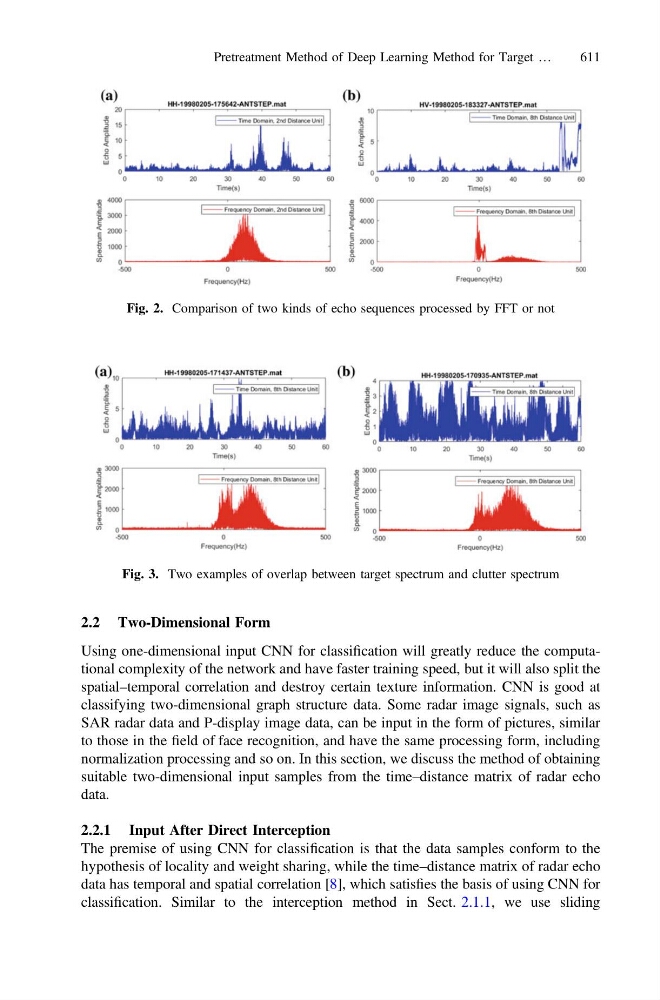
Fig. 2. Comparison of two kinds of echo sequences processed by FFT or not
Fig. 3. Two examples of overlap between target spectrum and clutter spectrum
Pretreatment Method of Deep Learning Method for Target …
611