

68
5 Ionization Counters
Potential
(Pulse height)
Amplifier
EHT
Probe
Unit
Pulse Height
Analyser
Scaler
Count rate
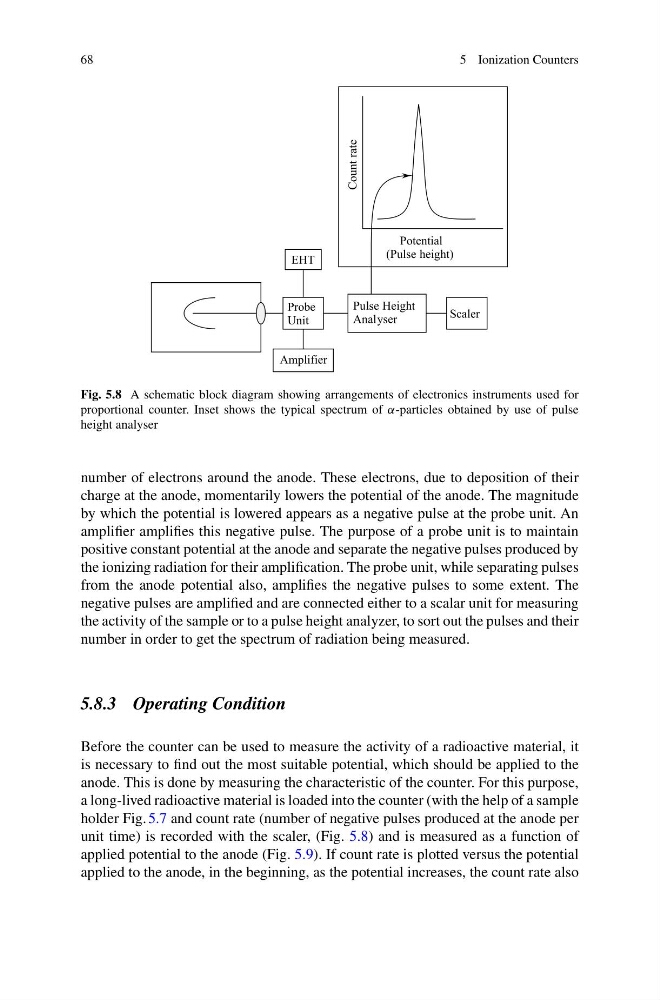
Fig. 5.8 A schematic block diagram showing arrangements of electronics instruments used for
proportional counter. Inset shows the typical spectrum of α-particles obtained by use of pulse
height analyser
number of electrons around the anode. These electrons, due to deposition of their
charge at the anode, momentarily lowers the potential of the anode. The magnitude
by which the potential is lowered appears as a negative pulse at the probe unit. An
amplifier amplifies this negative pulse. The purpose of a probe unit is to maintain
positive constant potential at the anode and separate the negative pulses produced by
the ionizing radiation for their amplification. The probe unit, while separating pulses
from the anode potential also, amplifies the negative pulses to some extent. The
negative pulses are amplified and are connected either to a scalar unit for measuring
the activity of the sample or to a pulse height analyzer, to sort out the pulses and their
number in order to get the spectrum of radiation being measured.
5.8.3 Operating Condition
Before the counter can be used to measure the activity of a radioactive material, it
is necessary to find out the most suitable potential, which should be applied to the
anode. This is done by measuring the characteristic of the counter. For this purpose,
a long-lived radioactive material is loaded into the counter (with the help of a sample
holder Fig. 5.7 and count rate (number of negative pulses produced at the anode per
unit time) is recorded with the scaler, (Fig. 5.8) and is measured as a function of
applied potential to the anode (Fig. 5.9). If count rate is plotted versus the potential
applied to the anode, in the beginning, as the potential increases, the count rate also
5 Ionization Counters
Potential
(Pulse height)
Amplifier
EHT
Probe
Unit
Pulse Height
Analyser
Scaler
Count rate
Fig. 5.8 A schematic block diagram showing arrangements of electronics instruments used for
proportional counter. Inset shows the typical spectrum of α-particles obtained by use of pulse
height analyser
number of electrons around the anode. These electrons, due to deposition of their
charge at the anode, momentarily lowers the potential of the anode. The magnitude
by which the potential is lowered appears as a negative pulse at the probe unit. An
amplifier amplifies this negative pulse. The purpose of a probe unit is to maintain
positive constant potential at the anode and separate the negative pulses produced by
the ionizing radiation for their amplification. The probe unit, while separating pulses
from the anode potential also, amplifies the negative pulses to some extent. The
negative pulses are amplified and are connected either to a scalar unit for measuring
the activity of the sample or to a pulse height analyzer, to sort out the pulses and their
number in order to get the spectrum of radiation being measured.
5.8.3 Operating Condition
Before the counter can be used to measure the activity of a radioactive material, it
is necessary to find out the most suitable potential, which should be applied to the
anode. This is done by measuring the characteristic of the counter. For this purpose,
a long-lived radioactive material is loaded into the counter (with the help of a sample
holder Fig. 5.7 and count rate (number of negative pulses produced at the anode per
unit time) is recorded with the scaler, (Fig. 5.8) and is measured as a function of
applied potential to the anode (Fig. 5.9). If count rate is plotted versus the potential
applied to the anode, in the beginning, as the potential increases, the count rate also