

90
T. Wang et al.
Ph 2 P
1,1-carboboration
+
B(C 6 F 5 ) 3
(C 6 F 5 ) 2 B
C 6 F 5
p-tol
PPh 2
C N
t
Bu
C N
n Bu
(C 6 F 5 ) 2 B
C 6 F 5
p-tol
PPh 2
C
N
n Bu
1
2
(C 6 F 5 ) 2 B
C 6 F 5
p-tol
PPh 2
3
C
N
t
Bu
(C 6 F 5 ) 2 B
C 6 F 5
p-tol
PPh 2
C
N
t
Bu
4
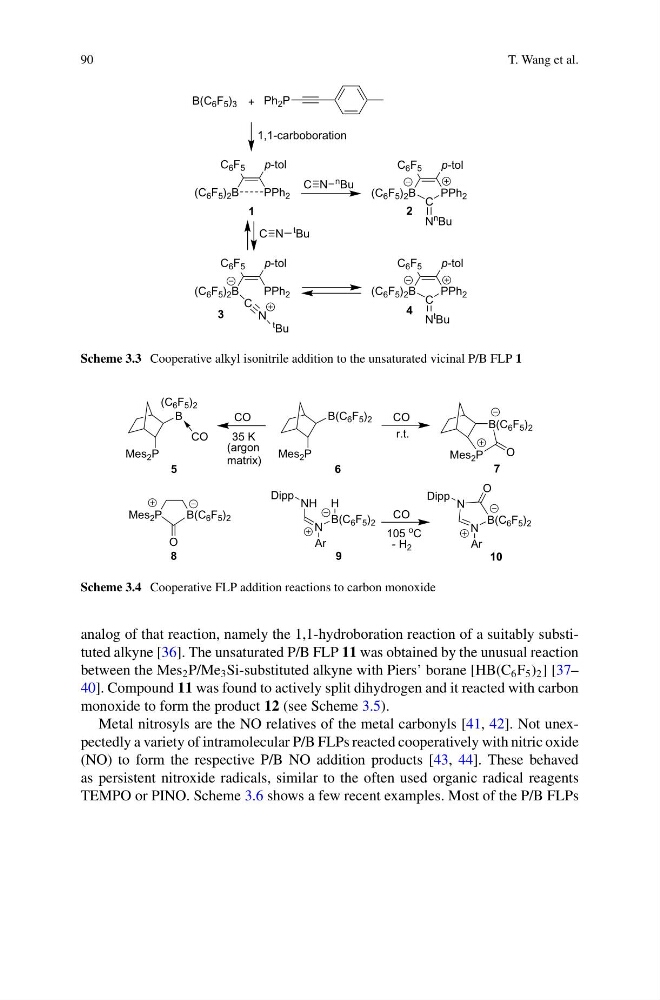
Scheme 3.3 Cooperative alkyl isonitrile addition to the unsaturated vicinal P/B FLP 1
B
Mes 2 P
CO
(C 6 F 5 ) 2
B(C 6 F 5 ) 2
Mes 2 P
CO
35 K
(argon
matrix)
5
6
B(C 6 F 5 ) 2
Mes 2 P
CO
r.t.
7
O
Mes 2 P
B(C 6 F 5 ) 2
O
8
N
B(C 6 F 5 ) 2
NH
Dipp
H
Ar
9
CO
105
o C
- H 2
N
B(C 6 F 5 ) 2
N
Dipp
Ar
10
O
Scheme 3.4 Cooperative FLP addition reactions to carbon monoxide
analog of that reaction, namely the 1,1-hydroboration reaction of a suitably substituted alkyne [36]. The unsaturated P/B FLP 11 was obtained by the unusual reaction
between the Mes 2 P/Me 3 Si-substituted alkyne with Piers’ borane [HB(C 6 F 5 ) 2 ] [37–
40]. Compound 11 was found to actively split dihydrogen and it reacted with carbon
monoxide to form the product 12 (see Scheme 3.5).
Metal nitrosyls are the NO relatives of the metal carbonyls [41, 42]. Not unexpectedly a variety of intramolecular P/B FLPs reacted cooperatively with nitric oxide
(NO) to form the respective P/B NO addition products [43, 44]. These behaved
as persistent nitroxide radicals, similar to the often used organic radical reagents
TEMPO or PINO. Scheme 3.6 shows a few recent examples. Most of the P/B FLPs
T. Wang et al.
Ph 2 P
1,1-carboboration
+
B(C 6 F 5 ) 3
(C 6 F 5 ) 2 B
C 6 F 5
p-tol
PPh 2
C N
t
Bu
C N
n Bu
(C 6 F 5 ) 2 B
C 6 F 5
p-tol
PPh 2
C
N
n Bu
1
2
(C 6 F 5 ) 2 B
C 6 F 5
p-tol
PPh 2
3
C
N
t
Bu
(C 6 F 5 ) 2 B
C 6 F 5
p-tol
PPh 2
C
N
t
Bu
4
Scheme 3.3 Cooperative alkyl isonitrile addition to the unsaturated vicinal P/B FLP 1
B
Mes 2 P
CO
(C 6 F 5 ) 2
B(C 6 F 5 ) 2
Mes 2 P
CO
35 K
(argon
matrix)
5
6
B(C 6 F 5 ) 2
Mes 2 P
CO
r.t.
7
O
Mes 2 P
B(C 6 F 5 ) 2
O
8
N
B(C 6 F 5 ) 2
NH
Dipp
H
Ar
9
CO
105
o C
- H 2
N
B(C 6 F 5 ) 2
N
Dipp
Ar
10
O
Scheme 3.4 Cooperative FLP addition reactions to carbon monoxide
analog of that reaction, namely the 1,1-hydroboration reaction of a suitably substituted alkyne [36]. The unsaturated P/B FLP 11 was obtained by the unusual reaction
between the Mes 2 P/Me 3 Si-substituted alkyne with Piers’ borane [HB(C 6 F 5 ) 2 ] [37–
40]. Compound 11 was found to actively split dihydrogen and it reacted with carbon
monoxide to form the product 12 (see Scheme 3.5).
Metal nitrosyls are the NO relatives of the metal carbonyls [41, 42]. Not unexpectedly a variety of intramolecular P/B FLPs reacted cooperatively with nitric oxide
(NO) to form the respective P/B NO addition products [43, 44]. These behaved
as persistent nitroxide radicals, similar to the often used organic radical reagents
TEMPO or PINO. Scheme 3.6 shows a few recent examples. Most of the P/B FLPs