

2 Frustrated Lewis Pair Catalyzed Asymmetric Reactions
39
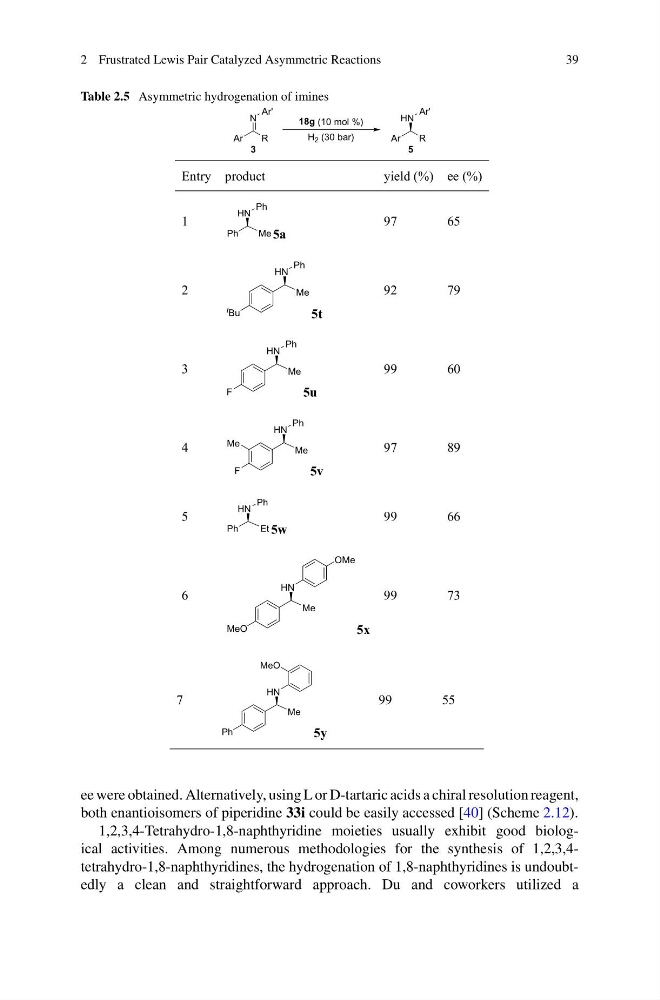
Table 2.5 Asymmetric hydrogenation of imines
Ar
R
N
Ar'
18g (10 mol %)
H 2 (30 bar)
Ar
R
HN
Ar'
3
5
Entry product
yield (%) ee (%)
1
5a
Ph
Me
HN
Ph
97
65
2
5t
Me
HN
Ph
t Bu
92
79
3
5u
Me
HN
Ph
F
99
60
4
5v
Me
HN
Ph
F
Me
97
89
5
5w
Ph
Et
HN
Ph
99
66
6
5x
Me
HN
MeO
OMe
99
73
7
5y
Me
HN
MeO
Ph
99
55
ee were obtained. Alternatively, using L or D-tartaric acids a chiral resolution reagent,
both enantioisomers of piperidine 33i could be easily accessed [40] (Scheme 2.12).
1,2,3,4-Tetrahydro-1,8-naphthyridine moieties usually exhibit good biological activities. Among numerous methodologies for the synthesis of 1,2,3,4tetrahydro-1,8-naphthyridines, the hydrogenation of 1,8-naphthyridines is undoubtedly a clean and straightforward approach. Du and coworkers utilized a
39
Table 2.5 Asymmetric hydrogenation of imines
Ar
R
N
Ar'
18g (10 mol %)
H 2 (30 bar)
Ar
R
HN
Ar'
3
5
Entry product
yield (%) ee (%)
1
5a
Ph
Me
HN
Ph
97
65
2
5t
Me
HN
Ph
t Bu
92
79
3
5u
Me
HN
Ph
F
99
60
4
5v
Me
HN
Ph
F
Me
97
89
5
5w
Ph
Et
HN
Ph
99
66
6
5x
Me
HN
MeO
OMe
99
73
7
5y
Me
HN
MeO
Ph
99
55
ee were obtained. Alternatively, using L or D-tartaric acids a chiral resolution reagent,
both enantioisomers of piperidine 33i could be easily accessed [40] (Scheme 2.12).
1,2,3,4-Tetrahydro-1,8-naphthyridine moieties usually exhibit good biological activities. Among numerous methodologies for the synthesis of 1,2,3,4tetrahydro-1,8-naphthyridines, the hydrogenation of 1,8-naphthyridines is undoubtedly a clean and straightforward approach. Du and coworkers utilized a