

38
X. Feng et al.
Ar
OH
OH
Ar
Cl
Cl
one step
Ar
O
O
Ar
16
chiral diols
readily available
17
chiral alkenes
easily accessible
HB(C 6 F 5 ) 2
in situ
Ar
O
O
Ar
B(C 6 F 5 ) 2
18
chiral boron Lewis acids
18a: Ar = 4-FC 6 H 4
18b: Ar = 4- t BuC 6 H 4
18c: Ar = 2-OMeC 6 H 4
18d: Ar = 2- i PrOC 6 H 4
18e: Ar = 2-OBnC 6 H 4
18f: Ar = 3-OMeC 6 H 4
18g: Ar = 3,5t Bu 2 C 6 H 3
18h: Ar = 3,5-(CF 3 ) 2 C 6 H 3
18i: Ar = 3,5-(3,5- t Bu 2 C 6 H 3)2 C 6 H 3
18j: Ar = 2-OMe-5- t BuC 6 H 3
18k: Ar = 2,4,6-Me 3 C 6 H 2
18l: Ar = 2,4,6-Cy 3 C 6 H 2
18m: Ar = 2-Np
18n: Ar = 9-Anthracene
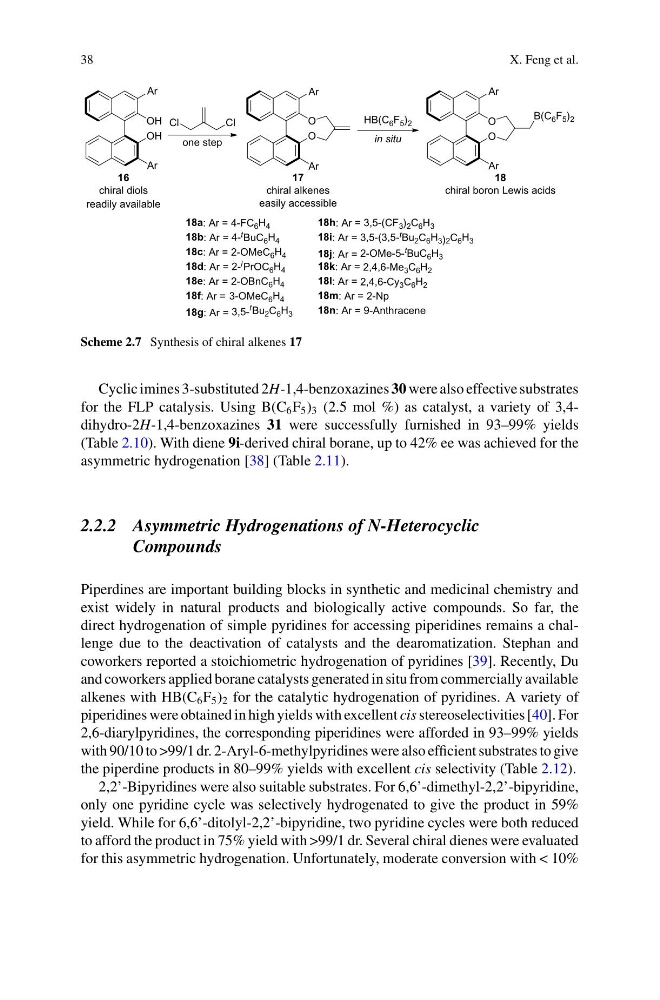
Scheme 2.7 Synthesis of chiral alkenes 17
Cyclic imines 3-substituted 2H-1,4-benzoxazines 30 were also effective substrates
for the FLP catalysis. Using B(C 6 F 5 ) 3 (2.5 mol %) as catalyst, a variety of 3,4dihydro-2H-1,4-benzoxazines 31 were successfully furnished in 93–99% yields
(Table 2.10). With diene 9i-derived chiral borane, up to 42% ee was achieved for the
asymmetric hydrogenation [38] (Table 2.11).
2.2.2 Asymmetric Hydrogenations of N-Heterocyclic
Compounds
Piperdines are important building blocks in synthetic and medicinal chemistry and
exist widely in natural products and biologically active compounds. So far, the
direct hydrogenation of simple pyridines for accessing piperidines remains a challenge due to the deactivation of catalysts and the dearomatization. Stephan and
coworkers reported a stoichiometric hydrogenation of pyridines [39]. Recently, Du
and coworkers applied borane catalysts generated in situ from commercially available
alkenes with HB(C 6 F 5 ) 2 for the catalytic hydrogenation of pyridines. A variety of
piperidines were obtained in high yields with excellent cis stereoselectivities [40]. For
2,6-diarylpyridines, the corresponding piperidines were afforded in 93–99% yields
with 90/10 to >99/1 dr. 2-Aryl-6-methylpyridines were also efficient substrates to give
the piperdine products in 80–99% yields with excellent cis selectivity (Table 2.12).
2,2’-Bipyridines were also suitable substrates. For 6,6’-dimethyl-2,2’-bipyridine,
only one pyridine cycle was selectively hydrogenated to give the product in 59%
yield. While for 6,6’-ditolyl-2,2’-bipyridine, two pyridine cycles were both reduced
to afford the product in 75% yield with >99/1 dr. Several chiral dienes were evaluated
for this asymmetric hydrogenation. Unfortunately, moderate conversion with < 10%
X. Feng et al.
Ar
OH
OH
Ar
Cl
Cl
one step
Ar
O
O
Ar
16
chiral diols
readily available
17
chiral alkenes
easily accessible
HB(C 6 F 5 ) 2
in situ
Ar
O
O
Ar
B(C 6 F 5 ) 2
18
chiral boron Lewis acids
18a: Ar = 4-FC 6 H 4
18b: Ar = 4- t BuC 6 H 4
18c: Ar = 2-OMeC 6 H 4
18d: Ar = 2- i PrOC 6 H 4
18e: Ar = 2-OBnC 6 H 4
18f: Ar = 3-OMeC 6 H 4
18g: Ar = 3,5t Bu 2 C 6 H 3
18h: Ar = 3,5-(CF 3 ) 2 C 6 H 3
18i: Ar = 3,5-(3,5- t Bu 2 C 6 H 3)2 C 6 H 3
18j: Ar = 2-OMe-5- t BuC 6 H 3
18k: Ar = 2,4,6-Me 3 C 6 H 2
18l: Ar = 2,4,6-Cy 3 C 6 H 2
18m: Ar = 2-Np
18n: Ar = 9-Anthracene
Scheme 2.7 Synthesis of chiral alkenes 17
Cyclic imines 3-substituted 2H-1,4-benzoxazines 30 were also effective substrates
for the FLP catalysis. Using B(C 6 F 5 ) 3 (2.5 mol %) as catalyst, a variety of 3,4dihydro-2H-1,4-benzoxazines 31 were successfully furnished in 93–99% yields
(Table 2.10). With diene 9i-derived chiral borane, up to 42% ee was achieved for the
asymmetric hydrogenation [38] (Table 2.11).
2.2.2 Asymmetric Hydrogenations of N-Heterocyclic
Compounds
Piperdines are important building blocks in synthetic and medicinal chemistry and
exist widely in natural products and biologically active compounds. So far, the
direct hydrogenation of simple pyridines for accessing piperidines remains a challenge due to the deactivation of catalysts and the dearomatization. Stephan and
coworkers reported a stoichiometric hydrogenation of pyridines [39]. Recently, Du
and coworkers applied borane catalysts generated in situ from commercially available
alkenes with HB(C 6 F 5 ) 2 for the catalytic hydrogenation of pyridines. A variety of
piperidines were obtained in high yields with excellent cis stereoselectivities [40]. For
2,6-diarylpyridines, the corresponding piperidines were afforded in 93–99% yields
with 90/10 to >99/1 dr. 2-Aryl-6-methylpyridines were also efficient substrates to give
the piperdine products in 80–99% yields with excellent cis selectivity (Table 2.12).
2,2’-Bipyridines were also suitable substrates. For 6,6’-dimethyl-2,2’-bipyridine,
only one pyridine cycle was selectively hydrogenated to give the product in 59%
yield. While for 6,6’-ditolyl-2,2’-bipyridine, two pyridine cycles were both reduced
to afford the product in 75% yield with >99/1 dr. Several chiral dienes were evaluated
for this asymmetric hydrogenation. Unfortunately, moderate conversion with < 10%