

40
X. Feng et al.
H
H
Ar
Ar
H
H
Ar
Ar
B
BAr F
2
Ar F
2
H
H
Ar
Ar
B
BAr F
2
Ar F
2
HBAr F
2
25 ° C
HBAr F
2
80 ° C
20
kinetic
predominantly one isomer
21
thermodynamic
predominantly one isomer
19
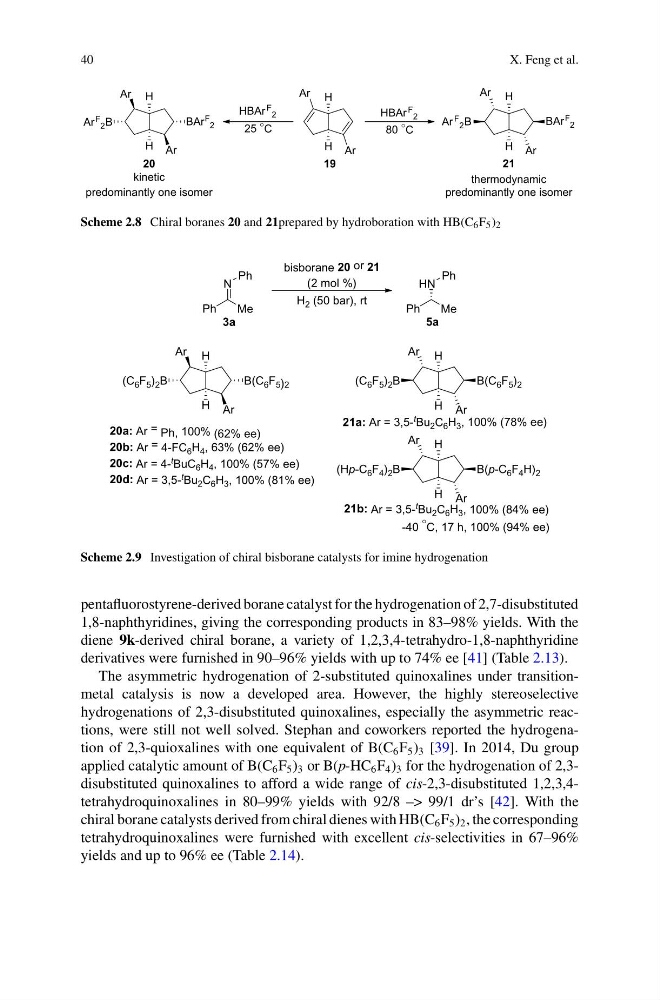
Scheme 2.8 Chiral boranes 20 and 21prepared by hydroboration with HB(C 6 F 5 ) 2
H
H
Ar
Ar
(C 6 F 5 ) 2 B
B(C 6 F 5)2
H
H
Ar
Ar
(C 6 F 5 ) 2 B
B(C 6 F 5 ) 2
20a: Ar = Ph, 100% (62% ee)
20b: Ar = 4-FC 6 H 4 , 63% (62% ee)
20c: Ar = 4- t BuC 6 H 4 , 100% (57% ee)
20d: Ar = 3,5- t Bu 2 C 6 H 3 , 100% (81% ee)
H
H
Ar
Ar
(Hp-C 6 F 4 ) 2 B
B(p-C 6 F 4 H) 2
N
Ph
Me
Ph
HN
Ph
Me
Ph
21a: Ar = 3,5- t Bu 2 C 6 H 3 , 100% (78% ee)
21b: Ar = 3,5- t Bu 2 C 6 H 3 , 100% (84% ee)
-40 ° C, 17 h, 100% (94% ee)
bisborane 20 or 21
(2 mol %)
H 2 (50 bar), rt
3a
5a
Scheme 2.9 Investigation of chiral bisborane catalysts for imine hydrogenation
pentafluorostyrene-derived borane catalyst for the hydrogenation of 2,7-disubstituted
1,8-naphthyridines, giving the corresponding products in 83–98% yields. With the
diene 9k-derived chiral borane, a variety of 1,2,3,4-tetrahydro-1,8-naphthyridine
derivatives were furnished in 90–96% yields with up to 74% ee [41] (Table 2.13).
The asymmetric hydrogenation of 2-substituted quinoxalines under transitionmetal catalysis is now a developed area. However, the highly stereoselective
hydrogenations of 2,3-disubstituted quinoxalines, especially the asymmetric reactions, were still not well solved. Stephan and coworkers reported the hydrogenation of 2,3-quioxalines with one equivalent of B(C 6 F 5 ) 3 [39]. In 2014, Du group
applied catalytic amount of B(C 6 F 5 ) 3 or B(p-HC 6 F 4 ) 3 for the hydrogenation of 2,3disubstituted quinoxalines to afford a wide range of cis-2,3-disubstituted 1,2,3,4tetrahydroquinoxalines in 80–99% yields with 92/8 –> 99/1 dr’s [42]. With the
chiral borane catalysts derived from chiral dienes with HB(C 6 F 5 ) 2 , the corresponding
tetrahydroquinoxalines were furnished with excellent cis-selectivities in 67–96%
yields and up to 96% ee (Table 2.14).
X. Feng et al.
H
H
Ar
Ar
H
H
Ar
Ar
B
BAr F
2
Ar F
2
H
H
Ar
Ar
B
BAr F
2
Ar F
2
HBAr F
2
25 ° C
HBAr F
2
80 ° C
20
kinetic
predominantly one isomer
21
thermodynamic
predominantly one isomer
19
Scheme 2.8 Chiral boranes 20 and 21prepared by hydroboration with HB(C 6 F 5 ) 2
H
H
Ar
Ar
(C 6 F 5 ) 2 B
B(C 6 F 5)2
H
H
Ar
Ar
(C 6 F 5 ) 2 B
B(C 6 F 5 ) 2
20a: Ar = Ph, 100% (62% ee)
20b: Ar = 4-FC 6 H 4 , 63% (62% ee)
20c: Ar = 4- t BuC 6 H 4 , 100% (57% ee)
20d: Ar = 3,5- t Bu 2 C 6 H 3 , 100% (81% ee)
H
H
Ar
Ar
(Hp-C 6 F 4 ) 2 B
B(p-C 6 F 4 H) 2
N
Ph
Me
Ph
HN
Ph
Me
Ph
21a: Ar = 3,5- t Bu 2 C 6 H 3 , 100% (78% ee)
21b: Ar = 3,5- t Bu 2 C 6 H 3 , 100% (84% ee)
-40 ° C, 17 h, 100% (94% ee)
bisborane 20 or 21
(2 mol %)
H 2 (50 bar), rt
3a
5a
Scheme 2.9 Investigation of chiral bisborane catalysts for imine hydrogenation
pentafluorostyrene-derived borane catalyst for the hydrogenation of 2,7-disubstituted
1,8-naphthyridines, giving the corresponding products in 83–98% yields. With the
diene 9k-derived chiral borane, a variety of 1,2,3,4-tetrahydro-1,8-naphthyridine
derivatives were furnished in 90–96% yields with up to 74% ee [41] (Table 2.13).
The asymmetric hydrogenation of 2-substituted quinoxalines under transitionmetal catalysis is now a developed area. However, the highly stereoselective
hydrogenations of 2,3-disubstituted quinoxalines, especially the asymmetric reactions, were still not well solved. Stephan and coworkers reported the hydrogenation of 2,3-quioxalines with one equivalent of B(C 6 F 5 ) 3 [39]. In 2014, Du group
applied catalytic amount of B(C 6 F 5 ) 3 or B(p-HC 6 F 4 ) 3 for the hydrogenation of 2,3disubstituted quinoxalines to afford a wide range of cis-2,3-disubstituted 1,2,3,4tetrahydroquinoxalines in 80–99% yields with 92/8 –> 99/1 dr’s [42]. With the
chiral borane catalysts derived from chiral dienes with HB(C 6 F 5 ) 2 , the corresponding
tetrahydroquinoxalines were furnished with excellent cis-selectivities in 67–96%
yields and up to 96% ee (Table 2.14).