

11 Frustrated Lewis Pair Pedagogy: Expanding Core Undergraduate Curriculum …
391
Lewis
acidity/basicity
scales
Factors influencing
acid/base strength:
electronics and sterics
Variation in
adduct formation
equilibrium
Weak unhindered acid and base
Weak adduct, non-reactive
Strong unhindered acid and base
Strong adduct, non-reactive
Weak hindered acid and base
Weak adduct, non-reactive
Strong hindered acid and base
Weak adduct, reactive
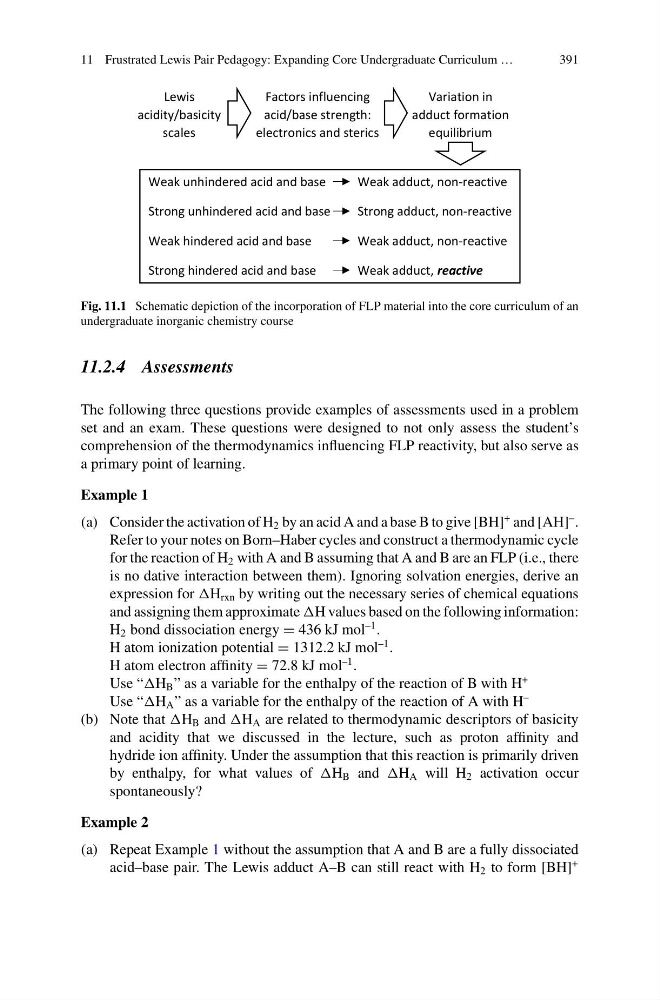
Fig. 11.1 Schematic depiction of the incorporation of FLP material into the core curriculum of an
undergraduate inorganic chemistry course
11.2.4 Assessments
The following three questions provide examples of assessments used in a problem
set and an exam. These questions were designed to not only assess the student’s
comprehension of the thermodynamics influencing FLP reactivity, but also serve as
a primary point of learning.
Example 1
(a) Consider the activation of H 2 by an acid A and a base B to give [BH]
+ and [AH]
– .
Refer to your notes on Born–Haber cycles and construct a thermodynamic cycle
for the reaction of H 2 with A and B assuming that A and B are an FLP (i.e., there
is no dative interaction between them). Ignoring solvation energies, derive an
expression for rxn by writing out the necessary series of chemical equations
and assigning them approximate H values based on the following information:
H 2 bond dissociation energy = 436 kJ mol
–1 .
H atom ionization potential = 1312.2 kJ mol
–1 .
H atom electron affinity = 72.8 kJ mol
–1 .
Use “ B ” as a variable for the enthalpy of the reaction of B with H
+
Use “ A ” as a variable for the enthalpy of the reaction of A with H
–
(b) Note that B and A are related to thermodynamic descriptors of basicity
and acidity that we discussed in the lecture, such as proton affinity and
hydride ion affinity. Under the assumption that this reaction is primarily driven
by enthalpy, for what values of B and A will H 2 activation occur
spontaneously?
Example 2
(a) Repeat Example 1 without the assumption that A and B are a fully dissociated
acid–base pair. The Lewis adduct A–B can still react with H 2 to form [BH]
+
391
Lewis
acidity/basicity
scales
Factors influencing
acid/base strength:
electronics and sterics
Variation in
adduct formation
equilibrium
Weak unhindered acid and base
Weak adduct, non-reactive
Strong unhindered acid and base
Strong adduct, non-reactive
Weak hindered acid and base
Weak adduct, non-reactive
Strong hindered acid and base
Weak adduct, reactive
Fig. 11.1 Schematic depiction of the incorporation of FLP material into the core curriculum of an
undergraduate inorganic chemistry course
11.2.4 Assessments
The following three questions provide examples of assessments used in a problem
set and an exam. These questions were designed to not only assess the student’s
comprehension of the thermodynamics influencing FLP reactivity, but also serve as
a primary point of learning.
Example 1
(a) Consider the activation of H 2 by an acid A and a base B to give [BH]
+ and [AH]
– .
Refer to your notes on Born–Haber cycles and construct a thermodynamic cycle
for the reaction of H 2 with A and B assuming that A and B are an FLP (i.e., there
is no dative interaction between them). Ignoring solvation energies, derive an
expression for rxn by writing out the necessary series of chemical equations
and assigning them approximate H values based on the following information:
H 2 bond dissociation energy = 436 kJ mol
–1 .
H atom ionization potential = 1312.2 kJ mol
–1 .
H atom electron affinity = 72.8 kJ mol
–1 .
Use “ B ” as a variable for the enthalpy of the reaction of B with H
+
Use “ A ” as a variable for the enthalpy of the reaction of A with H
–
(b) Note that B and A are related to thermodynamic descriptors of basicity
and acidity that we discussed in the lecture, such as proton affinity and
hydride ion affinity. Under the assumption that this reaction is primarily driven
by enthalpy, for what values of B and A will H 2 activation occur
spontaneously?
Example 2
(a) Repeat Example 1 without the assumption that A and B are a fully dissociated
acid–base pair. The Lewis adduct A–B can still react with H 2 to form [BH]
+