

9 Frustrated Lewis Pairs Based on Transition Metals
337
Sc
ArO
ArO
O
PPh 2
THF
Ph
H
O
Sc
ArO
ArO
O
PPh 2
O
Ph
Ph
Ph
O
PPh 2
O
Sc
O
Ph
Ph
ArO
ArO
Ph
COOMe
N 2
Sc
ArO
ArO
O
PPh 2
O
MeO
N
Ph
N
34
Sc
ArO
ArO
O
PPh 2
S
PPh 2
O
Sc
O
MeO
ArO
ArO
Ph 2 P
O
Sc
O
OMe
OAr
OAr
·
PPh 2
O
Sc
O
Ph
Ph
ArO
ArO
Sc
ArO
ArO
O
PPh 2
O
N
Ph
O
PPh 2
O
Sc
O
Ph
ArO
ArO
Ph
PPh 2
O
Sc
O
Ph
ArO
ArO
Ph
PPh 2
O
Sc
O
ArO
ArO
PPh 2
O
Sc
Br
ArO
ArO
Ph
PPh 2
O
Sc
ArO
ArO
N
N
H
Me 3 Si
Ph
Ph
O
O
O
BzBr
CO 2 Me
MeO 2 C
Ph
O
S 8
Ph
O
Ph
Ph
N C O
N 2
SiMe 3
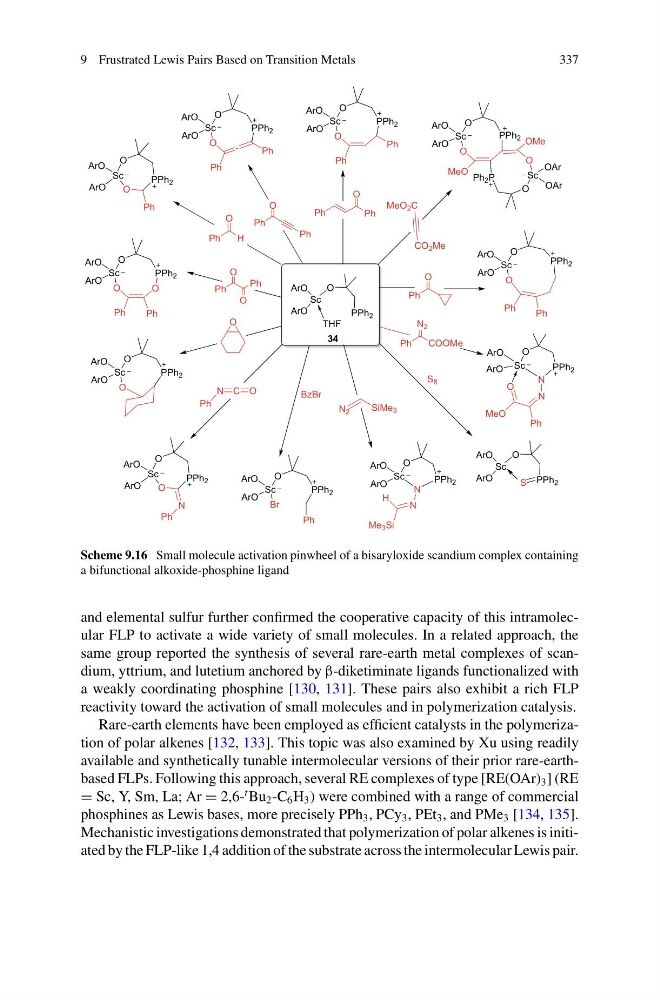
Scheme 9.16 Small molecule activation pinwheel of a bisaryloxide scandium complex containing
a bifunctional alkoxide-phosphine ligand
and elemental sulfur further confirmed the cooperative capacity of this intramolecular FLP to activate a wide variety of small molecules. In a related approach, the
same group reported the synthesis of several rare-earth metal complexes of scandium, yttrium, and lutetium anchored by β-diketiminate ligands functionalized with
a weakly coordinating phosphine [130, 131]. These pairs also exhibit a rich FLP
reactivity toward the activation of small molecules and in polymerization catalysis.
Rare-earth elements have been employed as efficient catalysts in the polymerization of polar alkenes [132, 133]. This topic was also examined by Xu using readily
available and synthetically tunable intermolecular versions of their prior rare-earthbased FLPs. Following this approach, several RE complexes of type [RE(OAr) 3 ] (RE
= Sc, Y, Sm, La; Ar = 2,6t Bu 2 -C 6 H 3 ) were combined with a range of commercial
phosphines as Lewis bases, more precisely PPh 3 , PCy 3 , PEt 3 , and PMe 3 [134, 135].
Mechanistic investigations demonstrated that polymerization of polar alkenes is initiated by the FLP-like 1,4 addition of the substrate across the intermolecular Lewis pair.
337
Sc
ArO
ArO
O
PPh 2
THF
Ph
H
O
Sc
ArO
ArO
O
PPh 2
O
Ph
Ph
Ph
O
PPh 2
O
Sc
O
Ph
Ph
ArO
ArO
Ph
COOMe
N 2
Sc
ArO
ArO
O
PPh 2
O
MeO
N
Ph
N
34
Sc
ArO
ArO
O
PPh 2
S
PPh 2
O
Sc
O
MeO
ArO
ArO
Ph 2 P
O
Sc
O
OMe
OAr
OAr
·
PPh 2
O
Sc
O
Ph
Ph
ArO
ArO
Sc
ArO
ArO
O
PPh 2
O
N
Ph
O
PPh 2
O
Sc
O
Ph
ArO
ArO
Ph
PPh 2
O
Sc
O
Ph
ArO
ArO
Ph
PPh 2
O
Sc
O
ArO
ArO
PPh 2
O
Sc
Br
ArO
ArO
Ph
PPh 2
O
Sc
ArO
ArO
N
N
H
Me 3 Si
Ph
Ph
O
O
O
BzBr
CO 2 Me
MeO 2 C
Ph
O
S 8
Ph
O
Ph
Ph
N C O
N 2
SiMe 3
Scheme 9.16 Small molecule activation pinwheel of a bisaryloxide scandium complex containing
a bifunctional alkoxide-phosphine ligand
and elemental sulfur further confirmed the cooperative capacity of this intramolecular FLP to activate a wide variety of small molecules. In a related approach, the
same group reported the synthesis of several rare-earth metal complexes of scandium, yttrium, and lutetium anchored by β-diketiminate ligands functionalized with
a weakly coordinating phosphine [130, 131]. These pairs also exhibit a rich FLP
reactivity toward the activation of small molecules and in polymerization catalysis.
Rare-earth elements have been employed as efficient catalysts in the polymerization of polar alkenes [132, 133]. This topic was also examined by Xu using readily
available and synthetically tunable intermolecular versions of their prior rare-earthbased FLPs. Following this approach, several RE complexes of type [RE(OAr) 3 ] (RE
= Sc, Y, Sm, La; Ar = 2,6t Bu 2 -C 6 H 3 ) were combined with a range of commercial
phosphines as Lewis bases, more precisely PPh 3 , PCy 3 , PEt 3 , and PMe 3 [134, 135].
Mechanistic investigations demonstrated that polymerization of polar alkenes is initiated by the FLP-like 1,4 addition of the substrate across the intermolecular Lewis pair.