

310
M. Hong
O
+
C S
O
BEt 3 /LB
N
N
N
N
N
N
N
N
N
N
N
TMED
TEA
TEED
TEPD
TEMD
TMDM
O
S
O
O
S
O
n
+
N
N
BEt 3
Cl
O
S
O
n
OH
NH
HN
Cl
Cl
+
HCl/Ethanol
2
N
O
S
O
n
OBEt 3
2
Et 3 B
O
C S
O
N
O
S
BEt 3
O
2
Initiation
Propagation
+
Termination
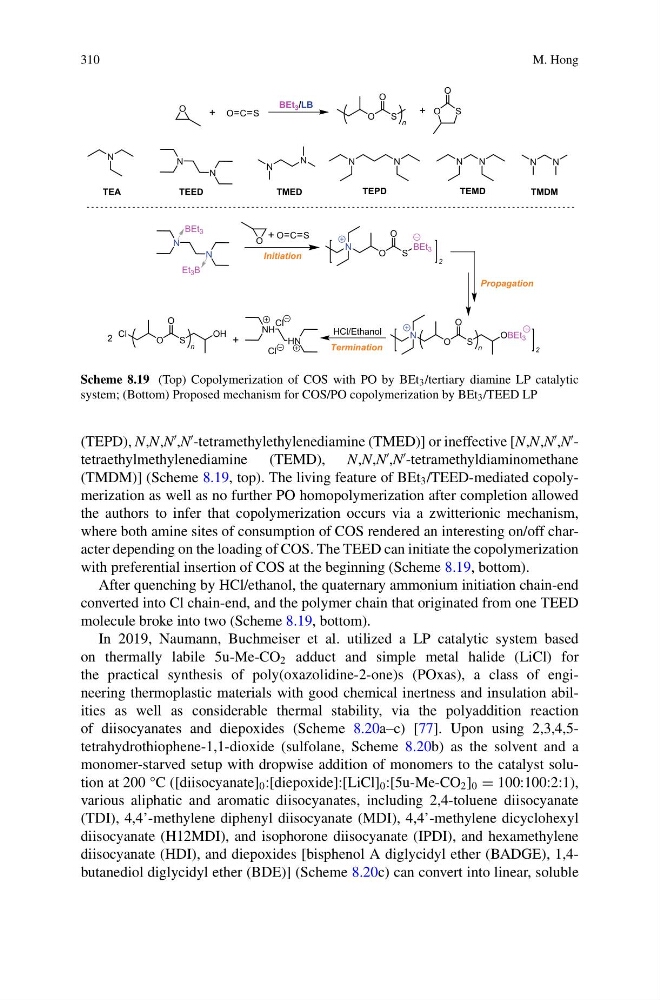
Scheme 8.19 (Top) Copolymerization of COS with PO by BEt 3 /tertiary diamine LP catalytic
system; (Bottom) Proposed mechanism for COS/PO copolymerization by BEt 3 /TEED LP
(TEPD), N,N,N
,N
-tetramethylethylenediamine (TMED)] or ineffective [N,N,N
,N
-
tetraethylmethylenediamine (TEMD), N,N,N
,N
-tetramethyldiaminomethane
(TMDM)] (Scheme 8.19, top). The living feature of BEt 3 /TEED-mediated copolymerization as well as no further PO homopolymerization after completion allowed
the authors to infer that copolymerization occurs via a zwitterionic mechanism,
where both amine sites of consumption of COS rendered an interesting on/off character depending on the loading of COS. The TEED can initiate the copolymerization
with preferential insertion of COS at the beginning (Scheme 8.19, bottom).
After quenching by HCl/ethanol, the quaternary ammonium initiation chain-end
converted into Cl chain-end, and the polymer chain that originated from one TEED
molecule broke into two (Scheme 8.19, bottom).
In 2019, Naumann, Buchmeiser et al. utilized a LP catalytic system based
on thermally labile 5u-Me-CO 2 adduct and simple metal halide (LiCl) for
the practical synthesis of poly(oxazolidine-2-one)s (POxas), a class of engineering thermoplastic materials with good chemical inertness and insulation abilities as well as considerable thermal stability, via the polyaddition reaction
of diisocyanates and diepoxides (Scheme 8.20a–c) [77]. Upon using 2,3,4,5tetrahydrothiophene-1,1-dioxide (sulfolane, Scheme 8.20b) as the solvent and a
monomer-starved setup with dropwise addition of monomers to the catalyst solution at 200 °C ([diisocyanate] 0 :[diepoxide]:[LiCl] 0 :[5u-Me-CO 2 ] 0 = 100:100:2:1),
various aliphatic and aromatic diisocyanates, including 2,4-toluene diisocyanate
(TDI), 4,4’-methylene diphenyl diisocyanate (MDI), 4,4’-methylene dicyclohexyl
diisocyanate (H12MDI), and isophorone diisocyanate (IPDI), and hexamethylene
diisocyanate (HDI), and diepoxides [bisphenol A diglycidyl ether (BADGE), 1,4butanediol diglycidyl ether (BDE)] (Scheme 8.20c) can convert into linear, soluble
M. Hong
O
+
C S
O
BEt 3 /LB
N
N
N
N
N
N
N
N
N
N
N
TMED
TEA
TEED
TEPD
TEMD
TMDM
O
S
O
O
S
O
n
+
N
N
BEt 3
Cl
O
S
O
n
OH
NH
HN
Cl
Cl
+
HCl/Ethanol
2
N
O
S
O
n
OBEt 3
2
Et 3 B
O
C S
O
N
O
S
BEt 3
O
2
Initiation
Propagation
+
Termination
Scheme 8.19 (Top) Copolymerization of COS with PO by BEt 3 /tertiary diamine LP catalytic
system; (Bottom) Proposed mechanism for COS/PO copolymerization by BEt 3 /TEED LP
(TEPD), N,N,N
,N
-tetramethylethylenediamine (TMED)] or ineffective [N,N,N
,N
-
tetraethylmethylenediamine (TEMD), N,N,N
,N
-tetramethyldiaminomethane
(TMDM)] (Scheme 8.19, top). The living feature of BEt 3 /TEED-mediated copolymerization as well as no further PO homopolymerization after completion allowed
the authors to infer that copolymerization occurs via a zwitterionic mechanism,
where both amine sites of consumption of COS rendered an interesting on/off character depending on the loading of COS. The TEED can initiate the copolymerization
with preferential insertion of COS at the beginning (Scheme 8.19, bottom).
After quenching by HCl/ethanol, the quaternary ammonium initiation chain-end
converted into Cl chain-end, and the polymer chain that originated from one TEED
molecule broke into two (Scheme 8.19, bottom).
In 2019, Naumann, Buchmeiser et al. utilized a LP catalytic system based
on thermally labile 5u-Me-CO 2 adduct and simple metal halide (LiCl) for
the practical synthesis of poly(oxazolidine-2-one)s (POxas), a class of engineering thermoplastic materials with good chemical inertness and insulation abilities as well as considerable thermal stability, via the polyaddition reaction
of diisocyanates and diepoxides (Scheme 8.20a–c) [77]. Upon using 2,3,4,5tetrahydrothiophene-1,1-dioxide (sulfolane, Scheme 8.20b) as the solvent and a
monomer-starved setup with dropwise addition of monomers to the catalyst solution at 200 °C ([diisocyanate] 0 :[diepoxide]:[LiCl] 0 :[5u-Me-CO 2 ] 0 = 100:100:2:1),
various aliphatic and aromatic diisocyanates, including 2,4-toluene diisocyanate
(TDI), 4,4’-methylene diphenyl diisocyanate (MDI), 4,4’-methylene dicyclohexyl
diisocyanate (H12MDI), and isophorone diisocyanate (IPDI), and hexamethylene
diisocyanate (HDI), and diepoxides [bisphenol A diglycidyl ether (BADGE), 1,4butanediol diglycidyl ether (BDE)] (Scheme 8.20c) can convert into linear, soluble