

7 Heterogeneous Catalysis by Frustrated Lewis Pairs
269
a)
b)
c)
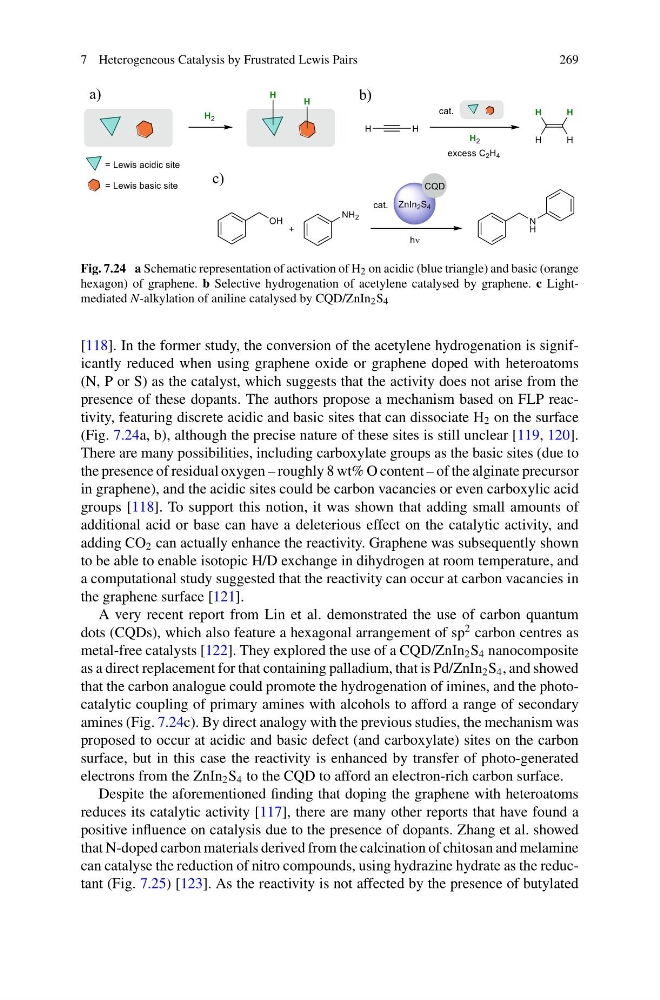
Fig. 7.24 a Schematic representation of activation of H 2 on acidic (blue triangle) and basic (orange
hexagon) of graphene. b Selective hydrogenation of acetylene catalysed by graphene. c Lightmediated N-alkylation of aniline catalysed by CQD/ZnIn 2 S 4
[118]. In the former study, the conversion of the acetylene hydrogenation is significantly reduced when using graphene oxide or graphene doped with heteroatoms
(N, P or S) as the catalyst, which suggests that the activity does not arise from the
presence of these dopants. The authors propose a mechanism based on FLP reactivity, featuring discrete acidic and basic sites that can dissociate H 2 on the surface
(Fig. 7.24a, b), although the precise nature of these sites is still unclear [119, 120].
There are many possibilities, including carboxylate groups as the basic sites (due to
the presence of residual oxygen – roughly 8 wt% O content – of the alginate precursor
in graphene), and the acidic sites could be carbon vacancies or even carboxylic acid
groups [118]. To support this notion, it was shown that adding small amounts of
additional acid or base can have a deleterious effect on the catalytic activity, and
adding CO 2 can actually enhance the reactivity. Graphene was subsequently shown
to be able to enable isotopic H/D exchange in dihydrogen at room temperature, and
a computational study suggested that the reactivity can occur at carbon vacancies in
the graphene surface [121].
A very recent report from Lin et al. demonstrated the use of carbon quantum
dots (CQDs), which also feature a hexagonal arrangement of sp
2 carbon centres as
metal-free catalysts [122]. They explored the use of a CQD/ZnIn 2 S 4 nanocomposite
as a direct replacement for that containing palladium, that is Pd/ZnIn 2 S 4 , and showed
that the carbon analogue could promote the hydrogenation of imines, and the photocatalytic coupling of primary amines with alcohols to afford a range of secondary
amines (Fig. 7.24c). By direct analogy with the previous studies, the mechanism was
proposed to occur at acidic and basic defect (and carboxylate) sites on the carbon
surface, but in this case the reactivity is enhanced by transfer of photo-generated
electrons from the ZnIn 2 S 4 to the CQD to afford an electron-rich carbon surface.
Despite the aforementioned finding that doping the graphene with heteroatoms
reduces its catalytic activity [117], there are many other reports that have found a
positive influence on catalysis due to the presence of dopants. Zhang et al. showed
that N-doped carbon materials derived from the calcination of chitosan and melamine
can catalyse the reduction of nitro compounds, using hydrazine hydrate as the reductant (Fig. 7.25) [123]. As the reactivity is not affected by the presence of butylated
269
a)
b)
c)
Fig. 7.24 a Schematic representation of activation of H 2 on acidic (blue triangle) and basic (orange
hexagon) of graphene. b Selective hydrogenation of acetylene catalysed by graphene. c Lightmediated N-alkylation of aniline catalysed by CQD/ZnIn 2 S 4
[118]. In the former study, the conversion of the acetylene hydrogenation is significantly reduced when using graphene oxide or graphene doped with heteroatoms
(N, P or S) as the catalyst, which suggests that the activity does not arise from the
presence of these dopants. The authors propose a mechanism based on FLP reactivity, featuring discrete acidic and basic sites that can dissociate H 2 on the surface
(Fig. 7.24a, b), although the precise nature of these sites is still unclear [119, 120].
There are many possibilities, including carboxylate groups as the basic sites (due to
the presence of residual oxygen – roughly 8 wt% O content – of the alginate precursor
in graphene), and the acidic sites could be carbon vacancies or even carboxylic acid
groups [118]. To support this notion, it was shown that adding small amounts of
additional acid or base can have a deleterious effect on the catalytic activity, and
adding CO 2 can actually enhance the reactivity. Graphene was subsequently shown
to be able to enable isotopic H/D exchange in dihydrogen at room temperature, and
a computational study suggested that the reactivity can occur at carbon vacancies in
the graphene surface [121].
A very recent report from Lin et al. demonstrated the use of carbon quantum
dots (CQDs), which also feature a hexagonal arrangement of sp
2 carbon centres as
metal-free catalysts [122]. They explored the use of a CQD/ZnIn 2 S 4 nanocomposite
as a direct replacement for that containing palladium, that is Pd/ZnIn 2 S 4 , and showed
that the carbon analogue could promote the hydrogenation of imines, and the photocatalytic coupling of primary amines with alcohols to afford a range of secondary
amines (Fig. 7.24c). By direct analogy with the previous studies, the mechanism was
proposed to occur at acidic and basic defect (and carboxylate) sites on the carbon
surface, but in this case the reactivity is enhanced by transfer of photo-generated
electrons from the ZnIn 2 S 4 to the CQD to afford an electron-rich carbon surface.
Despite the aforementioned finding that doping the graphene with heteroatoms
reduces its catalytic activity [117], there are many other reports that have found a
positive influence on catalysis due to the presence of dopants. Zhang et al. showed
that N-doped carbon materials derived from the calcination of chitosan and melamine
can catalyse the reduction of nitro compounds, using hydrazine hydrate as the reductant (Fig. 7.25) [123]. As the reactivity is not affected by the presence of butylated