

7 Heterogeneous Catalysis by Frustrated Lewis Pairs
263
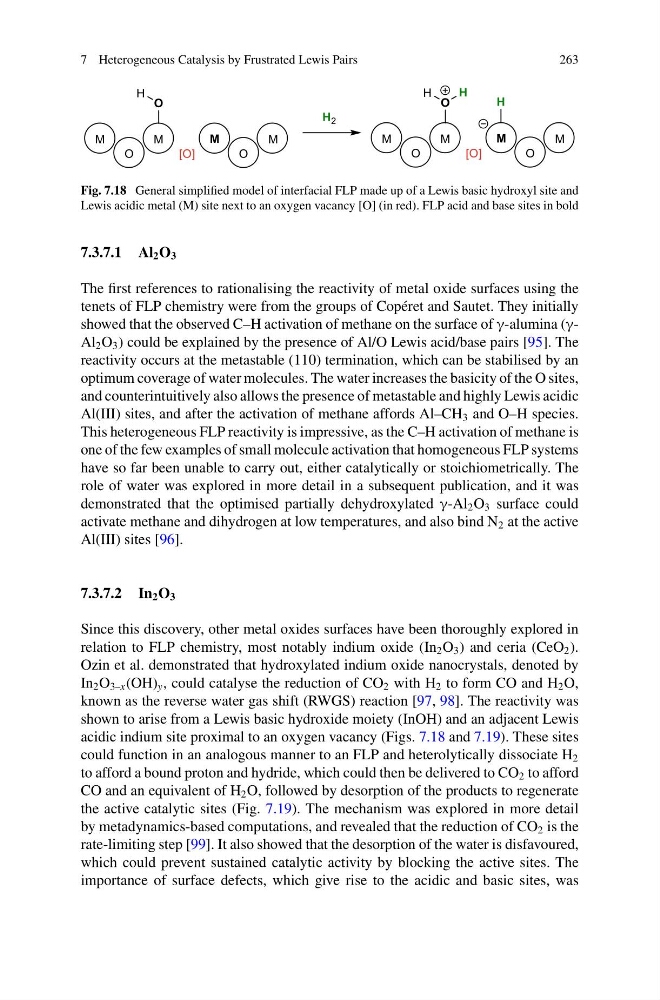
Fig. 7.18 General simplified model of interfacial FLP made up of a Lewis basic hydroxyl site and
Lewis acidic metal (M) site next to an oxygen vacancy [O] (in red). FLP acid and base sites in bold
7.3.7.1 Al 2 O 3
The first references to rationalising the reactivity of metal oxide surfaces using the
tenets of FLP chemistry were from the groups of Copéret and Sautet. They initially
showed that the observed C–H activation of methane on the surface of γ-alumina (γAl 2 O 3 ) could be explained by the presence of Al/O Lewis acid/base pairs [95]. The
reactivity occurs at the metastable (110) termination, which can be stabilised by an
optimum coverage of water molecules. The water increases the basicity of the O sites,
and counterintuitively also allows the presence of metastable and highly Lewis acidic
Al(III) sites, and after the activation of methane affords Al–CH 3 and O–H species.
This heterogeneous FLP reactivity is impressive, as the C–H activation of methane is
one of the few examples of small molecule activation that homogeneous FLP systems
have so far been unable to carry out, either catalytically or stoichiometrically. The
role of water was explored in more detail in a subsequent publication, and it was
demonstrated that the optimised partially dehydroxylated γ-Al 2 O 3 surface could
activate methane and dihydrogen at low temperatures, and also bind N 2 at the active
Al(III) sites [96].
7.3.7.2 In 2 O 3
Since this discovery, other metal oxides surfaces have been thoroughly explored in
relation to FLP chemistry, most notably indium oxide (In 2 O 3 ) and ceria (CeO 2 ).
Ozin et al. demonstrated that hydroxylated indium oxide nanocrystals, denoted by
In 2 O 3–x (OH) y , could catalyse the reduction of CO 2 with H 2 to form CO and H 2 O,
known as the reverse water gas shift (RWGS) reaction [97, 98]. The reactivity was
shown to arise from a Lewis basic hydroxide moiety (InOH) and an adjacent Lewis
acidic indium site proximal to an oxygen vacancy (Figs. 7.18 and 7.19). These sites
could function in an analogous manner to an FLP and heterolytically dissociate H 2
to afford a bound proton and hydride, which could then be delivered to CO 2 to afford
CO and an equivalent of H 2 O, followed by desorption of the products to regenerate
the active catalytic sites (Fig. 7.19). The mechanism was explored in more detail
by metadynamics-based computations, and revealed that the reduction of CO 2 is the
rate-limiting step [99]. It also showed that the desorption of the water is disfavoured,
which could prevent sustained catalytic activity by blocking the active sites. The
importance of surface defects, which give rise to the acidic and basic sites, was
263
Fig. 7.18 General simplified model of interfacial FLP made up of a Lewis basic hydroxyl site and
Lewis acidic metal (M) site next to an oxygen vacancy [O] (in red). FLP acid and base sites in bold
7.3.7.1 Al 2 O 3
The first references to rationalising the reactivity of metal oxide surfaces using the
tenets of FLP chemistry were from the groups of Copéret and Sautet. They initially
showed that the observed C–H activation of methane on the surface of γ-alumina (γAl 2 O 3 ) could be explained by the presence of Al/O Lewis acid/base pairs [95]. The
reactivity occurs at the metastable (110) termination, which can be stabilised by an
optimum coverage of water molecules. The water increases the basicity of the O sites,
and counterintuitively also allows the presence of metastable and highly Lewis acidic
Al(III) sites, and after the activation of methane affords Al–CH 3 and O–H species.
This heterogeneous FLP reactivity is impressive, as the C–H activation of methane is
one of the few examples of small molecule activation that homogeneous FLP systems
have so far been unable to carry out, either catalytically or stoichiometrically. The
role of water was explored in more detail in a subsequent publication, and it was
demonstrated that the optimised partially dehydroxylated γ-Al 2 O 3 surface could
activate methane and dihydrogen at low temperatures, and also bind N 2 at the active
Al(III) sites [96].
7.3.7.2 In 2 O 3
Since this discovery, other metal oxides surfaces have been thoroughly explored in
relation to FLP chemistry, most notably indium oxide (In 2 O 3 ) and ceria (CeO 2 ).
Ozin et al. demonstrated that hydroxylated indium oxide nanocrystals, denoted by
In 2 O 3–x (OH) y , could catalyse the reduction of CO 2 with H 2 to form CO and H 2 O,
known as the reverse water gas shift (RWGS) reaction [97, 98]. The reactivity was
shown to arise from a Lewis basic hydroxide moiety (InOH) and an adjacent Lewis
acidic indium site proximal to an oxygen vacancy (Figs. 7.18 and 7.19). These sites
could function in an analogous manner to an FLP and heterolytically dissociate H 2
to afford a bound proton and hydride, which could then be delivered to CO 2 to afford
CO and an equivalent of H 2 O, followed by desorption of the products to regenerate
the active catalytic sites (Fig. 7.19). The mechanism was explored in more detail
by metadynamics-based computations, and revealed that the reduction of CO 2 is the
rate-limiting step [99]. It also showed that the desorption of the water is disfavoured,
which could prevent sustained catalytic activity by blocking the active sites. The
importance of surface defects, which give rise to the acidic and basic sites, was