

7 Heterogeneous Catalysis by Frustrated Lewis Pairs
261
a)
b)
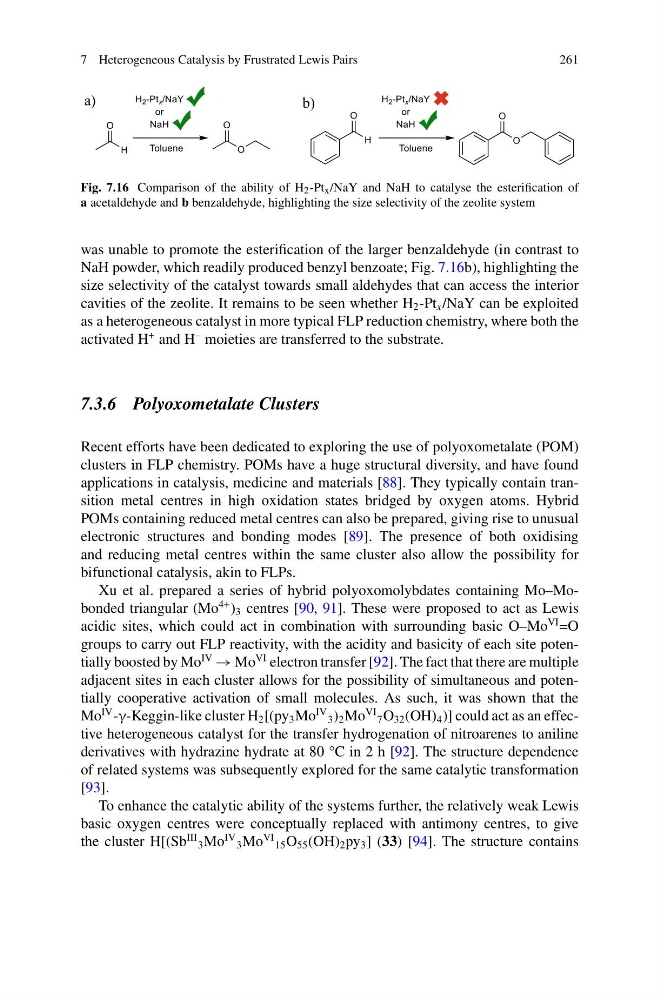
Fig. 7.16 Comparison of the ability of H 2 -Pt x /NaY and NaH to catalyse the esterification of
a acetaldehyde and b benzaldehyde, highlighting the size selectivity of the zeolite system
was unable to promote the esterification of the larger benzaldehyde (in contrast to
NaH powder, which readily produced benzyl benzoate; Fig. 7.16b), highlighting the
size selectivity of the catalyst towards small aldehydes that can access the interior
cavities of the zeolite. It remains to be seen whether H 2 -Pt x /NaY can be exploited
as a heterogeneous catalyst in more typical FLP reduction chemistry, where both the
activated H
+ and H
– moieties are transferred to the substrate.
7.3.6 Polyoxometalate Clusters
Recent efforts have been dedicated to exploring the use of polyoxometalate (POM)
clusters in FLP chemistry. POMs have a huge structural diversity, and have found
applications in catalysis, medicine and materials [88]. They typically contain transition metal centres in high oxidation states bridged by oxygen atoms. Hybrid
POMs containing reduced metal centres can also be prepared, giving rise to unusual
electronic structures and bonding modes [89]. The presence of both oxidising
and reducing metal centres within the same cluster also allow the possibility for
bifunctional catalysis, akin to FLPs.
Xu et al. prepared a series of hybrid polyoxomolybdates containing Mo–Mobonded triangular (Mo
4+ ) 3 centres [90, 91]. These were proposed to act as Lewis
acidic sites, which could act in combination with surrounding basic O–Mo
VI =O
groups to carry out FLP reactivity, with the acidity and basicity of each site potentially boosted by Mo
IV
→ Mo
VI electron transfer [92]. The fact that there are multiple
adjacent sites in each cluster allows for the possibility of simultaneous and potentially cooperative activation of small molecules. As such, it was shown that the
Mo
IV -γ-Keggin-like cluster H 2 [(py 3 Mo
IV
3 ) 2 Mo
VI
7 O 32 (OH) 4 )] could act as an effective heterogeneous catalyst for the transfer hydrogenation of nitroarenes to aniline
derivatives with hydrazine hydrate at 80 °C in 2 h [92]. The structure dependence
of related systems was subsequently explored for the same catalytic transformation
[93].
To enhance the catalytic ability of the systems further, the relatively weak Lewis
basic oxygen centres were conceptually replaced with antimony centres, to give
the cluster H[(Sb
III
3 Mo
IV
3 Mo
VI
15 O 55 (OH) 2 py 3 ] (33) [94]. The structure contains
261
a)
b)
Fig. 7.16 Comparison of the ability of H 2 -Pt x /NaY and NaH to catalyse the esterification of
a acetaldehyde and b benzaldehyde, highlighting the size selectivity of the zeolite system
was unable to promote the esterification of the larger benzaldehyde (in contrast to
NaH powder, which readily produced benzyl benzoate; Fig. 7.16b), highlighting the
size selectivity of the catalyst towards small aldehydes that can access the interior
cavities of the zeolite. It remains to be seen whether H 2 -Pt x /NaY can be exploited
as a heterogeneous catalyst in more typical FLP reduction chemistry, where both the
activated H
+ and H
– moieties are transferred to the substrate.
7.3.6 Polyoxometalate Clusters
Recent efforts have been dedicated to exploring the use of polyoxometalate (POM)
clusters in FLP chemistry. POMs have a huge structural diversity, and have found
applications in catalysis, medicine and materials [88]. They typically contain transition metal centres in high oxidation states bridged by oxygen atoms. Hybrid
POMs containing reduced metal centres can also be prepared, giving rise to unusual
electronic structures and bonding modes [89]. The presence of both oxidising
and reducing metal centres within the same cluster also allow the possibility for
bifunctional catalysis, akin to FLPs.
Xu et al. prepared a series of hybrid polyoxomolybdates containing Mo–Mobonded triangular (Mo
4+ ) 3 centres [90, 91]. These were proposed to act as Lewis
acidic sites, which could act in combination with surrounding basic O–Mo
VI =O
groups to carry out FLP reactivity, with the acidity and basicity of each site potentially boosted by Mo
IV
→ Mo
VI electron transfer [92]. The fact that there are multiple
adjacent sites in each cluster allows for the possibility of simultaneous and potentially cooperative activation of small molecules. As such, it was shown that the
Mo
IV -γ-Keggin-like cluster H 2 [(py 3 Mo
IV
3 ) 2 Mo
VI
7 O 32 (OH) 4 )] could act as an effective heterogeneous catalyst for the transfer hydrogenation of nitroarenes to aniline
derivatives with hydrazine hydrate at 80 °C in 2 h [92]. The structure dependence
of related systems was subsequently explored for the same catalytic transformation
[93].
To enhance the catalytic ability of the systems further, the relatively weak Lewis
basic oxygen centres were conceptually replaced with antimony centres, to give
the cluster H[(Sb
III
3 Mo
IV
3 Mo
VI
15 O 55 (OH) 2 py 3 ] (33) [94]. The structure contains