

228
T. A. Gazis et al.
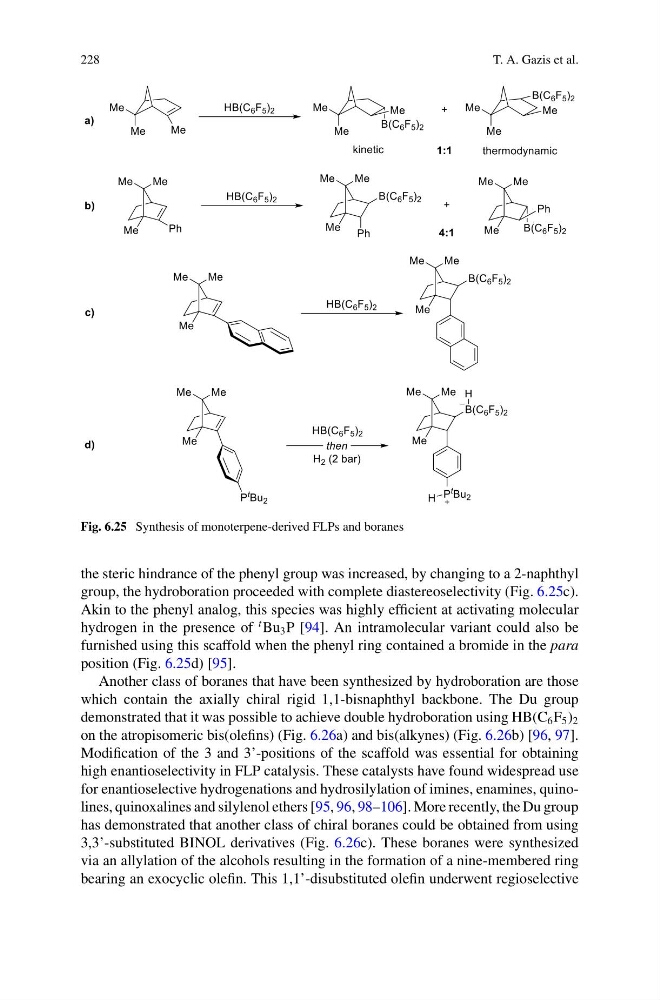
Fig. 6.25 Synthesis of monoterpene-derived FLPs and boranes
the steric hindrance of the phenyl group was increased, by changing to a 2-naphthyl
group, the hydroboration proceeded with complete diastereoselectivity (Fig. 6.25c).
Akin to the phenyl analog, this species was highly efficient at activating molecular
hydrogen in the presence of
t Bu 3 P [94]. An intramolecular variant could also be
furnished using this scaffold when the phenyl ring contained a bromide in the para
position (Fig. 6.25d) [95].
Another class of boranes that have been synthesized by hydroboration are those
which contain the axially chiral rigid 1,1-bisnaphthyl backbone. The Du group
demonstrated that it was possible to achieve double hydroboration using HB(C 6 F 5 ) 2
on the atropisomeric bis(olefins) (Fig. 6.26a) and bis(alkynes) (Fig. 6.26b) [96, 97].
Modification of the 3 and 3’-positions of the scaffold was essential for obtaining
high enantioselectivity in FLP catalysis. These catalysts have found widespread use
for enantioselective hydrogenations and hydrosilylation of imines, enamines, quinolines, quinoxalines and silylenol ethers [95, 96, 98–106]. More recently, the Du group
has demonstrated that another class of chiral boranes could be obtained from using
3,3’-substituted BINOL derivatives (Fig. 6.26c). These boranes were synthesized
via an allylation of the alcohols resulting in the formation of a nine-membered ring
bearing an exocyclic olefin. This 1,1’-disubstituted olefin underwent regioselective
T. A. Gazis et al.
Fig. 6.25 Synthesis of monoterpene-derived FLPs and boranes
the steric hindrance of the phenyl group was increased, by changing to a 2-naphthyl
group, the hydroboration proceeded with complete diastereoselectivity (Fig. 6.25c).
Akin to the phenyl analog, this species was highly efficient at activating molecular
hydrogen in the presence of
t Bu 3 P [94]. An intramolecular variant could also be
furnished using this scaffold when the phenyl ring contained a bromide in the para
position (Fig. 6.25d) [95].
Another class of boranes that have been synthesized by hydroboration are those
which contain the axially chiral rigid 1,1-bisnaphthyl backbone. The Du group
demonstrated that it was possible to achieve double hydroboration using HB(C 6 F 5 ) 2
on the atropisomeric bis(olefins) (Fig. 6.26a) and bis(alkynes) (Fig. 6.26b) [96, 97].
Modification of the 3 and 3’-positions of the scaffold was essential for obtaining
high enantioselectivity in FLP catalysis. These catalysts have found widespread use
for enantioselective hydrogenations and hydrosilylation of imines, enamines, quinolines, quinoxalines and silylenol ethers [95, 96, 98–106]. More recently, the Du group
has demonstrated that another class of chiral boranes could be obtained from using
3,3’-substituted BINOL derivatives (Fig. 6.26c). These boranes were synthesized
via an allylation of the alcohols resulting in the formation of a nine-membered ring
bearing an exocyclic olefin. This 1,1’-disubstituted olefin underwent regioselective