

6 Lewis Acidic Boranes in Frustrated Lewis Pair Chemistry
229
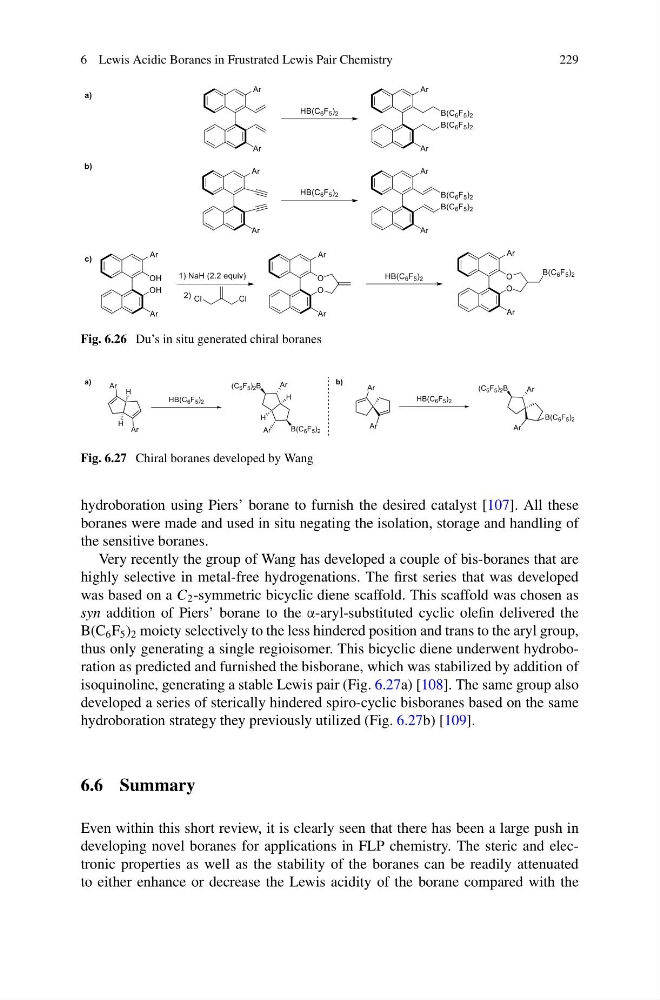
Fig. 6.26 Du’s in situ generated chiral boranes
Fig. 6.27 Chiral boranes developed by Wang
hydroboration using Piers’ borane to furnish the desired catalyst [107]. All these
boranes were made and used in situ negating the isolation, storage and handling of
the sensitive boranes.
Very recently the group of Wang has developed a couple of bis-boranes that are
highly selective in metal-free hydrogenations. The first series that was developed
was based on a C 2 -symmetric bicyclic diene scaffold. This scaffold was chosen as
syn addition of Piers’ borane to the α-aryl-substituted cyclic olefin delivered the
B(C 6 F 5 ) 2 moiety selectively to the less hindered position and trans to the aryl group,
thus only generating a single regioisomer. This bicyclic diene underwent hydroboration as predicted and furnished the bisborane, which was stabilized by addition of
isoquinoline, generating a stable Lewis pair (Fig. 6.27a) [108]. The same group also
developed a series of sterically hindered spiro-cyclic bisboranes based on the same
hydroboration strategy they previously utilized (Fig. 6.27b) [109].
6.6 Summary
Even within this short review, it is clearly seen that there has been a large push in
developing novel boranes for applications in FLP chemistry. The steric and electronic properties as well as the stability of the boranes can be readily attenuated
to either enhance or decrease the Lewis acidity of the borane compared with the
229
Fig. 6.26 Du’s in situ generated chiral boranes
Fig. 6.27 Chiral boranes developed by Wang
hydroboration using Piers’ borane to furnish the desired catalyst [107]. All these
boranes were made and used in situ negating the isolation, storage and handling of
the sensitive boranes.
Very recently the group of Wang has developed a couple of bis-boranes that are
highly selective in metal-free hydrogenations. The first series that was developed
was based on a C 2 -symmetric bicyclic diene scaffold. This scaffold was chosen as
syn addition of Piers’ borane to the α-aryl-substituted cyclic olefin delivered the
B(C 6 F 5 ) 2 moiety selectively to the less hindered position and trans to the aryl group,
thus only generating a single regioisomer. This bicyclic diene underwent hydroboration as predicted and furnished the bisborane, which was stabilized by addition of
isoquinoline, generating a stable Lewis pair (Fig. 6.27a) [108]. The same group also
developed a series of sterically hindered spiro-cyclic bisboranes based on the same
hydroboration strategy they previously utilized (Fig. 6.27b) [109].
6.6 Summary
Even within this short review, it is clearly seen that there has been a large push in
developing novel boranes for applications in FLP chemistry. The steric and electronic properties as well as the stability of the boranes can be readily attenuated
to either enhance or decrease the Lewis acidity of the borane compared with the