

6 Lewis Acidic Boranes in Frustrated Lewis Pair Chemistry
227
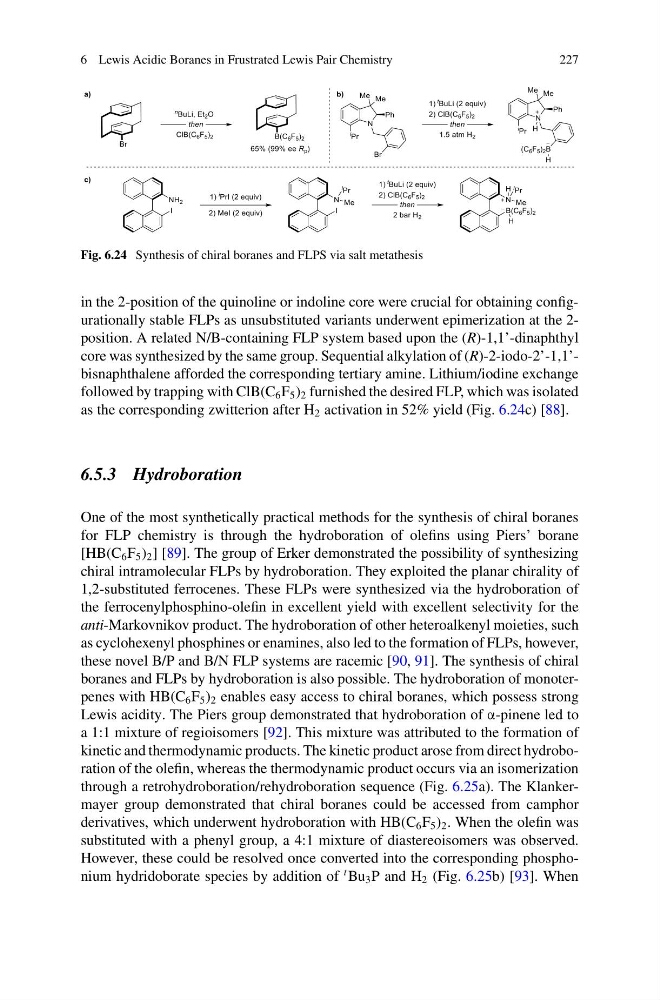
Fig. 6.24 Synthesis of chiral boranes and FLPS via salt metathesis
in the 2-position of the quinoline or indoline core were crucial for obtaining configurationally stable FLPs as unsubstituted variants underwent epimerization at the 2position. A related N/B-containing FLP system based upon the (R)-1,1’-dinaphthyl
core was synthesized by the same group. Sequential alkylation of (R)-2-iodo-2’-1,1’bisnaphthalene afforded the corresponding tertiary amine. Lithium/iodine exchange
followed by trapping with ClB(C 6 F 5 ) 2 furnished the desired FLP, which was isolated
as the corresponding zwitterion after H 2 activation in 52% yield (Fig. 6.24c) [88].
6.5.3 Hydroboration
One of the most synthetically practical methods for the synthesis of chiral boranes
for FLP chemistry is through the hydroboration of olefins using Piers’ borane
[HB(C 6 F 5 ) 2 ] [89]. The group of Erker demonstrated the possibility of synthesizing
chiral intramolecular FLPs by hydroboration. They exploited the planar chirality of
1,2-substituted ferrocenes. These FLPs were synthesized via the hydroboration of
the ferrocenylphosphino-olefin in excellent yield with excellent selectivity for the
anti-Markovnikov product. The hydroboration of other heteroalkenyl moieties, such
as cyclohexenyl phosphines or enamines, also led to the formation of FLPs, however,
these novel B/P and B/N FLP systems are racemic [90, 91]. The synthesis of chiral
boranes and FLPs by hydroboration is also possible. The hydroboration of monoterpenes with HB(C 6 F 5 ) 2 enables easy access to chiral boranes, which possess strong
Lewis acidity. The Piers group demonstrated that hydroboration of α-pinene led to
a 1:1 mixture of regioisomers [92]. This mixture was attributed to the formation of
kinetic and thermodynamic products. The kinetic product arose from direct hydroboration of the olefin, whereas the thermodynamic product occurs via an isomerization
through a retrohydroboration/rehydroboration sequence (Fig. 6.25a). The Klankermayer group demonstrated that chiral boranes could be accessed from camphor
derivatives, which underwent hydroboration with HB(C 6 F 5 ) 2 . When the olefin was
substituted with a phenyl group, a 4:1 mixture of diastereoisomers was observed.
However, these could be resolved once converted into the corresponding phosphonium hydridoborate species by addition of
t Bu 3 P and H 2 (Fig. 6.25b) [93]. When
227
Fig. 6.24 Synthesis of chiral boranes and FLPS via salt metathesis
in the 2-position of the quinoline or indoline core were crucial for obtaining configurationally stable FLPs as unsubstituted variants underwent epimerization at the 2position. A related N/B-containing FLP system based upon the (R)-1,1’-dinaphthyl
core was synthesized by the same group. Sequential alkylation of (R)-2-iodo-2’-1,1’bisnaphthalene afforded the corresponding tertiary amine. Lithium/iodine exchange
followed by trapping with ClB(C 6 F 5 ) 2 furnished the desired FLP, which was isolated
as the corresponding zwitterion after H 2 activation in 52% yield (Fig. 6.24c) [88].
6.5.3 Hydroboration
One of the most synthetically practical methods for the synthesis of chiral boranes
for FLP chemistry is through the hydroboration of olefins using Piers’ borane
[HB(C 6 F 5 ) 2 ] [89]. The group of Erker demonstrated the possibility of synthesizing
chiral intramolecular FLPs by hydroboration. They exploited the planar chirality of
1,2-substituted ferrocenes. These FLPs were synthesized via the hydroboration of
the ferrocenylphosphino-olefin in excellent yield with excellent selectivity for the
anti-Markovnikov product. The hydroboration of other heteroalkenyl moieties, such
as cyclohexenyl phosphines or enamines, also led to the formation of FLPs, however,
these novel B/P and B/N FLP systems are racemic [90, 91]. The synthesis of chiral
boranes and FLPs by hydroboration is also possible. The hydroboration of monoterpenes with HB(C 6 F 5 ) 2 enables easy access to chiral boranes, which possess strong
Lewis acidity. The Piers group demonstrated that hydroboration of α-pinene led to
a 1:1 mixture of regioisomers [92]. This mixture was attributed to the formation of
kinetic and thermodynamic products. The kinetic product arose from direct hydroboration of the olefin, whereas the thermodynamic product occurs via an isomerization
through a retrohydroboration/rehydroboration sequence (Fig. 6.25a). The Klankermayer group demonstrated that chiral boranes could be accessed from camphor
derivatives, which underwent hydroboration with HB(C 6 F 5 ) 2 . When the olefin was
substituted with a phenyl group, a 4:1 mixture of diastereoisomers was observed.
However, these could be resolved once converted into the corresponding phosphonium hydridoborate species by addition of
t Bu 3 P and H 2 (Fig. 6.25b) [93]. When