

222
T. A. Gazis et al.
H
N
Ar
2
Ar
1
O
Ar
1
R
Ar
2
NH 2 , PhMe 2 SiH,
PhCl,100
o C
B(C 6 F 5 ) 3
RO 2 CCO 2 Et, PHMS
PhMe, 100
o C
H 2 N
H 2 N
R
N
H
H
N
R
R
N
H
H
N
Ph
N
H
H
N
Me
Me
Me
H
N
Ph
Ph
Me
Me
H
N
Ph
Ph
MeO
Selected examples
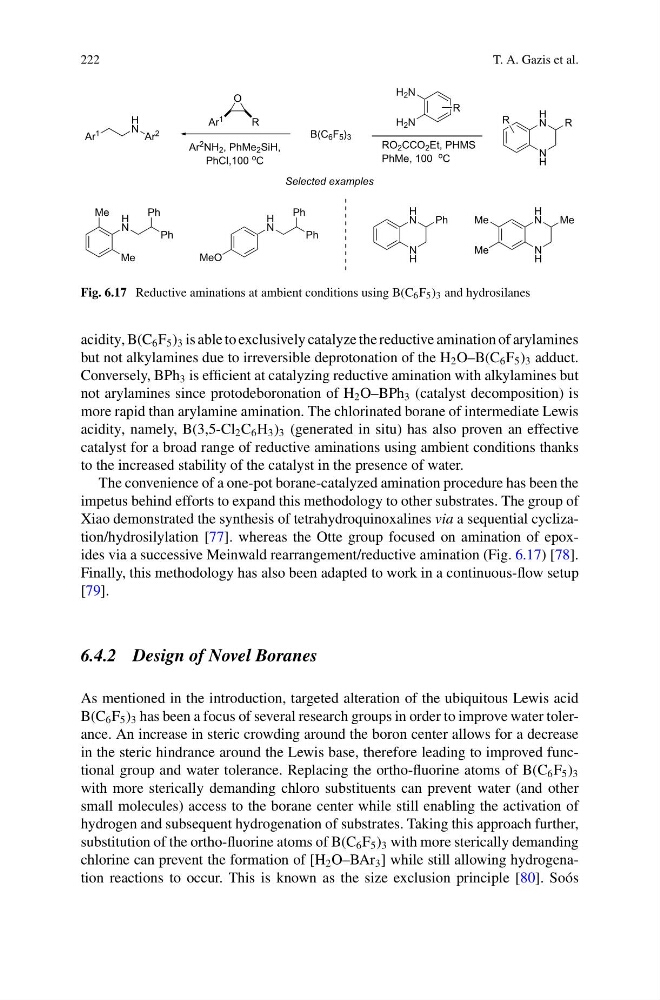
Fig. 6.17 Reductive aminations at ambient conditions using B(C 6 F 5 ) 3 and hydrosilanes
acidity, B(C 6 F 5 ) 3 is able to exclusively catalyze the reductive amination of arylamines
but not alkylamines due to irreversible deprotonation of the H 2 O–B(C 6 F 5 ) 3 adduct.
Conversely, BPh 3 is efficient at catalyzing reductive amination with alkylamines but
not arylamines since protodeboronation of H 2 O–BPh 3 (catalyst decomposition) is
more rapid than arylamine amination. The chlorinated borane of intermediate Lewis
acidity, namely, B(3,5-Cl 2 C 6 H 3 ) 3 (generated in situ) has also proven an effective
catalyst for a broad range of reductive aminations using ambient conditions thanks
to the increased stability of the catalyst in the presence of water.
The convenience of a one-pot borane-catalyzed amination procedure has been the
impetus behind efforts to expand this methodology to other substrates. The group of
Xiao demonstrated the synthesis of tetrahydroquinoxalines via a sequential cyclization/hydrosilylation [77]. whereas the Otte group focused on amination of epoxides via a successive Meinwald rearrangement/reductive amination (Fig. 6.17) [78].
Finally, this methodology has also been adapted to work in a continuous-flow setup
[79].
6.4.2 Design of Novel Boranes
As mentioned in the introduction, targeted alteration of the ubiquitous Lewis acid
B(C 6 F 5 ) 3 has been a focus of several research groups in order to improve water tolerance. An increase in steric crowding around the boron center allows for a decrease
in the steric hindrance around the Lewis base, therefore leading to improved functional group and water tolerance. Replacing the ortho-fluorine atoms of B(C 6 F 5 ) 3
with more sterically demanding chloro substituents can prevent water (and other
small molecules) access to the borane center while still enabling the activation of
hydrogen and subsequent hydrogenation of substrates. Taking this approach further,
substitution of the ortho-fluorine atoms of B(C 6 F 5 ) 3 with more sterically demanding
chlorine can prevent the formation of [H 2 O–BAr 3 ] while still allowing hydrogenation reactions to occur. This is known as the size exclusion principle [80]. Soós
T. A. Gazis et al.
H
N
Ar
2
Ar
1
O
Ar
1
R
Ar
2
NH 2 , PhMe 2 SiH,
PhCl,100
o C
B(C 6 F 5 ) 3
RO 2 CCO 2 Et, PHMS
PhMe, 100
o C
H 2 N
H 2 N
R
N
H
H
N
R
R
N
H
H
N
Ph
N
H
H
N
Me
Me
Me
H
N
Ph
Ph
Me
Me
H
N
Ph
Ph
MeO
Selected examples
Fig. 6.17 Reductive aminations at ambient conditions using B(C 6 F 5 ) 3 and hydrosilanes
acidity, B(C 6 F 5 ) 3 is able to exclusively catalyze the reductive amination of arylamines
but not alkylamines due to irreversible deprotonation of the H 2 O–B(C 6 F 5 ) 3 adduct.
Conversely, BPh 3 is efficient at catalyzing reductive amination with alkylamines but
not arylamines since protodeboronation of H 2 O–BPh 3 (catalyst decomposition) is
more rapid than arylamine amination. The chlorinated borane of intermediate Lewis
acidity, namely, B(3,5-Cl 2 C 6 H 3 ) 3 (generated in situ) has also proven an effective
catalyst for a broad range of reductive aminations using ambient conditions thanks
to the increased stability of the catalyst in the presence of water.
The convenience of a one-pot borane-catalyzed amination procedure has been the
impetus behind efforts to expand this methodology to other substrates. The group of
Xiao demonstrated the synthesis of tetrahydroquinoxalines via a sequential cyclization/hydrosilylation [77]. whereas the Otte group focused on amination of epoxides via a successive Meinwald rearrangement/reductive amination (Fig. 6.17) [78].
Finally, this methodology has also been adapted to work in a continuous-flow setup
[79].
6.4.2 Design of Novel Boranes
As mentioned in the introduction, targeted alteration of the ubiquitous Lewis acid
B(C 6 F 5 ) 3 has been a focus of several research groups in order to improve water tolerance. An increase in steric crowding around the boron center allows for a decrease
in the steric hindrance around the Lewis base, therefore leading to improved functional group and water tolerance. Replacing the ortho-fluorine atoms of B(C 6 F 5 ) 3
with more sterically demanding chloro substituents can prevent water (and other
small molecules) access to the borane center while still enabling the activation of
hydrogen and subsequent hydrogenation of substrates. Taking this approach further,
substitution of the ortho-fluorine atoms of B(C 6 F 5 ) 3 with more sterically demanding
chlorine can prevent the formation of [H 2 O–BAr 3 ] while still allowing hydrogenation reactions to occur. This is known as the size exclusion principle [80]. Soós