

218
T. A. Gazis et al.
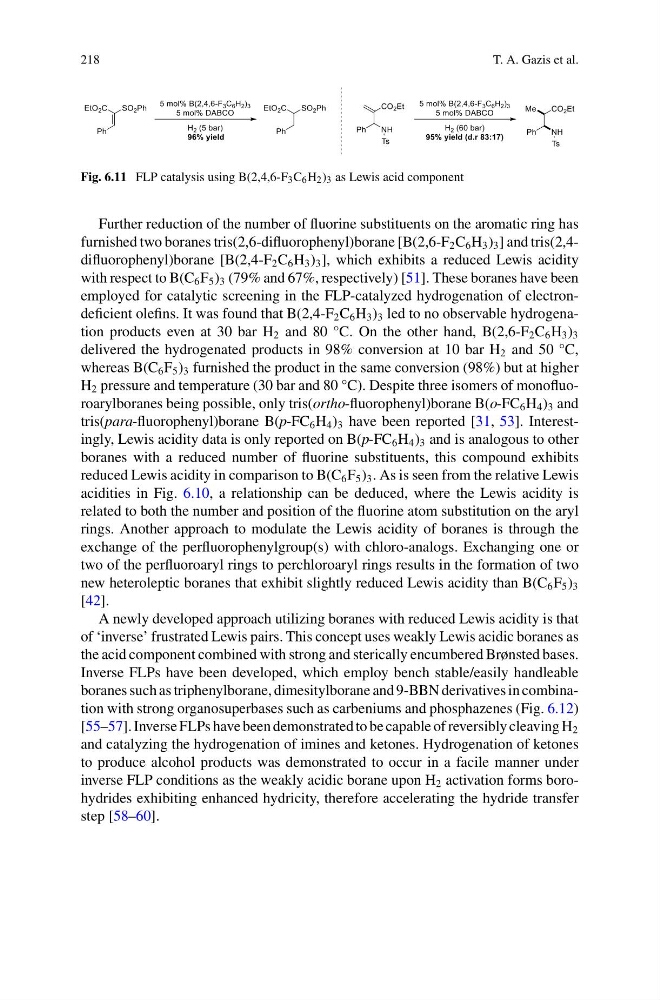
Fig. 6.11 FLP catalysis using B(2,4,6-F 3 C 6 H 2 ) 3 as Lewis acid component
Further reduction of the number of fluorine substituents on the aromatic ring has
furnished two boranes tris(2,6-difluorophenyl)borane [B(2,6-F 2 C 6 H 3 ) 3 ] and tris(2,4difluorophenyl)borane [B(2,4-F 2 C 6 H 3 ) 3 ], which exhibits a reduced Lewis acidity
with respect to B(C 6 F 5 ) 3 (79% and 67%, respectively) [51]. These boranes have been
employed for catalytic screening in the FLP-catalyzed hydrogenation of electrondeficient olefins. It was found that B(2,4-F 2 C 6 H 3 ) 3 led to no observable hydrogenation products even at 30 bar H 2 and 80 °C. On the other hand, B(2,6-F 2 C 6 H 3 ) 3
delivered the hydrogenated products in 98% conversion at 10 bar H 2 and 50 °C,
whereas B(C 6 F 5 ) 3 furnished the product in the same conversion (98%) but at higher
H 2 pressure and temperature (30 bar and 80 °C). Despite three isomers of monofluoroarylboranes being possible, only tris(ortho-fluorophenyl)borane B(o-FC 6 H 4 ) 3 and
tris(para-fluorophenyl)borane B(p-FC 6 H 4 ) 3 have been reported [31, 53]. Interestingly, Lewis acidity data is only reported on B(p-FC 6 H 4 ) 3 and is analogous to other
boranes with a reduced number of fluorine substituents, this compound exhibits
reduced Lewis acidity in comparison to B(C 6 F 5 ) 3 . As is seen from the relative Lewis
acidities in Fig. 6.10, a relationship can be deduced, where the Lewis acidity is
related to both the number and position of the fluorine atom substitution on the aryl
rings. Another approach to modulate the Lewis acidity of boranes is through the
exchange of the perfluorophenylgroup(s) with chloro-analogs. Exchanging one or
two of the perfluoroaryl rings to perchloroaryl rings results in the formation of two
new heteroleptic boranes that exhibit slightly reduced Lewis acidity than B(C 6 F 5 ) 3
[42].
A newly developed approach utilizing boranes with reduced Lewis acidity is that
of ‘inverse’ frustrated Lewis pairs. This concept uses weakly Lewis acidic boranes as
the acid component combined with strong and sterically encumbered Brønsted bases.
Inverse FLPs have been developed, which employ bench stable/easily handleable
boranes such as triphenylborane, dimesitylborane and 9-BBN derivatives in combination with strong organosuperbases such as carbeniums and phosphazenes (Fig. 6.12)
[55–57]. Inverse FLPs have been demonstrated to be capable of reversibly cleaving H 2
and catalyzing the hydrogenation of imines and ketones. Hydrogenation of ketones
to produce alcohol products was demonstrated to occur in a facile manner under
inverse FLP conditions as the weakly acidic borane upon H 2 activation forms borohydrides exhibiting enhanced hydricity, therefore accelerating the hydride transfer
step [58–60].
T. A. Gazis et al.
Fig. 6.11 FLP catalysis using B(2,4,6-F 3 C 6 H 2 ) 3 as Lewis acid component
Further reduction of the number of fluorine substituents on the aromatic ring has
furnished two boranes tris(2,6-difluorophenyl)borane [B(2,6-F 2 C 6 H 3 ) 3 ] and tris(2,4difluorophenyl)borane [B(2,4-F 2 C 6 H 3 ) 3 ], which exhibits a reduced Lewis acidity
with respect to B(C 6 F 5 ) 3 (79% and 67%, respectively) [51]. These boranes have been
employed for catalytic screening in the FLP-catalyzed hydrogenation of electrondeficient olefins. It was found that B(2,4-F 2 C 6 H 3 ) 3 led to no observable hydrogenation products even at 30 bar H 2 and 80 °C. On the other hand, B(2,6-F 2 C 6 H 3 ) 3
delivered the hydrogenated products in 98% conversion at 10 bar H 2 and 50 °C,
whereas B(C 6 F 5 ) 3 furnished the product in the same conversion (98%) but at higher
H 2 pressure and temperature (30 bar and 80 °C). Despite three isomers of monofluoroarylboranes being possible, only tris(ortho-fluorophenyl)borane B(o-FC 6 H 4 ) 3 and
tris(para-fluorophenyl)borane B(p-FC 6 H 4 ) 3 have been reported [31, 53]. Interestingly, Lewis acidity data is only reported on B(p-FC 6 H 4 ) 3 and is analogous to other
boranes with a reduced number of fluorine substituents, this compound exhibits
reduced Lewis acidity in comparison to B(C 6 F 5 ) 3 . As is seen from the relative Lewis
acidities in Fig. 6.10, a relationship can be deduced, where the Lewis acidity is
related to both the number and position of the fluorine atom substitution on the aryl
rings. Another approach to modulate the Lewis acidity of boranes is through the
exchange of the perfluorophenylgroup(s) with chloro-analogs. Exchanging one or
two of the perfluoroaryl rings to perchloroaryl rings results in the formation of two
new heteroleptic boranes that exhibit slightly reduced Lewis acidity than B(C 6 F 5 ) 3
[42].
A newly developed approach utilizing boranes with reduced Lewis acidity is that
of ‘inverse’ frustrated Lewis pairs. This concept uses weakly Lewis acidic boranes as
the acid component combined with strong and sterically encumbered Brønsted bases.
Inverse FLPs have been developed, which employ bench stable/easily handleable
boranes such as triphenylborane, dimesitylborane and 9-BBN derivatives in combination with strong organosuperbases such as carbeniums and phosphazenes (Fig. 6.12)
[55–57]. Inverse FLPs have been demonstrated to be capable of reversibly cleaving H 2
and catalyzing the hydrogenation of imines and ketones. Hydrogenation of ketones
to produce alcohol products was demonstrated to occur in a facile manner under
inverse FLP conditions as the weakly acidic borane upon H 2 activation forms borohydrides exhibiting enhanced hydricity, therefore accelerating the hydride transfer
step [58–60].