

6 Lewis Acidic Boranes in Frustrated Lewis Pair Chemistry
215
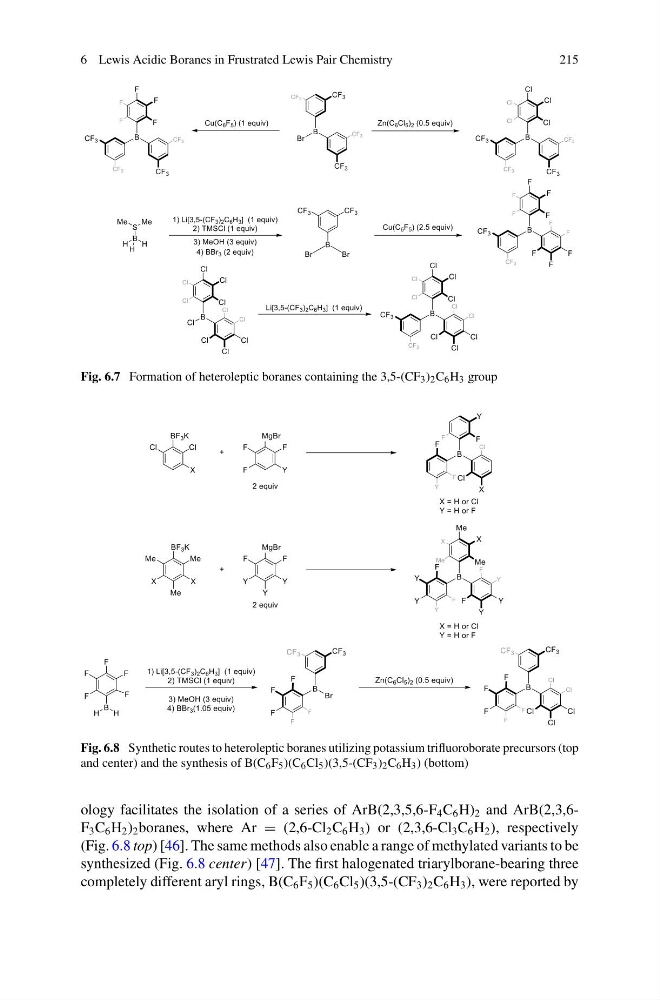
Fig. 6.7 Formation of heteroleptic boranes containing the 3,5-(CF 3 ) 2 C 6 H 3 group
Fig. 6.8 Synthetic routes to heteroleptic boranes utilizing potassium trifluoroborate precursors (top
and center) and the synthesis of B(C 6 F 5 )(C 6 Cl 5 )(3,5-(CF 3 ) 2 C 6 H 3 ) (bottom)
ology facilitates the isolation of a series of ArB(2,3,5,6-F 4 C 6 H) 2 and ArB(2,3,6F 3 C 6 H 2 ) 2 boranes, where Ar = (2,6-Cl 2 C 6 H 3 ) or (2,3,6-Cl 3 C 6 H 2 ), respectively
(Fig. 6.8 top) [46]. The same methods also enable a range of methylated variants to be
synthesized (Fig. 6.8 center) [47]. The first halogenated triarylborane-bearing three
completely different aryl rings, B(C 6 F 5 )(C 6 Cl 5 )(3,5-(CF 3 ) 2 C 6 H 3 ), were reported by
215
Fig. 6.7 Formation of heteroleptic boranes containing the 3,5-(CF 3 ) 2 C 6 H 3 group
Fig. 6.8 Synthetic routes to heteroleptic boranes utilizing potassium trifluoroborate precursors (top
and center) and the synthesis of B(C 6 F 5 )(C 6 Cl 5 )(3,5-(CF 3 ) 2 C 6 H 3 ) (bottom)
ology facilitates the isolation of a series of ArB(2,3,5,6-F 4 C 6 H) 2 and ArB(2,3,6F 3 C 6 H 2 ) 2 boranes, where Ar = (2,6-Cl 2 C 6 H 3 ) or (2,3,6-Cl 3 C 6 H 2 ), respectively
(Fig. 6.8 top) [46]. The same methods also enable a range of methylated variants to be
synthesized (Fig. 6.8 center) [47]. The first halogenated triarylborane-bearing three
completely different aryl rings, B(C 6 F 5 )(C 6 Cl 5 )(3,5-(CF 3 ) 2 C 6 H 3 ), were reported by