

214
T. A. Gazis et al.
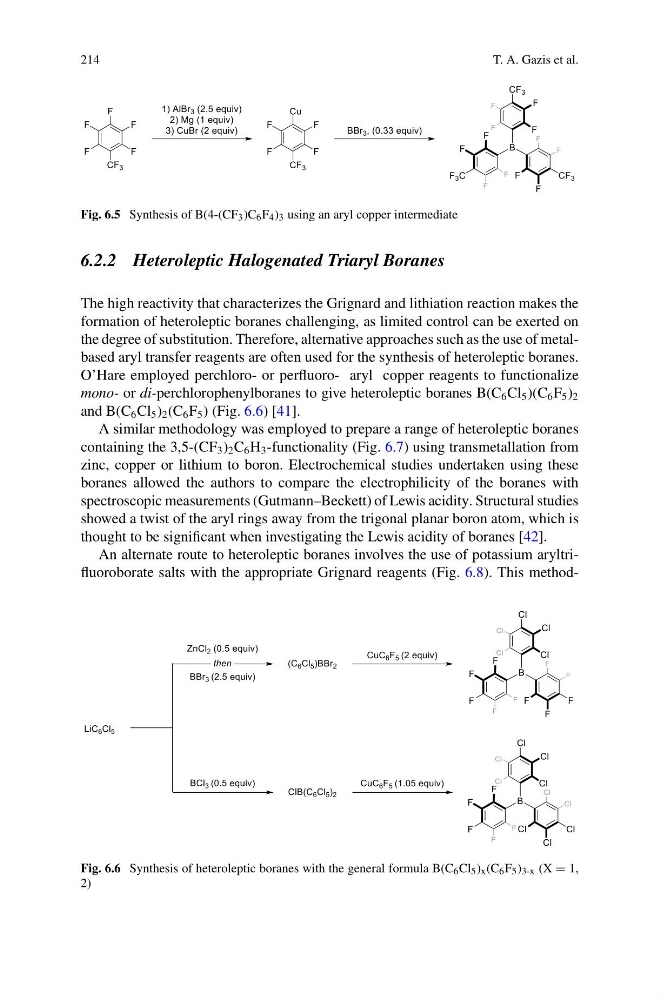
Fig. 6.5 Synthesis of B(4-(CF 3 )C 6 F 4 ) 3 using an aryl copper intermediate
6.2.2 Heteroleptic Halogenated Triaryl Boranes
The high reactivity that characterizes the Grignard and lithiation reaction makes the
formation of heteroleptic boranes challenging, as limited control can be exerted on
the degree of substitution. Therefore, alternative approaches such as the use of metalbased aryl transfer reagents are often used for the synthesis of heteroleptic boranes.
O’Hare employed perchloro- or perfluoro- aryl copper reagents to functionalize
mono- or di-perchlorophenylboranes to give heteroleptic boranes B(C 6 Cl 5 )(C 6 F 5 ) 2
and B(C 6 Cl 5 ) 2 (C 6 F 5 ) (Fig. 6.6) [41].
A similar methodology was employed to prepare a range of heteroleptic boranes
containing the 3,5-(CF 3 ) 2 C 6 H 3 -functionality (Fig. 6.7) using transmetallation from
zinc, copper or lithium to boron. Electrochemical studies undertaken using these
boranes allowed the authors to compare the electrophilicity of the boranes with
spectroscopic measurements (Gutmann–Beckett) of Lewis acidity. Structural studies
showed a twist of the aryl rings away from the trigonal planar boron atom, which is
thought to be significant when investigating the Lewis acidity of boranes [42].
An alternate route to heteroleptic boranes involves the use of potassium aryltrifluoroborate salts with the appropriate Grignard reagents (Fig. 6.8). This methodFig. 6.6 Synthesis of heteroleptic boranes with the general formula B(C 6 Cl 5 ) x (C 6 F 5 ) 3-x (X = 1,
2)
T. A. Gazis et al.
Fig. 6.5 Synthesis of B(4-(CF 3 )C 6 F 4 ) 3 using an aryl copper intermediate
6.2.2 Heteroleptic Halogenated Triaryl Boranes
The high reactivity that characterizes the Grignard and lithiation reaction makes the
formation of heteroleptic boranes challenging, as limited control can be exerted on
the degree of substitution. Therefore, alternative approaches such as the use of metalbased aryl transfer reagents are often used for the synthesis of heteroleptic boranes.
O’Hare employed perchloro- or perfluoro- aryl copper reagents to functionalize
mono- or di-perchlorophenylboranes to give heteroleptic boranes B(C 6 Cl 5 )(C 6 F 5 ) 2
and B(C 6 Cl 5 ) 2 (C 6 F 5 ) (Fig. 6.6) [41].
A similar methodology was employed to prepare a range of heteroleptic boranes
containing the 3,5-(CF 3 ) 2 C 6 H 3 -functionality (Fig. 6.7) using transmetallation from
zinc, copper or lithium to boron. Electrochemical studies undertaken using these
boranes allowed the authors to compare the electrophilicity of the boranes with
spectroscopic measurements (Gutmann–Beckett) of Lewis acidity. Structural studies
showed a twist of the aryl rings away from the trigonal planar boron atom, which is
thought to be significant when investigating the Lewis acidity of boranes [42].
An alternate route to heteroleptic boranes involves the use of potassium aryltrifluoroborate salts with the appropriate Grignard reagents (Fig. 6.8). This methodFig. 6.6 Synthesis of heteroleptic boranes with the general formula B(C 6 Cl 5 ) x (C 6 F 5 ) 3-x (X = 1,
2)