

198
M. Heshmat et al.
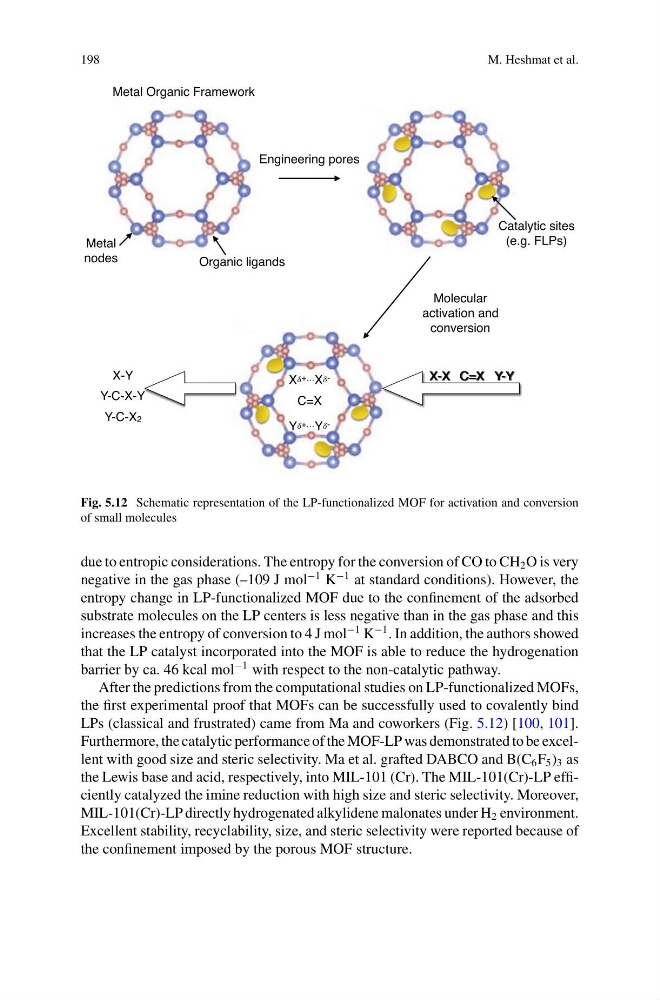
Fig. 5.12 Schematic representation of the LP-functionalized MOF for activation and conversion
of small molecules
due to entropic considerations. The entropy for the conversion of CO to CH 2 O is very
negative in the gas phase (–109 J mol
−1 K
−1 at standard conditions). However, the
entropy change in LP-functionalized MOF due to the confinement of the adsorbed
substrate molecules on the LP centers is less negative than in the gas phase and this
increases the entropy of conversion to 4 J mol
−1 K
−1 . In addition, the authors showed
that the LP catalyst incorporated into the MOF is able to reduce the hydrogenation
barrier by ca. 46 kcal mol
−1 with respect to the non-catalytic pathway.
After the predictions from the computational studies on LP-functionalized MOFs,
the first experimental proof that MOFs can be successfully used to covalently bind
LPs (classical and frustrated) came from Ma and coworkers (Fig. 5.12) [100, 101].
Furthermore, the catalytic performance of the MOF-LP was demonstrated to be excellent with good size and steric selectivity. Ma et al. grafted DABCO and B(C 6 F 5 ) 3 as
the Lewis base and acid, respectively, into MIL-101 (Cr). The MIL-101(Cr)-LP efficiently catalyzed the imine reduction with high size and steric selectivity. Moreover,
MIL-101(Cr)-LP directly hydrogenated alkylidene malonates under H 2 environment.
Excellent stability, recyclability, size, and steric selectivity were reported because of
the confinement imposed by the porous MOF structure.
M. Heshmat et al.
Fig. 5.12 Schematic representation of the LP-functionalized MOF for activation and conversion
of small molecules
due to entropic considerations. The entropy for the conversion of CO to CH 2 O is very
negative in the gas phase (–109 J mol
−1 K
−1 at standard conditions). However, the
entropy change in LP-functionalized MOF due to the confinement of the adsorbed
substrate molecules on the LP centers is less negative than in the gas phase and this
increases the entropy of conversion to 4 J mol
−1 K
−1 . In addition, the authors showed
that the LP catalyst incorporated into the MOF is able to reduce the hydrogenation
barrier by ca. 46 kcal mol
−1 with respect to the non-catalytic pathway.
After the predictions from the computational studies on LP-functionalized MOFs,
the first experimental proof that MOFs can be successfully used to covalently bind
LPs (classical and frustrated) came from Ma and coworkers (Fig. 5.12) [100, 101].
Furthermore, the catalytic performance of the MOF-LP was demonstrated to be excellent with good size and steric selectivity. Ma et al. grafted DABCO and B(C 6 F 5 ) 3 as
the Lewis base and acid, respectively, into MIL-101 (Cr). The MIL-101(Cr)-LP efficiently catalyzed the imine reduction with high size and steric selectivity. Moreover,
MIL-101(Cr)-LP directly hydrogenated alkylidene malonates under H 2 environment.
Excellent stability, recyclability, size, and steric selectivity were reported because of
the confinement imposed by the porous MOF structure.