

4 FLP-Mediated C–H-Activation
147
NMe 2
B(C 6 R 5 ) 2
Ar-H (neat)
NMe 2
B(C 6 R 5 )
Ar
- H-H
120 °C, 10 min
- C 6 R 5 D
Ar D
NMe 2
B(OCD 3 ) 2
+
CD 3 OD
R=H 20a
R=F 20b
Int47
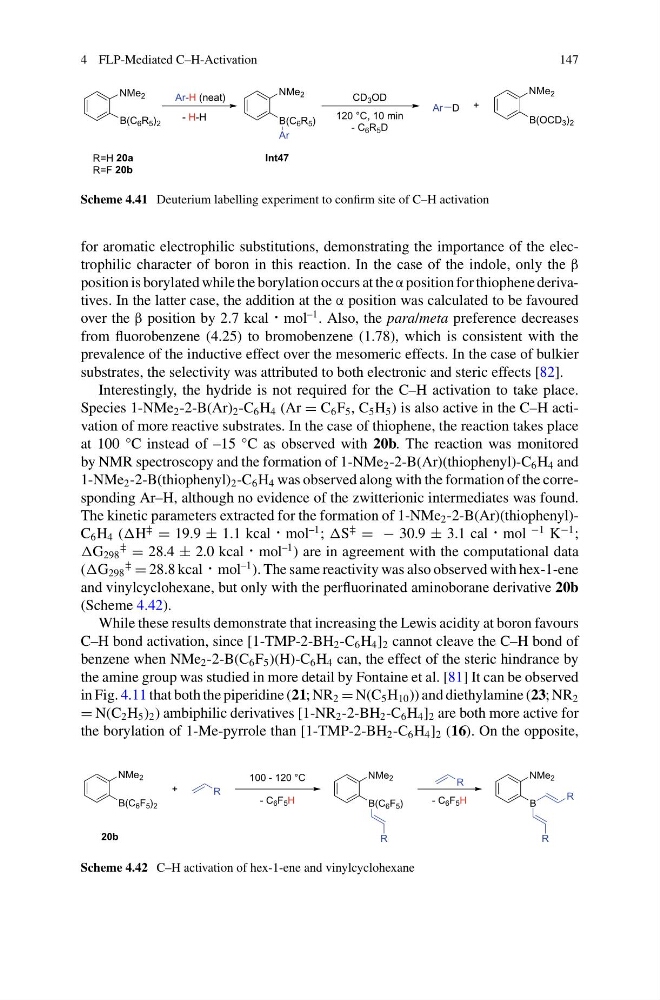
Scheme 4.41 Deuterium labelling experiment to confirm site of C–H activation
for aromatic electrophilic substitutions, demonstrating the importance of the electrophilic character of boron in this reaction. In the case of the indole, only the β
position is borylated while the borylation occurs at the α position for thiophene derivatives. In the latter case, the addition at the α position was calculated to be favoured
over the β position by 2.7 kcal‧mol
–1 . Also, the para/meta preference decreases
from fluorobenzene (4.25) to bromobenzene (1.78), which is consistent with the
prevalence of the inductive effect over the mesomeric effects. In the case of bulkier
substrates, the selectivity was attributed to both electronic and steric effects [82].
Interestingly, the hydride is not required for the C–H activation to take place.
Species 1-NMe 2 -2-B(Ar) 2 -C 6 H 4 (Ar = C 6 F 5 , C 5 H 5 ) is also active in the C–H activation of more reactive substrates. In the case of thiophene, the reaction takes place
at 100 °C instead of –15 °C as observed with 20b. The reaction was monitored
by NMR spectroscopy and the formation of 1-NMe 2 -2-B(Ar)(thiophenyl)-C 6 H 4 and
1-NMe 2 -2-B(thiophenyl) 2 -C 6 H 4 was observed along with the formation of the corresponding Ar–H, although no evidence of the zwitterionic intermediates was found.
The kinetic parameters extracted for the formation of 1-NMe 2 -2-B(Ar)(thiophenyl)C 6 H 4 (
⧧
= 19.9 ± 1.1 kcal‧mol
–1 ;
⧧
= − 30.9 ± 3.1 cal‧mol
−1 K
−1 ;
298
⧧
= 28.4 ± 2.0 kcal‧mol
–1 ) are in agreement with the computational data
( 298
⧧
= 28.8 kcal‧mol
–1 ). The same reactivity was also observed with hex-1-ene
and vinylcyclohexane, but only with the perfluorinated aminoborane derivative 20b
(Scheme 4.42).
While these results demonstrate that increasing the Lewis acidity at boron favours
C–H bond activation, since [1-TMP-2-BH 2 -C 6 H 4 ] 2 cannot cleave the C–H bond of
benzene when NMe 2 -2-B(C 6 F 5 )(H)-C 6 H 4 can, the effect of the steric hindrance by
the amine group was studied in more detail by Fontaine et al. [81] It can be observed
in Fig. 4.11 that both the piperidine (21; NR 2 = N(C 5 H 10 )) and diethylamine (23; NR 2
= N(C 2 H 5 ) 2 ) ambiphilic derivatives [1-NR 2 -2-BH 2 -C 6 H 4 ] 2 are both more active for
the borylation of 1-Me-pyrrole than [1-TMP-2-BH 2 -C 6 H 4 ] 2 (16). On the opposite,
NMe 2
B(C 6 F 5 ) 2
R
- C 6 F 5 H
100 - 120 °C
NMe 2
B(C 6 F 5 )
R
+
R
- C 6 F 5 H
NMe 2
B
R
R
20b
Scheme 4.42 C–H activation of hex-1-ene and vinylcyclohexane
147
NMe 2
B(C 6 R 5 ) 2
Ar-H (neat)
NMe 2
B(C 6 R 5 )
Ar
- H-H
120 °C, 10 min
- C 6 R 5 D
Ar D
NMe 2
B(OCD 3 ) 2
+
CD 3 OD
R=H 20a
R=F 20b
Int47
Scheme 4.41 Deuterium labelling experiment to confirm site of C–H activation
for aromatic electrophilic substitutions, demonstrating the importance of the electrophilic character of boron in this reaction. In the case of the indole, only the β
position is borylated while the borylation occurs at the α position for thiophene derivatives. In the latter case, the addition at the α position was calculated to be favoured
over the β position by 2.7 kcal‧mol
–1 . Also, the para/meta preference decreases
from fluorobenzene (4.25) to bromobenzene (1.78), which is consistent with the
prevalence of the inductive effect over the mesomeric effects. In the case of bulkier
substrates, the selectivity was attributed to both electronic and steric effects [82].
Interestingly, the hydride is not required for the C–H activation to take place.
Species 1-NMe 2 -2-B(Ar) 2 -C 6 H 4 (Ar = C 6 F 5 , C 5 H 5 ) is also active in the C–H activation of more reactive substrates. In the case of thiophene, the reaction takes place
at 100 °C instead of –15 °C as observed with 20b. The reaction was monitored
by NMR spectroscopy and the formation of 1-NMe 2 -2-B(Ar)(thiophenyl)-C 6 H 4 and
1-NMe 2 -2-B(thiophenyl) 2 -C 6 H 4 was observed along with the formation of the corresponding Ar–H, although no evidence of the zwitterionic intermediates was found.
The kinetic parameters extracted for the formation of 1-NMe 2 -2-B(Ar)(thiophenyl)C 6 H 4 (
⧧
= 19.9 ± 1.1 kcal‧mol
–1 ;
⧧
= − 30.9 ± 3.1 cal‧mol
−1 K
−1 ;
298
⧧
= 28.4 ± 2.0 kcal‧mol
–1 ) are in agreement with the computational data
( 298
⧧
= 28.8 kcal‧mol
–1 ). The same reactivity was also observed with hex-1-ene
and vinylcyclohexane, but only with the perfluorinated aminoborane derivative 20b
(Scheme 4.42).
While these results demonstrate that increasing the Lewis acidity at boron favours
C–H bond activation, since [1-TMP-2-BH 2 -C 6 H 4 ] 2 cannot cleave the C–H bond of
benzene when NMe 2 -2-B(C 6 F 5 )(H)-C 6 H 4 can, the effect of the steric hindrance by
the amine group was studied in more detail by Fontaine et al. [81] It can be observed
in Fig. 4.11 that both the piperidine (21; NR 2 = N(C 5 H 10 )) and diethylamine (23; NR 2
= N(C 2 H 5 ) 2 ) ambiphilic derivatives [1-NR 2 -2-BH 2 -C 6 H 4 ] 2 are both more active for
the borylation of 1-Me-pyrrole than [1-TMP-2-BH 2 -C 6 H 4 ] 2 (16). On the opposite,
NMe 2
B(C 6 F 5 ) 2
R
- C 6 F 5 H
100 - 120 °C
NMe 2
B(C 6 F 5 )
R
+
R
- C 6 F 5 H
NMe 2
B
R
R
20b
Scheme 4.42 C–H activation of hex-1-ene and vinylcyclohexane