

4 FLP-Mediated C–H-Activation
135
B(C 6 F 5 ) 3
Si H
H
H
Ph
B(C 6 F 5 ) 3
Si H
H H
Ph
B(C 6 F 5 ) 3
Me 2 N
NMe 2
H 2 PhSi H
H B(C 6 F 5 ) 3
PhSiH 3
NMe 2
Int26
Int28
NMe 2
H 2 PhSi
+
H-H
Int27
δ δ
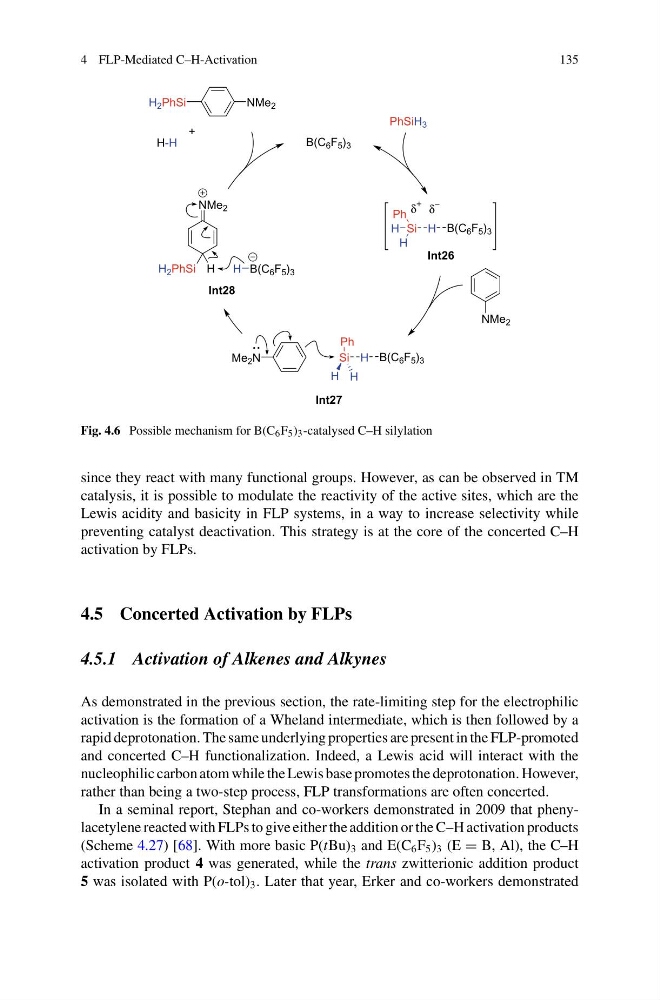
Fig. 4.6 Possible mechanism for B(C 6 F 5 ) 3 -catalysed C–H silylation
since they react with many functional groups. However, as can be observed in TM
catalysis, it is possible to modulate the reactivity of the active sites, which are the
Lewis acidity and basicity in FLP systems, in a way to increase selectivity while
preventing catalyst deactivation. This strategy is at the core of the concerted C–H
activation by FLPs.
4.5 Concerted Activation by FLPs
4.5.1 Activation of Alkenes and Alkynes
As demonstrated in the previous section, the rate-limiting step for the electrophilic
activation is the formation of a Wheland intermediate, which is then followed by a
rapid deprotonation. The same underlying properties are present in the FLP-promoted
and concerted C–H functionalization. Indeed, a Lewis acid will interact with the
nucleophilic carbon atom while the Lewis base promotes the deprotonation. However,
rather than being a two-step process, FLP transformations are often concerted.
In a seminal report, Stephan and co-workers demonstrated in 2009 that phenylacetylene reacted with FLPs to give either the addition or the C–H activation products
(Scheme 4.27) [68]. With more basic P(tBu) 3 and E(C 6 F 5 ) 3 (E = B, Al), the C–H
activation product 4 was generated, while the trans zwitterionic addition product
5 was isolated with P(o-tol) 3 . Later that year, Erker and co-workers demonstrated
135
B(C 6 F 5 ) 3
Si H
H
H
Ph
B(C 6 F 5 ) 3
Si H
H H
Ph
B(C 6 F 5 ) 3
Me 2 N
NMe 2
H 2 PhSi H
H B(C 6 F 5 ) 3
PhSiH 3
NMe 2
Int26
Int28
NMe 2
H 2 PhSi
+
H-H
Int27
δ δ
Fig. 4.6 Possible mechanism for B(C 6 F 5 ) 3 -catalysed C–H silylation
since they react with many functional groups. However, as can be observed in TM
catalysis, it is possible to modulate the reactivity of the active sites, which are the
Lewis acidity and basicity in FLP systems, in a way to increase selectivity while
preventing catalyst deactivation. This strategy is at the core of the concerted C–H
activation by FLPs.
4.5 Concerted Activation by FLPs
4.5.1 Activation of Alkenes and Alkynes
As demonstrated in the previous section, the rate-limiting step for the electrophilic
activation is the formation of a Wheland intermediate, which is then followed by a
rapid deprotonation. The same underlying properties are present in the FLP-promoted
and concerted C–H functionalization. Indeed, a Lewis acid will interact with the
nucleophilic carbon atom while the Lewis base promotes the deprotonation. However,
rather than being a two-step process, FLP transformations are often concerted.
In a seminal report, Stephan and co-workers demonstrated in 2009 that phenylacetylene reacted with FLPs to give either the addition or the C–H activation products
(Scheme 4.27) [68]. With more basic P(tBu) 3 and E(C 6 F 5 ) 3 (E = B, Al), the C–H
activation product 4 was generated, while the trans zwitterionic addition product
5 was isolated with P(o-tol) 3 . Later that year, Erker and co-workers demonstrated