

3 FLP Reduction of Carbon Monoxide and Related Reactions
103
O
C H
(C 6 F 5 ) 3 B
B(C 6 F 5 ) 3
90
O
(C 6 F 5 ) 2 B
H
C 6 F 5
B(C 6 F 5 ) 3
91
O
C H
(C 6 F 5 ) 3 B
ScCp* 2
92
t
Bu 3 PH
O
H
(C 6 F 5 ) 2 B
N
27
t
Bu 3 PH
O
(C 6 F 5 ) 2 B
H
C 6 F 5
ScCp* 2
93
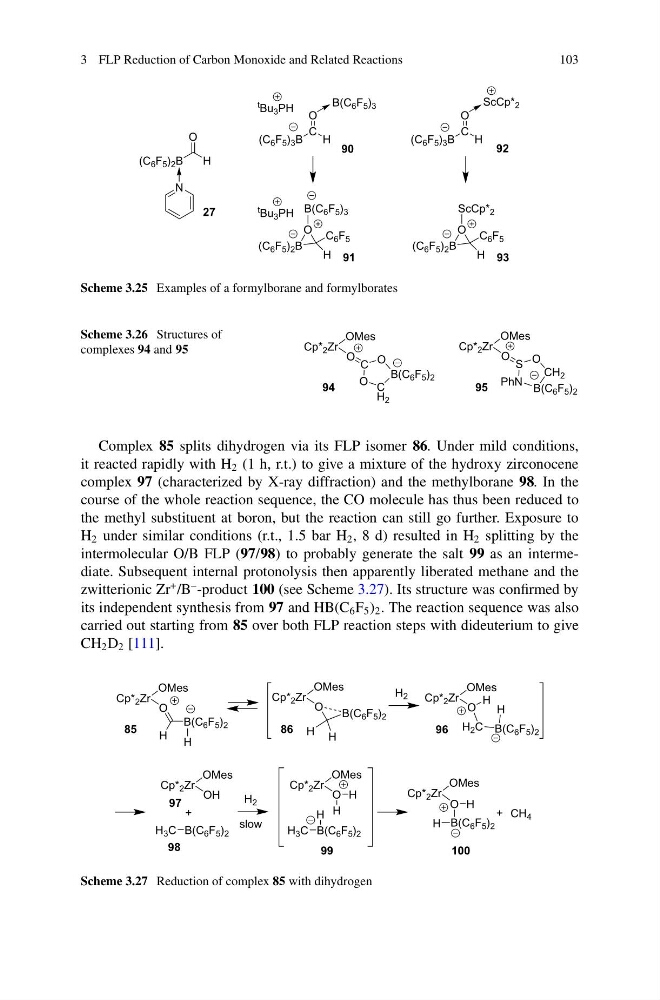
Scheme 3.25 Examples of a formylborane and formylborates
Scheme 3.26 Structures of
complexes 94 and 95
Cp* 2 Zr
OMes
O
94
C
O C
H 2
B(C 6 F 5 ) 2
O
Cp* 2 Zr
OMes
O
95
S
PhN B(C 6 F 5 ) 2
CH 2
O
Complex 85 splits dihydrogen via its FLP isomer 86. Under mild conditions,
it reacted rapidly with H 2 (1 h, r.t.) to give a mixture of the hydroxy zirconocene
complex 97 (characterized by X-ray diffraction) and the methylborane 98. In the
course of the whole reaction sequence, the CO molecule has thus been reduced to
the methyl substituent at boron, but the reaction can still go further. Exposure to
H 2 under similar conditions (r.t., 1.5 bar H 2 , 8 d) resulted in H 2 splitting by the
intermolecular O/B FLP (97/98) to probably generate the salt 99 as an intermediate. Subsequent internal protonolysis then apparently liberated methane and the
zwitterionic Zr
+ /B
– -product 100 (see Scheme 3.27). Its structure was confirmed by
its independent synthesis from 97 and HB(C 6 F 5 ) 2 . The reaction sequence was also
carried out starting from 85 over both FLP reaction steps with dideuterium to give
CH 2 D 2 [111].
H 2 Cp* 2 Zr
OMes
O
96 H 2 C B(C 6 F 5 ) 2
H
H
Cp* 2 Zr
OMes
OH
+
H 3 C B(C 6 F 5 ) 2
97
98
slow
Cp* 2 Zr
OMes
O
H 3 C B(C 6 F 5 ) 2
99
H
H
H
Cp* 2 Zr
OMes
O H
B(C 6 F 5 ) 2
H
+ CH 4
100
Cp* 2 Zr
OMes
O
85
B(C 6 F 5 ) 2
H H
Cp* 2 Zr
OMes
O
86
B(C 6 F 5 ) 2
H H
H 2
Scheme 3.27 Reduction of complex 85 with dihydrogen
103
O
C H
(C 6 F 5 ) 3 B
B(C 6 F 5 ) 3
90
O
(C 6 F 5 ) 2 B
H
C 6 F 5
B(C 6 F 5 ) 3
91
O
C H
(C 6 F 5 ) 3 B
ScCp* 2
92
t
Bu 3 PH
O
H
(C 6 F 5 ) 2 B
N
27
t
Bu 3 PH
O
(C 6 F 5 ) 2 B
H
C 6 F 5
ScCp* 2
93
Scheme 3.25 Examples of a formylborane and formylborates
Scheme 3.26 Structures of
complexes 94 and 95
Cp* 2 Zr
OMes
O
94
C
O C
H 2
B(C 6 F 5 ) 2
O
Cp* 2 Zr
OMes
O
95
S
PhN B(C 6 F 5 ) 2
CH 2
O
Complex 85 splits dihydrogen via its FLP isomer 86. Under mild conditions,
it reacted rapidly with H 2 (1 h, r.t.) to give a mixture of the hydroxy zirconocene
complex 97 (characterized by X-ray diffraction) and the methylborane 98. In the
course of the whole reaction sequence, the CO molecule has thus been reduced to
the methyl substituent at boron, but the reaction can still go further. Exposure to
H 2 under similar conditions (r.t., 1.5 bar H 2 , 8 d) resulted in H 2 splitting by the
intermolecular O/B FLP (97/98) to probably generate the salt 99 as an intermediate. Subsequent internal protonolysis then apparently liberated methane and the
zwitterionic Zr
+ /B
– -product 100 (see Scheme 3.27). Its structure was confirmed by
its independent synthesis from 97 and HB(C 6 F 5 ) 2 . The reaction sequence was also
carried out starting from 85 over both FLP reaction steps with dideuterium to give
CH 2 D 2 [111].
H 2 Cp* 2 Zr
OMes
O
96 H 2 C B(C 6 F 5 ) 2
H
H
Cp* 2 Zr
OMes
OH
+
H 3 C B(C 6 F 5 ) 2
97
98
slow
Cp* 2 Zr
OMes
O
H 3 C B(C 6 F 5 ) 2
99
H
H
H
Cp* 2 Zr
OMes
O H
B(C 6 F 5 ) 2
H
+ CH 4
100
Cp* 2 Zr
OMes
O
85
B(C 6 F 5 ) 2
H H
Cp* 2 Zr
OMes
O
86
B(C 6 F 5 ) 2
H H
H 2
Scheme 3.27 Reduction of complex 85 with dihydrogen