

3 FLP Reduction of Carbon Monoxide and Related Reactions
99
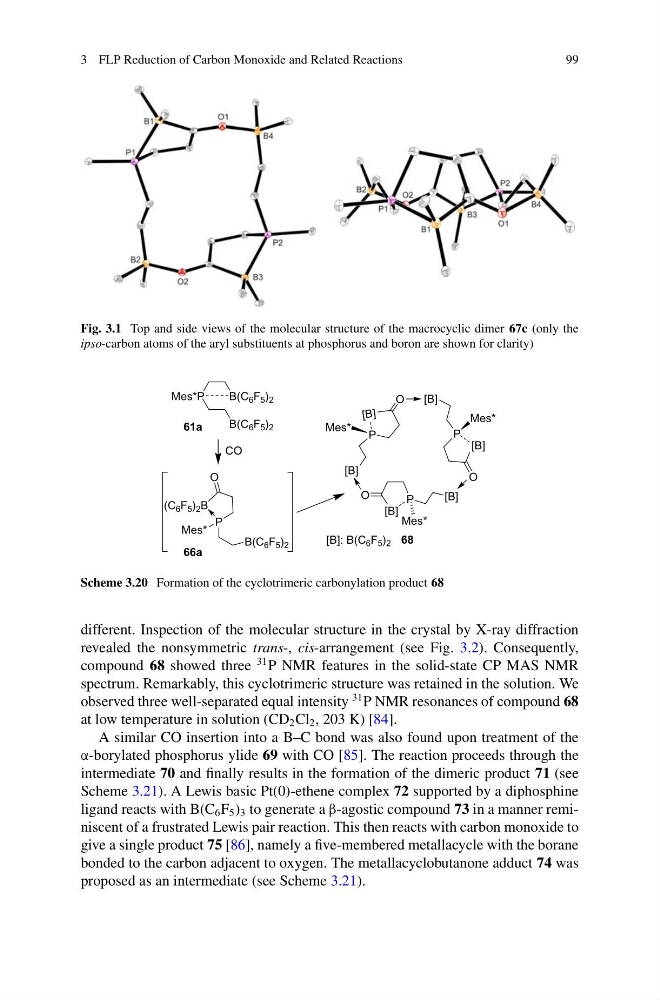
Fig. 3.1 Top and side views of the molecular structure of the macrocyclic dimer 67c (only the
ipso-carbon atoms of the aryl substituents at phosphorus and boron are shown for clarity)
Mes*P
B(C 6 F 5 ) 2
B(C 6 F 5 ) 2
61a
CO
(C 6 F 5 ) 2 B
P
B(C 6 F 5 ) 2
O
Mes*
66a
[B]
P
Mes*
[B]
O
[B]
P
Mes*
[B]
O
[B]
P
Mes*
[B]
O
68
[B]: B(C 6 F 5 ) 2
Scheme 3.20 Formation of the cyclotrimeric carbonylation product 68
different. Inspection of the molecular structure in the crystal by X-ray diffraction
revealed the nonsymmetric trans-, cis-arrangement (see Fig. 3.2). Consequently,
compound 68 showed three
31 P NMR features in the solid-state CP MAS NMR
spectrum. Remarkably, this cyclotrimeric structure was retained in the solution. We
observed three well-separated equal intensity
31 P NMR resonances of compound 68
at low temperature in solution (CD 2 Cl 2 , 203 K) [84].
A similar CO insertion into a B–C bond was also found upon treatment of the
α-borylated phosphorus ylide 69 with CO [85]. The reaction proceeds through the
intermediate 70 and finally results in the formation of the dimeric product 71 (see
Scheme 3.21). A Lewis basic Pt(0)-ethene complex 72 supported by a diphosphine
ligand reacts with B(C 6 F 5 ) 3 to generate a β-agostic compound 73 in a manner reminiscent of a frustrated Lewis pair reaction. This then reacts with carbon monoxide to
give a single product 75 [86], namely a five-membered metallacycle with the borane
bonded to the carbon adjacent to oxygen. The metallacyclobutanone adduct 74 was
proposed as an intermediate (see Scheme 3.21).
99
Fig. 3.1 Top and side views of the molecular structure of the macrocyclic dimer 67c (only the
ipso-carbon atoms of the aryl substituents at phosphorus and boron are shown for clarity)
Mes*P
B(C 6 F 5 ) 2
B(C 6 F 5 ) 2
61a
CO
(C 6 F 5 ) 2 B
P
B(C 6 F 5 ) 2
O
Mes*
66a
[B]
P
Mes*
[B]
O
[B]
P
Mes*
[B]
O
[B]
P
Mes*
[B]
O
68
[B]: B(C 6 F 5 ) 2
Scheme 3.20 Formation of the cyclotrimeric carbonylation product 68
different. Inspection of the molecular structure in the crystal by X-ray diffraction
revealed the nonsymmetric trans-, cis-arrangement (see Fig. 3.2). Consequently,
compound 68 showed three
31 P NMR features in the solid-state CP MAS NMR
spectrum. Remarkably, this cyclotrimeric structure was retained in the solution. We
observed three well-separated equal intensity
31 P NMR resonances of compound 68
at low temperature in solution (CD 2 Cl 2 , 203 K) [84].
A similar CO insertion into a B–C bond was also found upon treatment of the
α-borylated phosphorus ylide 69 with CO [85]. The reaction proceeds through the
intermediate 70 and finally results in the formation of the dimeric product 71 (see
Scheme 3.21). A Lewis basic Pt(0)-ethene complex 72 supported by a diphosphine
ligand reacts with B(C 6 F 5 ) 3 to generate a β-agostic compound 73 in a manner reminiscent of a frustrated Lewis pair reaction. This then reacts with carbon monoxide to
give a single product 75 [86], namely a five-membered metallacycle with the borane
bonded to the carbon adjacent to oxygen. The metallacyclobutanone adduct 74 was
proposed as an intermediate (see Scheme 3.21).