

3 FLP Reduction of Carbon Monoxide and Related Reactions
97
N
N
B
N
t
Bu
Ar
Ph
Li
Ar: 2,6-diisopropylphenyl
CO
N
N
B
N
t
Bu
Ar
Ph
C
O
Li
N
N
B
N
t
Bu
Ar
Ph
C
LiO
N
N
B
N
t
Bu
Ar
Ph
C
N
N
B
N
t
Bu
Ar
Ph
C
LiO
OLi
N
N
B
N
t
Bu
Ar
Ph
C
N
N
B
N
t
Bu
Ar
Ph
C
Me 3 SiO
OSiMe 3
2 Me 3 SiCl
55
56
57
58
59
- 2 LiCl
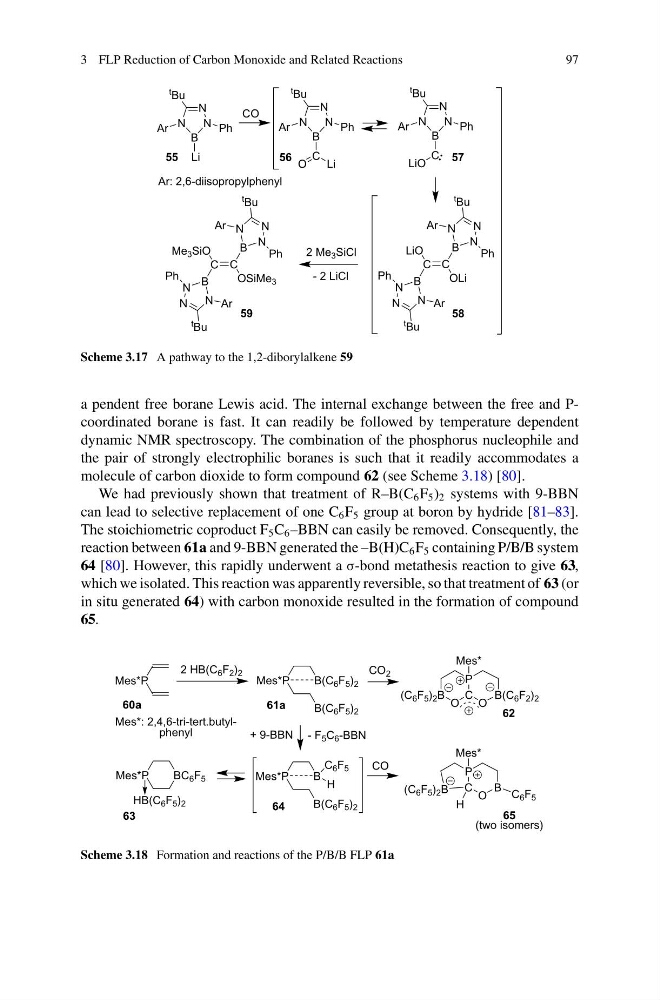
Scheme 3.17 A pathway to the 1,2-diborylalkene 59
a pendent free borane Lewis acid. The internal exchange between the free and Pcoordinated borane is fast. It can readily be followed by temperature dependent
dynamic NMR spectroscopy. The combination of the phosphorus nucleophile and
the pair of strongly electrophilic boranes is such that it readily accommodates a
molecule of carbon dioxide to form compound 62 (see Scheme 3.18) [80].
We had previously shown that treatment of R–B(C 6 F 5 ) 2 systems with 9-BBN
can lead to selective replacement of one C 6 F 5 group at boron by hydride [81–83].
The stoichiometric coproduct F 5 C 6 –BBN can easily be removed. Consequently, the
reaction between 61a and 9-BBN generated the –B(H)C 6 F 5 containing P/B/B system
64 [80]. However, this rapidly underwent a σ-bond metathesis reaction to give 63,
which we isolated. This reaction was apparently reversible, so that treatment of 63 (or
in situ generated 64) with carbon monoxide resulted in the formation of compound
65.
Mes*P
2 HB(C 6 F 2 ) 2
Mes*P
B(C 6 F 5 ) 2
B(C 6 F 5 ) 2
CO 2
(C 6 F 5 ) 2 B O
C
P
O
B(C 6 F 2 ) 2
Mes*
60a
61a
62
+ 9-BBN - F 5 C 6 -BBN
Mes*P
B(C 6 F 5 ) 2
B
64
C 6 F 5
H
Mes*P
BC 6 F 5
63
HB(C 6 F 5 ) 2
CO
(C 6 F 5 ) 2 B C
P
O
B
Mes*
H
C 6 F 5
65
(two isomers)
Mes*: 2,4,6-tri-tert.butylphenyl
Scheme 3.18 Formation and reactions of the P/B/B FLP 61a
97
N
N
B
N
t
Bu
Ar
Ph
Li
Ar: 2,6-diisopropylphenyl
CO
N
N
B
N
t
Bu
Ar
Ph
C
O
Li
N
N
B
N
t
Bu
Ar
Ph
C
LiO
N
N
B
N
t
Bu
Ar
Ph
C
N
N
B
N
t
Bu
Ar
Ph
C
LiO
OLi
N
N
B
N
t
Bu
Ar
Ph
C
N
N
B
N
t
Bu
Ar
Ph
C
Me 3 SiO
OSiMe 3
2 Me 3 SiCl
55
56
57
58
59
- 2 LiCl
Scheme 3.17 A pathway to the 1,2-diborylalkene 59
a pendent free borane Lewis acid. The internal exchange between the free and Pcoordinated borane is fast. It can readily be followed by temperature dependent
dynamic NMR spectroscopy. The combination of the phosphorus nucleophile and
the pair of strongly electrophilic boranes is such that it readily accommodates a
molecule of carbon dioxide to form compound 62 (see Scheme 3.18) [80].
We had previously shown that treatment of R–B(C 6 F 5 ) 2 systems with 9-BBN
can lead to selective replacement of one C 6 F 5 group at boron by hydride [81–83].
The stoichiometric coproduct F 5 C 6 –BBN can easily be removed. Consequently, the
reaction between 61a and 9-BBN generated the –B(H)C 6 F 5 containing P/B/B system
64 [80]. However, this rapidly underwent a σ-bond metathesis reaction to give 63,
which we isolated. This reaction was apparently reversible, so that treatment of 63 (or
in situ generated 64) with carbon monoxide resulted in the formation of compound
65.
Mes*P
2 HB(C 6 F 2 ) 2
Mes*P
B(C 6 F 5 ) 2
B(C 6 F 5 ) 2
CO 2
(C 6 F 5 ) 2 B O
C
P
O
B(C 6 F 2 ) 2
Mes*
60a
61a
62
+ 9-BBN - F 5 C 6 -BBN
Mes*P
B(C 6 F 5 ) 2
B
64
C 6 F 5
H
Mes*P
BC 6 F 5
63
HB(C 6 F 5 ) 2
CO
(C 6 F 5 ) 2 B C
P
O
B
Mes*
H
C 6 F 5
65
(two isomers)
Mes*: 2,4,6-tri-tert.butylphenyl
Scheme 3.18 Formation and reactions of the P/B/B FLP 61a