

3 FLP Reduction of Carbon Monoxide and Related Reactions
95
N
B(C 6 F 5 ) 2
N
B(C 6 F 5 ) 2
H
42
43
(C 6 F 5 ) 2 BH + CO
N
B(C 6 F 5 ) 2
O
44
H 2 C B(C 6 F 5 ) 2
H 2
N
B(C 6 F 5 ) 2
O
45
H 3 C B(C 6 F 5 ) 2
H
25
(C 6 F 5 ) 2 B
H
C O
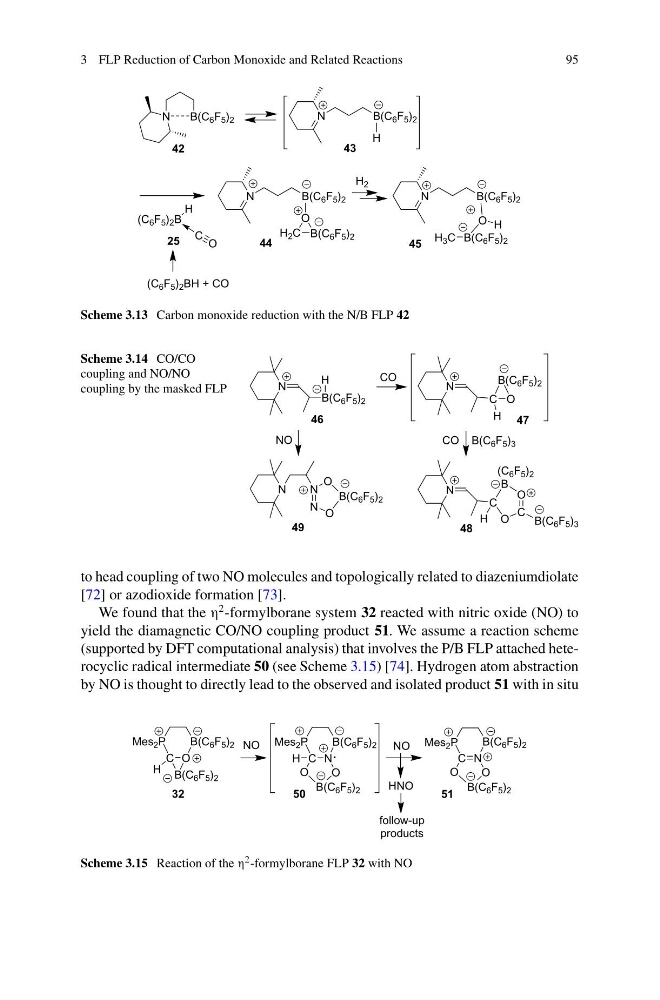
Scheme 3.13 Carbon monoxide reduction with the N/B FLP 42
Scheme 3.14 CO/CO
coupling and NO/NO
coupling by the masked FLP
N
B(C 6 F 5 ) 2
H
46
CO
NO
N
N
N
O
O
B(C 6 F 5 ) 2
49
N
C
47
B(C 6 F 5 ) 2
O
H
CO
N
C
B
O
H
O
C
B(C 6 F 5 ) 3
B(C 6 F 5 ) 3
(C 6 F 5 ) 2
48
to head coupling of two NO molecules and topologically related to diazeniumdiolate
[72] or azodioxide formation [73].
We found that the η
2 -formylborane system 32 reacted with nitric oxide (NO) to
yield the diamagnetic CO/NO coupling product 51. We assume a reaction scheme
(supported by DFT computational analysis) that involves the P/B FLP attached heterocyclic radical intermediate 50 (see Scheme 3.15) [74]. Hydrogen atom abstraction
by NO is thought to directly lead to the observed and isolated product 51 with in situ
Mes 2 P
B(C 6 F 5 ) 2
C O
B(C 6 F 5 ) 2
H
32
NO
50
Mes 2 P
B(C 6 F 5 ) 2
C N
O
O
B(C 6 F 5 ) 2
H
NO
HNO
follow-up
products
51
Mes 2 P
B(C 6 F 5 ) 2
C N
O
O
B(C 6 F 5 ) 2
Scheme 3.15 Reaction of the η 2 -formylborane FLP 32 with NO
95
N
B(C 6 F 5 ) 2
N
B(C 6 F 5 ) 2
H
42
43
(C 6 F 5 ) 2 BH + CO
N
B(C 6 F 5 ) 2
O
44
H 2 C B(C 6 F 5 ) 2
H 2
N
B(C 6 F 5 ) 2
O
45
H 3 C B(C 6 F 5 ) 2
H
25
(C 6 F 5 ) 2 B
H
C O
Scheme 3.13 Carbon monoxide reduction with the N/B FLP 42
Scheme 3.14 CO/CO
coupling and NO/NO
coupling by the masked FLP
N
B(C 6 F 5 ) 2
H
46
CO
NO
N
N
N
O
O
B(C 6 F 5 ) 2
49
N
C
47
B(C 6 F 5 ) 2
O
H
CO
N
C
B
O
H
O
C
B(C 6 F 5 ) 3
B(C 6 F 5 ) 3
(C 6 F 5 ) 2
48
to head coupling of two NO molecules and topologically related to diazeniumdiolate
[72] or azodioxide formation [73].
We found that the η
2 -formylborane system 32 reacted with nitric oxide (NO) to
yield the diamagnetic CO/NO coupling product 51. We assume a reaction scheme
(supported by DFT computational analysis) that involves the P/B FLP attached heterocyclic radical intermediate 50 (see Scheme 3.15) [74]. Hydrogen atom abstraction
by NO is thought to directly lead to the observed and isolated product 51 with in situ
Mes 2 P
B(C 6 F 5 ) 2
C O
B(C 6 F 5 ) 2
H
32
NO
50
Mes 2 P
B(C 6 F 5 ) 2
C N
O
O
B(C 6 F 5 ) 2
H
NO
HNO
follow-up
products
51
Mes 2 P
B(C 6 F 5 ) 2
C N
O
O
B(C 6 F 5 ) 2
Scheme 3.15 Reaction of the η 2 -formylborane FLP 32 with NO