

3 FLP Reduction of Carbon Monoxide and Related Reactions
93
B(C 6 F 5 ) 2
Mes 2 P
6
B(C 6 F 5 ) 2
Mes 2 P
CO
26
HB(C 6 F 5 ) 2
O
C B(C 6 F 5 ) 2
H
pyridine
O
H
(C 6 F 5 ) 2 B
N
27
H 2
K 2 Cr 2 O 7
O
O
(C 6 F 5 ) 2 B
30
H
2
B(C 6 F 5 ) 2
Mes 2 P
29
OH
C
B(C 6 F 5 ) 2
H
H
B(C 6 F 5 ) 2
Mes 2 P
28
O
C
H 2
B(C 6 F 5 ) 2
H
N
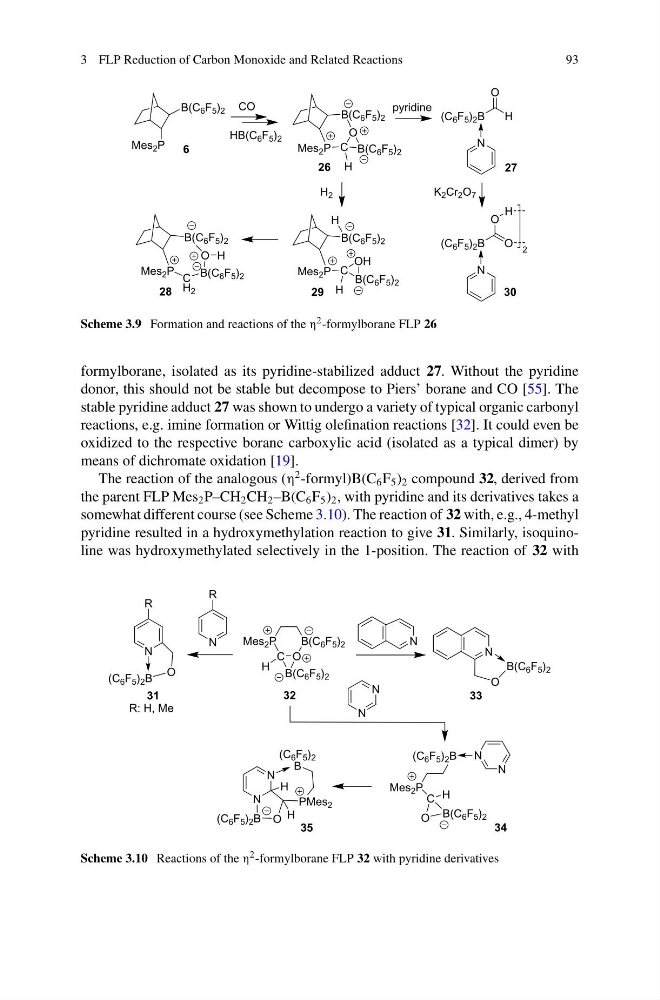
Scheme 3.9 Formation and reactions of the η 2 -formylborane FLP 26
formylborane, isolated as its pyridine-stabilized adduct 27. Without the pyridine
donor, this should not be stable but decompose to Piers’ borane and CO [55]. The
stable pyridine adduct 27 was shown to undergo a variety of typical organic carbonyl
reactions, e.g. imine formation or Wittig olefination reactions [32]. It could even be
oxidized to the respective borane carboxylic acid (isolated as a typical dimer) by
means of dichromate oxidation [19].
The reaction of the analogous (η
2 -formyl)B(C 6 F 5 ) 2 compound 32, derived from
the parent FLP Mes 2 P–CH 2 CH 2 –B(C 6 F 5 ) 2 , with pyridine and its derivatives takes a
somewhat different course (see Scheme 3.10). The reaction of 32 with, e.g., 4-methyl
pyridine resulted in a hydroxymethylation reaction to give 31. Similarly, isoquinoline was hydroxymethylated selectively in the 1-position. The reaction of 32 with
Mes 2 P
B(C 6 F 5 ) 2
C O
B(C 6 F 5 ) 2
H
32
N
R
N
O
R
31
N
N
O
B(C 6 F 5 ) 2
33
N
N
(C 6 F 5 ) 2 B
N
N
Mes 2 P
C
O
H
B(C 6 F 5 ) 2
34
N
N
(C 6 F 5 ) 2 B O
H
H
PMes 2
B
R: H, Me
35
(C 6 F 5 ) 2 B
(C 6 F 5 ) 2
Scheme 3.10 Reactions of the η 2 -formylborane FLP 32 with pyridine derivatives
93
B(C 6 F 5 ) 2
Mes 2 P
6
B(C 6 F 5 ) 2
Mes 2 P
CO
26
HB(C 6 F 5 ) 2
O
C B(C 6 F 5 ) 2
H
pyridine
O
H
(C 6 F 5 ) 2 B
N
27
H 2
K 2 Cr 2 O 7
O
O
(C 6 F 5 ) 2 B
30
H
2
B(C 6 F 5 ) 2
Mes 2 P
29
OH
C
B(C 6 F 5 ) 2
H
H
B(C 6 F 5 ) 2
Mes 2 P
28
O
C
H 2
B(C 6 F 5 ) 2
H
N
Scheme 3.9 Formation and reactions of the η 2 -formylborane FLP 26
formylborane, isolated as its pyridine-stabilized adduct 27. Without the pyridine
donor, this should not be stable but decompose to Piers’ borane and CO [55]. The
stable pyridine adduct 27 was shown to undergo a variety of typical organic carbonyl
reactions, e.g. imine formation or Wittig olefination reactions [32]. It could even be
oxidized to the respective borane carboxylic acid (isolated as a typical dimer) by
means of dichromate oxidation [19].
The reaction of the analogous (η
2 -formyl)B(C 6 F 5 ) 2 compound 32, derived from
the parent FLP Mes 2 P–CH 2 CH 2 –B(C 6 F 5 ) 2 , with pyridine and its derivatives takes a
somewhat different course (see Scheme 3.10). The reaction of 32 with, e.g., 4-methyl
pyridine resulted in a hydroxymethylation reaction to give 31. Similarly, isoquinoline was hydroxymethylated selectively in the 1-position. The reaction of 32 with
Mes 2 P
B(C 6 F 5 ) 2
C O
B(C 6 F 5 ) 2
H
32
N
R
N
O
R
31
N
N
O
B(C 6 F 5 ) 2
33
N
N
(C 6 F 5 ) 2 B
N
N
Mes 2 P
C
O
H
B(C 6 F 5 ) 2
34
N
N
(C 6 F 5 ) 2 B O
H
H
PMes 2
B
R: H, Me
35
(C 6 F 5 ) 2 B
(C 6 F 5 ) 2
Scheme 3.10 Reactions of the η 2 -formylborane FLP 32 with pyridine derivatives