

40
etc.—on top of caring for my ever-growing family, which now included my
mother and sisters. Now, at my age, it all looks impossible, unreal.
In order to survive, I had to set up a bunk bed in the building under the
measuring instruments of the Bordeaux Telescope. I slept there from sunrise
till lunchtime so that the children would not wake me. By 1964 we had two
children and were still living in the former quarters of the Meteorological
Observatory Chief. This odd situation continued night after night. I had in
mind what Professor Barbier once told me when we dined at Haute-Provence
Observatory: ‘There are only two kinds of astronomers, liars and cynics. The
former,’ he said, ‘always make a public show of complaining about cloud preventing them from observing, and the latter pray to be clouded out.’
The excellent results that we were publishing on the zodiacal light also
served to prove, with hard data, the exceptional astronomical conditions of
the Canarian summits. Our publications also attracted the attention of
Professor Ring of Imperial College London, who in the early seventies was
installing at our observatory what would for that time become the world’s
largest infrared telescope. We had agreed that he would send a student of his
to study the motion of interplanetary dust particles by means of Doppler shift
measurements of the zodiacal light. The student was none other than Brian
May, who would later leave astrophysics to become the celebrated guitarist of
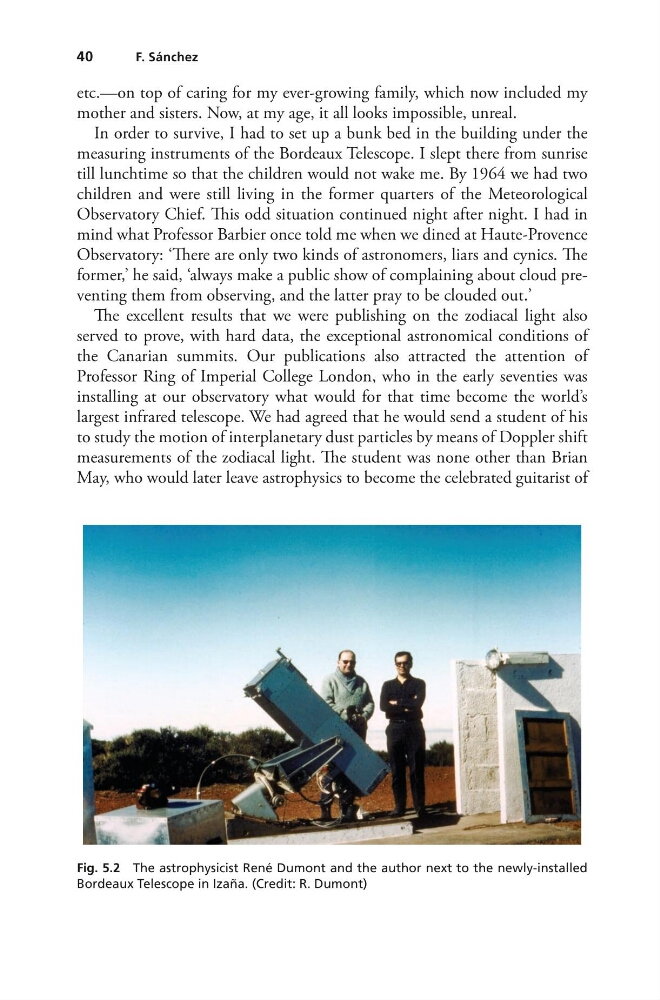
Fig. 5.2 The astrophysicist René Dumont and the author next to the newly-installed
Bordeaux Telescope in Izaña. (Credit: R. Dumont)
F. Sánchez
etc.—on top of caring for my ever-growing family, which now included my
mother and sisters. Now, at my age, it all looks impossible, unreal.
In order to survive, I had to set up a bunk bed in the building under the
measuring instruments of the Bordeaux Telescope. I slept there from sunrise
till lunchtime so that the children would not wake me. By 1964 we had two
children and were still living in the former quarters of the Meteorological
Observatory Chief. This odd situation continued night after night. I had in
mind what Professor Barbier once told me when we dined at Haute-Provence
Observatory: ‘There are only two kinds of astronomers, liars and cynics. The
former,’ he said, ‘always make a public show of complaining about cloud preventing them from observing, and the latter pray to be clouded out.’
The excellent results that we were publishing on the zodiacal light also
served to prove, with hard data, the exceptional astronomical conditions of
the Canarian summits. Our publications also attracted the attention of
Professor Ring of Imperial College London, who in the early seventies was
installing at our observatory what would for that time become the world’s
largest infrared telescope. We had agreed that he would send a student of his
to study the motion of interplanetary dust particles by means of Doppler shift
measurements of the zodiacal light. The student was none other than Brian
May, who would later leave astrophysics to become the celebrated guitarist of
Fig. 5.2 The astrophysicist René Dumont and the author next to the newly-installed
Bordeaux Telescope in Izaña. (Credit: R. Dumont)
F. Sánchez