

39
so we shall supply the sky (“buildable land”) and you, the telescopes so that
we can then work together’ (Chap. 10).
In 1964 we began systematic all-sky observations of the zodiacal light with
the telescope provisionally set up next to a primitive building that had been
abandoned by the meteorologists, where we already had a system for measuring atmospheric transparency. The power supply, measuring systems, and
control post were set up in the building. The 30-cm spectrophotopolarimetric
telescope was an advanced instrument for its day and was specially designed
to measure diffuse sources; today it stands on exhibit in the foyer of the library
at IAC headquarters in La Laguna. We had at last managed to acquire a professional instrument for the observatory that we wanted to build in the
Canaries. It is worth emphasizing that, with the data from this instrument, we
carried out the first astrophysical observations, published the first results, and
wrote the first Spanish doctoral theses in astrophysics.
I remember those times in the sixties and seventies when I had unlimited
energy for everything: site testing during the day, observing with the Bordeaux
Telescope during the long winter nights, studying astrophysics, breaking
down barriers, attracting foreign telescopes, introducing the teaching of astrophysics into Spanish universities, creating the Institute of Astrophysics,
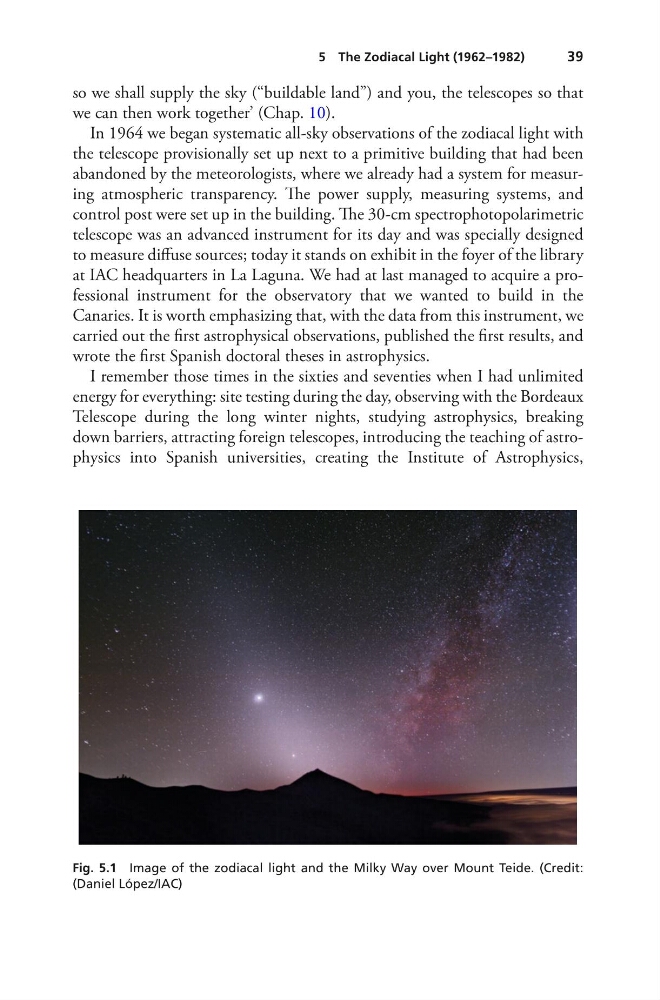
Fig. 5.1 Image of the zodiacal light and the Milky Way over Mount Teide. (Credit:
(Daniel López/IAC)
5 The Zodiacal Light (1962–1982)
so we shall supply the sky (“buildable land”) and you, the telescopes so that
we can then work together’ (Chap. 10).
In 1964 we began systematic all-sky observations of the zodiacal light with
the telescope provisionally set up next to a primitive building that had been
abandoned by the meteorologists, where we already had a system for measuring atmospheric transparency. The power supply, measuring systems, and
control post were set up in the building. The 30-cm spectrophotopolarimetric
telescope was an advanced instrument for its day and was specially designed
to measure diffuse sources; today it stands on exhibit in the foyer of the library
at IAC headquarters in La Laguna. We had at last managed to acquire a professional instrument for the observatory that we wanted to build in the
Canaries. It is worth emphasizing that, with the data from this instrument, we
carried out the first astrophysical observations, published the first results, and
wrote the first Spanish doctoral theses in astrophysics.
I remember those times in the sixties and seventies when I had unlimited
energy for everything: site testing during the day, observing with the Bordeaux
Telescope during the long winter nights, studying astrophysics, breaking
down barriers, attracting foreign telescopes, introducing the teaching of astrophysics into Spanish universities, creating the Institute of Astrophysics,
Fig. 5.1 Image of the zodiacal light and the Milky Way over Mount Teide. (Credit:
(Daniel López/IAC)
5 The Zodiacal Light (1962–1982)