

267
labelled astronomy, astrophysics, space, and so forth. In 2000 we managed to
get the National Programme of Astronomy and Astrophysics (PNAYA) explicitly included in the National Plans for RDi. There thus existed a stable framework for the consolidation of astrophysics in Spain. Until that time, it had
been a matter of competing with everybody else within the General Promotion
of Knowledge programme. As explained in Chap. 21, the construction and
exploitation of the Gran Telescopio Canarias played a decisive role in all of
this. The PNAYA has been a very useful tool for research teams dispersed
throughout Spanish territory, as is well documented.
The following list demonstrates the result of this nationwide programme.
This is how astronomical research is now distributed in Spain:
• Instituto de Astrofísica de Canarias (IAC)
• Instituto de Astrofísica de Andalucía (IAA)
• Astrobiology Centre (CAB)
• Institute of Space Sciences (ICE)
• Physics Institute of Cantabria (IFCA)
• National Astronomical Observatory (OAN)
• Centre of Energetic, Environmental, and Technological Research (CIEMAT)
• Aragon Centre of Cosmic Physical Studies (CEFCA)
• Institute of High Energy Physics (IFAE)
• Madrid Institute of Material Sciences
• San Fernando Royal Naval Observatory (ROA)
• University of Barcelona
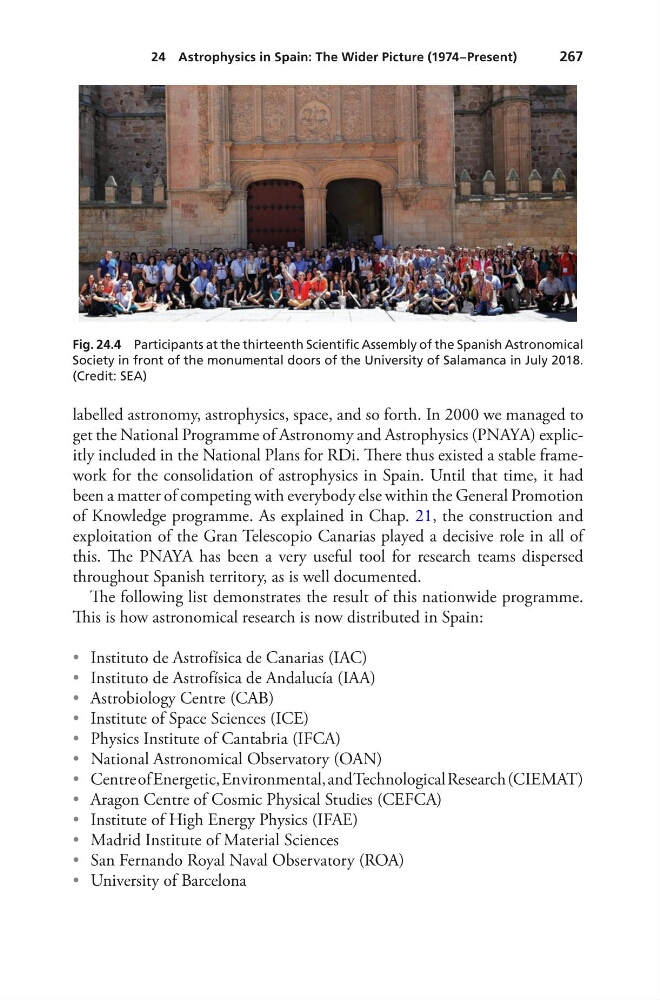
Fig. 24.4 Participants at the thirteenth Scientific Assembly of the Spanish Astronomical
Society in front of the monumental doors of the University of Salamanca in July 2018.
(Credit: SEA)
24 Astrophysics in Spain: The Wider Picture (1974–Present)
labelled astronomy, astrophysics, space, and so forth. In 2000 we managed to
get the National Programme of Astronomy and Astrophysics (PNAYA) explicitly included in the National Plans for RDi. There thus existed a stable framework for the consolidation of astrophysics in Spain. Until that time, it had
been a matter of competing with everybody else within the General Promotion
of Knowledge programme. As explained in Chap. 21, the construction and
exploitation of the Gran Telescopio Canarias played a decisive role in all of
this. The PNAYA has been a very useful tool for research teams dispersed
throughout Spanish territory, as is well documented.
The following list demonstrates the result of this nationwide programme.
This is how astronomical research is now distributed in Spain:
• Instituto de Astrofísica de Canarias (IAC)
• Instituto de Astrofísica de Andalucía (IAA)
• Astrobiology Centre (CAB)
• Institute of Space Sciences (ICE)
• Physics Institute of Cantabria (IFCA)
• National Astronomical Observatory (OAN)
• Centre of Energetic, Environmental, and Technological Research (CIEMAT)
• Aragon Centre of Cosmic Physical Studies (CEFCA)
• Institute of High Energy Physics (IFAE)
• Madrid Institute of Material Sciences
• San Fernando Royal Naval Observatory (ROA)
• University of Barcelona
Fig. 24.4 Participants at the thirteenth Scientific Assembly of the Spanish Astronomical
Society in front of the monumental doors of the University of Salamanca in July 2018.
(Credit: SEA)
24 Astrophysics in Spain: The Wider Picture (1974–Present)