

300
N. Kojima and A. Okazawa
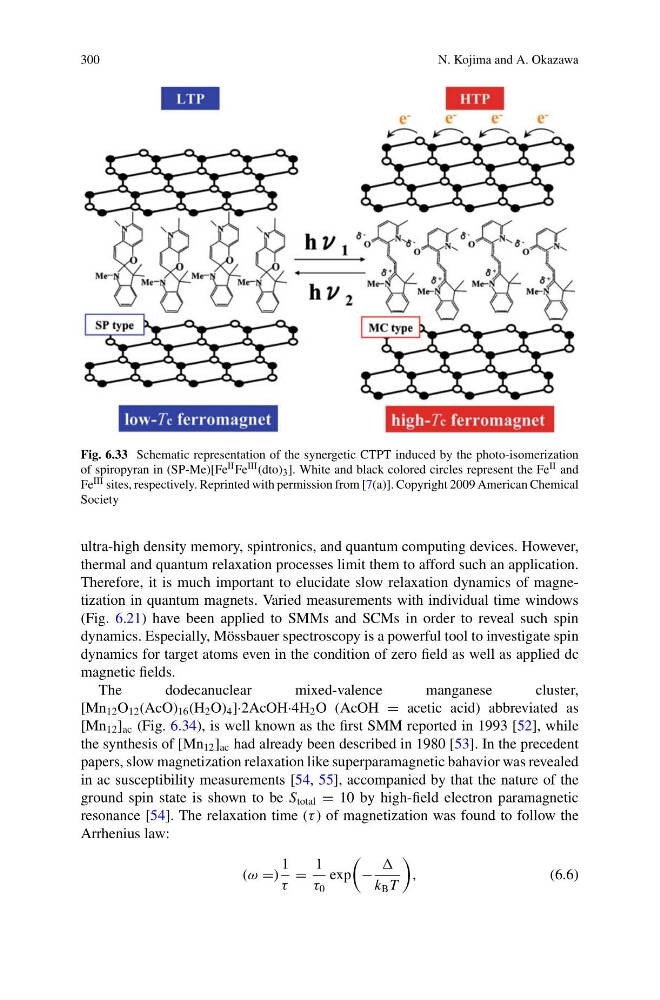
Fig. 6.33 Schematic representation of the synergetic CTPT induced by the photo-isomerization
of spiropyran in (SP-Me)[Fe II Fe III (dto) 3 ]. White and black colored circles represent the Fe II and
Fe III sites, respectively. Reprinted with permission from [7(a)]. Copyright 2009 American Chemical
Society
ultra-high density memory, spintronics, and quantum computing devices. However,
thermal and quantum relaxation processes limit them to afford such an application.
Therefore, it is much important to elucidate slow relaxation dynamics of magnetization in quantum magnets. Varied measurements with individual time windows
(Fig. 6.21) have been applied to SMMs and SCMs in order to reveal such spin
dynamics. Especially, Mössbauer spectroscopy is a powerful tool to investigate spin
dynamics for target atoms even in the condition of zero field as well as applied dc
magnetic fields.
The
dodecanuclear
mixed-valence
manganese
cluster,
[Mn 12 O 12 (AcO) 16 (H 2 O) 4 ]·2AcOH·4H 2 O (AcOH = acetic acid) abbreviated as
[Mn 12 ] ac (Fig. 6.34), is well known as the first SMM reported in 1993 [52], while
the synthesis of [Mn 12 ] ac had already been described in 1980 [53]. In the precedent
papers, slow magnetization relaxation like superparamagnetic bahavior was revealed
in ac susceptibility measurements [54, 55], accompanied by that the nature of the
ground spin state is shown to be S total = 10 by high-field electron paramagnetic
resonance [54]. The relaxation time (τ ) of magnetization was found to follow the
Arrhenius law:
(ω =)
1
τ
=
1
τ 0
exp
−
k B T
,
(6.6)
N. Kojima and A. Okazawa
Fig. 6.33 Schematic representation of the synergetic CTPT induced by the photo-isomerization
of spiropyran in (SP-Me)[Fe II Fe III (dto) 3 ]. White and black colored circles represent the Fe II and
Fe III sites, respectively. Reprinted with permission from [7(a)]. Copyright 2009 American Chemical
Society
ultra-high density memory, spintronics, and quantum computing devices. However,
thermal and quantum relaxation processes limit them to afford such an application.
Therefore, it is much important to elucidate slow relaxation dynamics of magnetization in quantum magnets. Varied measurements with individual time windows
(Fig. 6.21) have been applied to SMMs and SCMs in order to reveal such spin
dynamics. Especially, Mössbauer spectroscopy is a powerful tool to investigate spin
dynamics for target atoms even in the condition of zero field as well as applied dc
magnetic fields.
The
dodecanuclear
mixed-valence
manganese
cluster,
[Mn 12 O 12 (AcO) 16 (H 2 O) 4 ]·2AcOH·4H 2 O (AcOH = acetic acid) abbreviated as
[Mn 12 ] ac (Fig. 6.34), is well known as the first SMM reported in 1993 [52], while
the synthesis of [Mn 12 ] ac had already been described in 1980 [53]. In the precedent
papers, slow magnetization relaxation like superparamagnetic bahavior was revealed
in ac susceptibility measurements [54, 55], accompanied by that the nature of the
ground spin state is shown to be S total = 10 by high-field electron paramagnetic
resonance [54]. The relaxation time (τ ) of magnetization was found to follow the
Arrhenius law:
(ω =)
1
τ
=
1
τ 0
exp
−
k B T
,
(6.6)