

78
4 Technetium Coordinated by Organic Ligands …
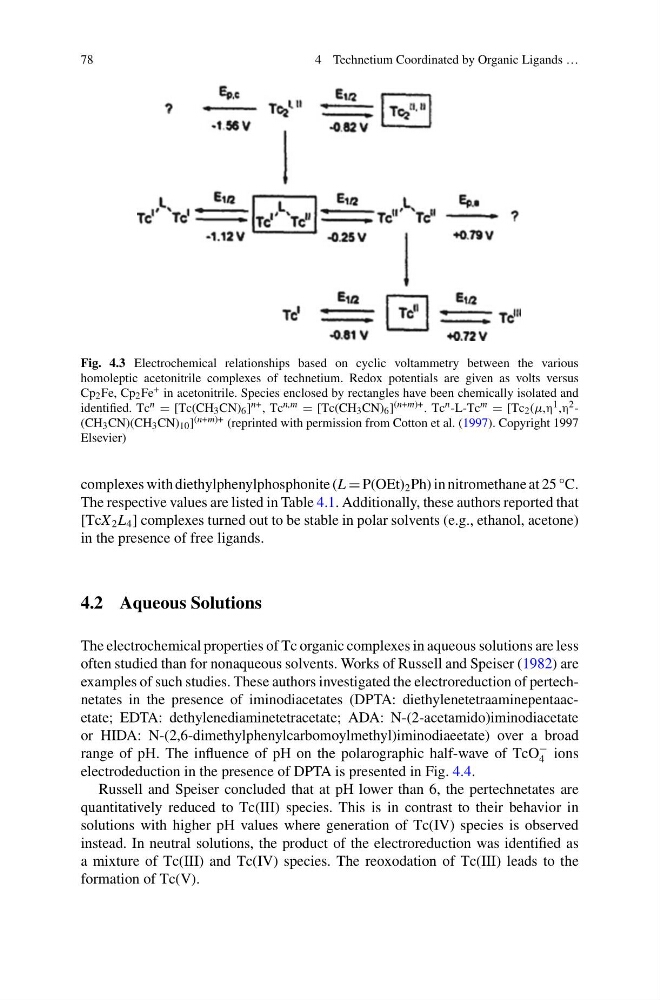
Fig. 4.3 Electrochemical relationships based on cyclic voltammetry between the various
homoleptic acetonitrile complexes of technetium. Redox potentials are given as volts versus
Cp 2 Fe, Cp 2 Fe + in acetonitrile. Species enclosed by rectangles have been chemically isolated and
identified. Tc n = [Tc(CH 3 CN) 6 ] n+ , Tc n,m = [Tc(CH 3 CN) 6 ] (n+m)+ . Tc n -L-Tc m = [Tc 2 (μ,η 1 ,η 2 -
(CH 3 CN)(CH 3 CN) 10 ] (n+m)+ (reprinted with permission from Cotton et al. (1997). Copyright 1997
Elsevier)
complexes with diethylphenylphosphonite (L = P(OEt) 2 Ph) in nitromethane at 25 °C.
The respective values are listed in Table 4.1. Additionally, these authors reported that
[TcX 2 L 4 ] complexes turned out to be stable in polar solvents (e.g., ethanol, acetone)
in the presence of free ligands.
4.2 Aqueous Solutions
The electrochemical properties of Tc organic complexes in aqueous solutions are less
often studied than for nonaqueous solvents. Works of Russell and Speiser (1982) are
examples of such studies. These authors investigated the electroreduction of pertechnetates in the presence of iminodiacetates (DPTA: diethylenetetraaminepentaacetate; EDTA: dethylenediaminetetracetate; ADA: N-(2-acetamido)iminodiacetate
or HIDA: N-(2,6-dimethylphenylcarbomoylmethyl)iminodiaeetate) over a broad
range of pH. The influence of pH on the polarographic half-wave of TcO
−
4 ions
electrodeduction in the presence of DPTA is presented in Fig. 4.4.
Russell and Speiser concluded that at pH lower than 6, the pertechnetates are
quantitatively reduced to Tc(III) species. This is in contrast to their behavior in
solutions with higher pH values where generation of Tc(IV) species is observed
instead. In neutral solutions, the product of the electroreduction was identified as
a mixture of Tc(III) and Tc(IV) species. The reoxodation of Tc(III) leads to the
formation of Tc(V).
4 Technetium Coordinated by Organic Ligands …
Fig. 4.3 Electrochemical relationships based on cyclic voltammetry between the various
homoleptic acetonitrile complexes of technetium. Redox potentials are given as volts versus
Cp 2 Fe, Cp 2 Fe + in acetonitrile. Species enclosed by rectangles have been chemically isolated and
identified. Tc n = [Tc(CH 3 CN) 6 ] n+ , Tc n,m = [Tc(CH 3 CN) 6 ] (n+m)+ . Tc n -L-Tc m = [Tc 2 (μ,η 1 ,η 2 -
(CH 3 CN)(CH 3 CN) 10 ] (n+m)+ (reprinted with permission from Cotton et al. (1997). Copyright 1997
Elsevier)
complexes with diethylphenylphosphonite (L = P(OEt) 2 Ph) in nitromethane at 25 °C.
The respective values are listed in Table 4.1. Additionally, these authors reported that
[TcX 2 L 4 ] complexes turned out to be stable in polar solvents (e.g., ethanol, acetone)
in the presence of free ligands.
4.2 Aqueous Solutions
The electrochemical properties of Tc organic complexes in aqueous solutions are less
often studied than for nonaqueous solvents. Works of Russell and Speiser (1982) are
examples of such studies. These authors investigated the electroreduction of pertechnetates in the presence of iminodiacetates (DPTA: diethylenetetraaminepentaacetate; EDTA: dethylenediaminetetracetate; ADA: N-(2-acetamido)iminodiacetate
or HIDA: N-(2,6-dimethylphenylcarbomoylmethyl)iminodiaeetate) over a broad
range of pH. The influence of pH on the polarographic half-wave of TcO
−
4 ions
electrodeduction in the presence of DPTA is presented in Fig. 4.4.
Russell and Speiser concluded that at pH lower than 6, the pertechnetates are
quantitatively reduced to Tc(III) species. This is in contrast to their behavior in
solutions with higher pH values where generation of Tc(IV) species is observed
instead. In neutral solutions, the product of the electroreduction was identified as
a mixture of Tc(III) and Tc(IV) species. The reoxodation of Tc(III) leads to the
formation of Tc(V).