

CFD Modelling and Simulation of Drilled Cuttings Transport Efficiency
207
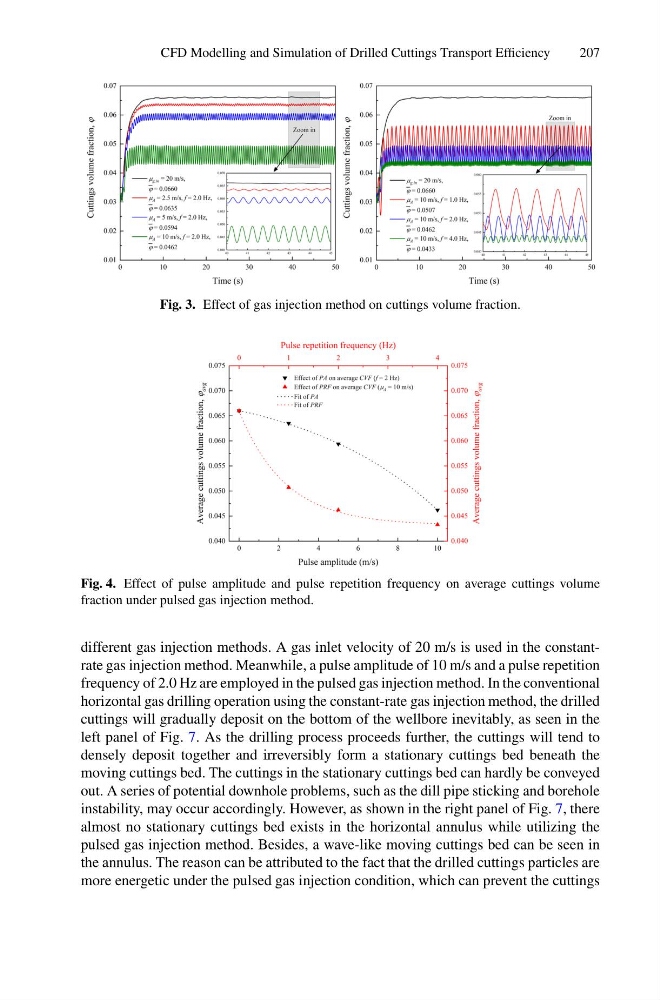
Fig. 3. Effect of gas injection method on cuttings volume fraction.
Fig. 4. Effect of pulse amplitude and pulse repetition frequency on average cuttings volume
fraction under pulsed gas injection method.
different gas injection methods. A gas inlet velocity of 20 m/s is used in the constantrate gas injection method. Meanwhile, a pulse amplitude of 10 m/s and a pulse repetition
frequency of 2.0 Hz are employed in the pulsed gas injection method. In the conventional
horizontal gas drilling operation using the constant-rate gas injection method, the drilled
cuttings will gradually deposit on the bottom of the wellbore inevitably, as seen in the
left panel of Fig. 7. As the drilling process proceeds further, the cuttings will tend to
densely deposit together and irreversibly form a stationary cuttings bed beneath the
moving cuttings bed. The cuttings in the stationary cuttings bed can hardly be conveyed
out. A series of potential downhole problems, such as the dill pipe sticking and borehole
instability, may occur accordingly. However, as shown in the right panel of Fig. 7, there
almost no stationary cuttings bed exists in the horizontal annulus while utilizing the
pulsed gas injection method. Besides, a wave-like moving cuttings bed can be seen in
the annulus. The reason can be attributed to the fact that the drilled cuttings particles are
more energetic under the pulsed gas injection condition, which can prevent the cuttings
207
Fig. 3. Effect of gas injection method on cuttings volume fraction.
Fig. 4. Effect of pulse amplitude and pulse repetition frequency on average cuttings volume
fraction under pulsed gas injection method.
different gas injection methods. A gas inlet velocity of 20 m/s is used in the constantrate gas injection method. Meanwhile, a pulse amplitude of 10 m/s and a pulse repetition
frequency of 2.0 Hz are employed in the pulsed gas injection method. In the conventional
horizontal gas drilling operation using the constant-rate gas injection method, the drilled
cuttings will gradually deposit on the bottom of the wellbore inevitably, as seen in the
left panel of Fig. 7. As the drilling process proceeds further, the cuttings will tend to
densely deposit together and irreversibly form a stationary cuttings bed beneath the
moving cuttings bed. The cuttings in the stationary cuttings bed can hardly be conveyed
out. A series of potential downhole problems, such as the dill pipe sticking and borehole
instability, may occur accordingly. However, as shown in the right panel of Fig. 7, there
almost no stationary cuttings bed exists in the horizontal annulus while utilizing the
pulsed gas injection method. Besides, a wave-like moving cuttings bed can be seen in
the annulus. The reason can be attributed to the fact that the drilled cuttings particles are
more energetic under the pulsed gas injection condition, which can prevent the cuttings