

150
R. Zhang et al.
of temperature and pressure in annulus, which provides an important reference for multigradient pressure control drilling by HGS injection to keep the safe wellbore pressure
within the narrow pressure window.
4.1 The Effect of Separation Efficiency on the Temperature Inside Drill String
and in Annulus
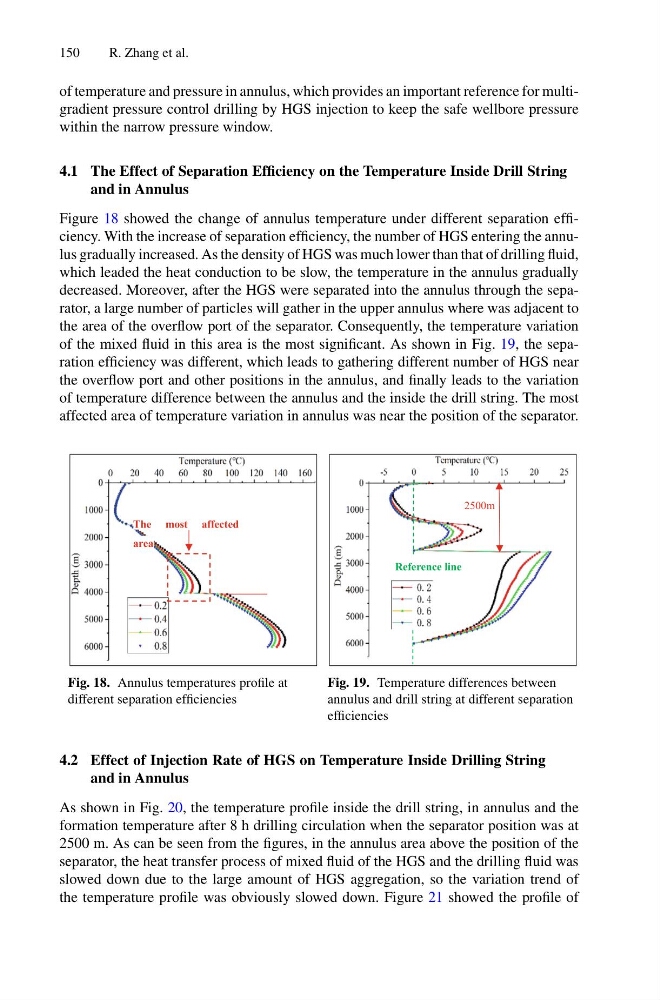
Figure 18 showed the change of annulus temperature under different separation efficiency. With the increase of separation efficiency, the number of HGS entering the annulus gradually increased. As the density of HGS was much lower than that of drilling fluid,
which leaded the heat conduction to be slow, the temperature in the annulus gradually
decreased. Moreover, after the HGS were separated into the annulus through the separator, a large number of particles will gather in the upper annulus where was adjacent to
the area of the overflow port of the separator. Consequently, the temperature variation
of the mixed fluid in this area is the most significant. As shown in Fig. 19, the separation efficiency was different, which leads to gathering different number of HGS near
the overflow port and other positions in the annulus, and finally leads to the variation
of temperature difference between the annulus and the inside the drill string. The most
affected area of temperature variation in annulus was near the position of the separator.
The most affected
area
Fig. 18. Annulus temperatures profile at
different separation efficiencies
Reference line
2500m
Fig. 19. Temperature differences between
annulus and drill string at different separation
efficiencies
4.2 Effect of Injection Rate of HGS on Temperature Inside Drilling String
and in Annulus
As shown in Fig. 20, the temperature profile inside the drill string, in annulus and the
formation temperature after 8 h drilling circulation when the separator position was at
2500 m. As can be seen from the figures, in the annulus area above the position of the
separator, the heat transfer process of mixed fluid of the HGS and the drilling fluid was
slowed down due to the large amount of HGS aggregation, so the variation trend of
the temperature profile was obviously slowed down. Figure 21 showed the profile of
R. Zhang et al.
of temperature and pressure in annulus, which provides an important reference for multigradient pressure control drilling by HGS injection to keep the safe wellbore pressure
within the narrow pressure window.
4.1 The Effect of Separation Efficiency on the Temperature Inside Drill String
and in Annulus
Figure 18 showed the change of annulus temperature under different separation efficiency. With the increase of separation efficiency, the number of HGS entering the annulus gradually increased. As the density of HGS was much lower than that of drilling fluid,
which leaded the heat conduction to be slow, the temperature in the annulus gradually
decreased. Moreover, after the HGS were separated into the annulus through the separator, a large number of particles will gather in the upper annulus where was adjacent to
the area of the overflow port of the separator. Consequently, the temperature variation
of the mixed fluid in this area is the most significant. As shown in Fig. 19, the separation efficiency was different, which leads to gathering different number of HGS near
the overflow port and other positions in the annulus, and finally leads to the variation
of temperature difference between the annulus and the inside the drill string. The most
affected area of temperature variation in annulus was near the position of the separator.
The most affected
area
Fig. 18. Annulus temperatures profile at
different separation efficiencies
Reference line
2500m
Fig. 19. Temperature differences between
annulus and drill string at different separation
efficiencies
4.2 Effect of Injection Rate of HGS on Temperature Inside Drilling String
and in Annulus
As shown in Fig. 20, the temperature profile inside the drill string, in annulus and the
formation temperature after 8 h drilling circulation when the separator position was at
2500 m. As can be seen from the figures, in the annulus area above the position of the
separator, the heat transfer process of mixed fluid of the HGS and the drilling fluid was
slowed down due to the large amount of HGS aggregation, so the variation trend of
the temperature profile was obviously slowed down. Figure 21 showed the profile of