

Study on the Separation Technology of HGS and Its Effect
149
Table 3. Thermo-physical parameters of different materials or fluid
Title
Density, kg/m 3 Specific Heat, J/(kg·K) Coefficient of Heat Conduction
W/(m·K)
Drilling fluid 1200
3900
1.73
Drill string
7850
400
43.71
Drill collars
8910
400
43.71
Seawater
1050
4130
0.65
Casing
8312
400
43.73
Cement
2145
850
0.85
Rock
2650
853
2.3
HGS
400
750
0.47
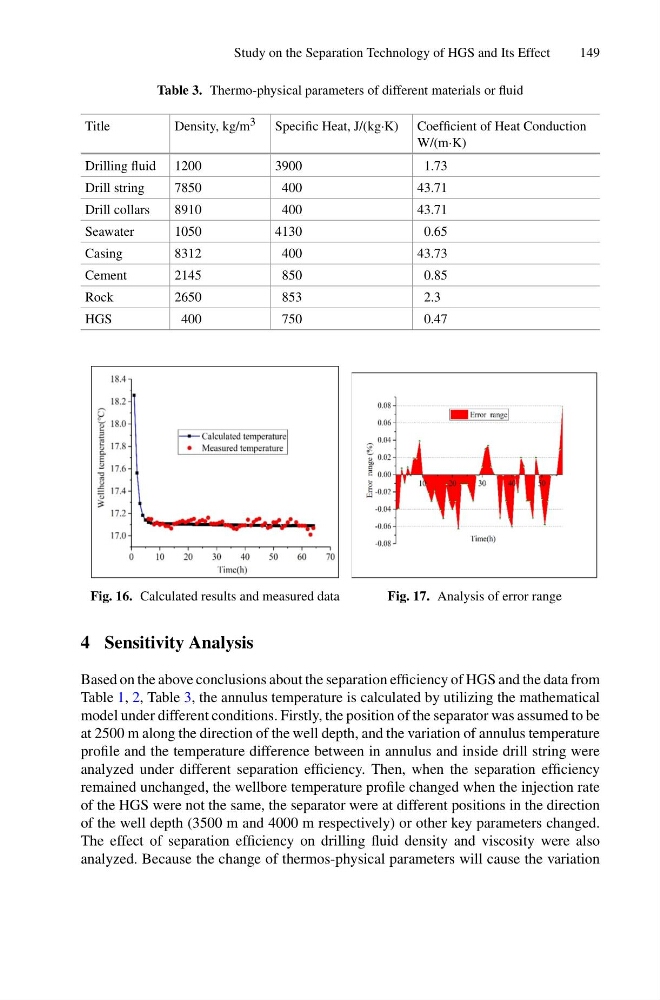
Fig. 16. Calculated results and measured data
Fig. 17. Analysis of error range
4 Sensitivity Analysis
Based on the above conclusions about the separation efficiency of HGS and the data from
Table 1, 2, Table 3, the annulus temperature is calculated by utilizing the mathematical
model under different conditions. Firstly, the position of the separator was assumed to be
at 2500 m along the direction of the well depth, and the variation of annulus temperature
profile and the temperature difference between in annulus and inside drill string were
analyzed under different separation efficiency. Then, when the separation efficiency
remained unchanged, the wellbore temperature profile changed when the injection rate
of the HGS were not the same, the separator were at different positions in the direction
of the well depth (3500 m and 4000 m respectively) or other key parameters changed.
The effect of separation efficiency on drilling fluid density and viscosity were also
analyzed. Because the change of thermos-physical parameters will cause the variation
149
Table 3. Thermo-physical parameters of different materials or fluid
Title
Density, kg/m 3 Specific Heat, J/(kg·K) Coefficient of Heat Conduction
W/(m·K)
Drilling fluid 1200
3900
1.73
Drill string
7850
400
43.71
Drill collars
8910
400
43.71
Seawater
1050
4130
0.65
Casing
8312
400
43.73
Cement
2145
850
0.85
Rock
2650
853
2.3
HGS
400
750
0.47
Fig. 16. Calculated results and measured data
Fig. 17. Analysis of error range
4 Sensitivity Analysis
Based on the above conclusions about the separation efficiency of HGS and the data from
Table 1, 2, Table 3, the annulus temperature is calculated by utilizing the mathematical
model under different conditions. Firstly, the position of the separator was assumed to be
at 2500 m along the direction of the well depth, and the variation of annulus temperature
profile and the temperature difference between in annulus and inside drill string were
analyzed under different separation efficiency. Then, when the separation efficiency
remained unchanged, the wellbore temperature profile changed when the injection rate
of the HGS were not the same, the separator were at different positions in the direction
of the well depth (3500 m and 4000 m respectively) or other key parameters changed.
The effect of separation efficiency on drilling fluid density and viscosity were also
analyzed. Because the change of thermos-physical parameters will cause the variation