

130
Y. Song et al.
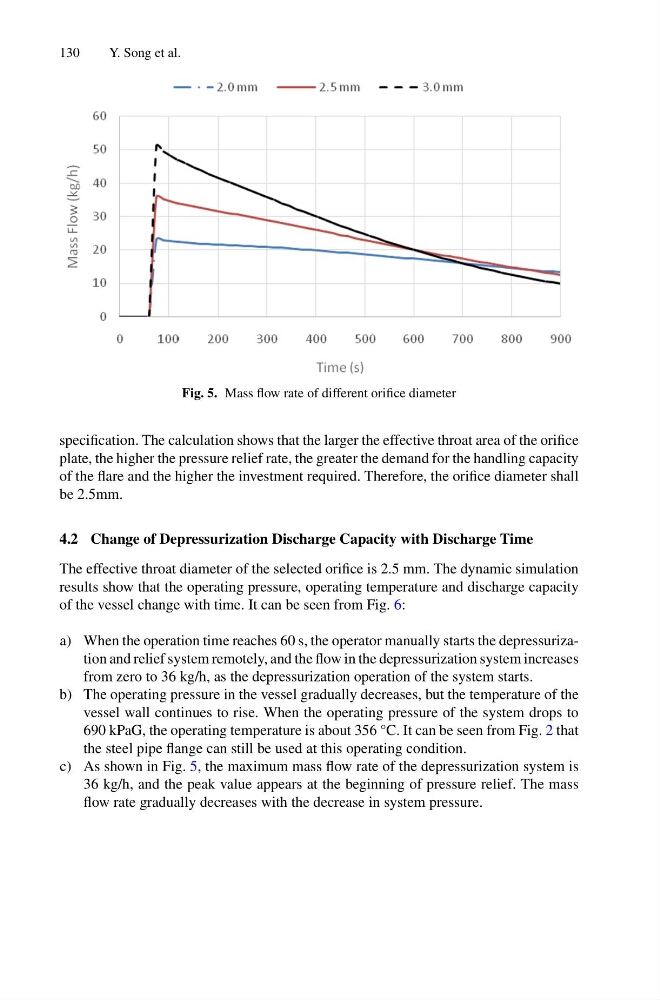
Fig. 5. Mass flow rate of different orifice diameter
specification. The calculation shows that the larger the effective throat area of the orifice
plate, the higher the pressure relief rate, the greater the demand for the handling capacity
of the flare and the higher the investment required. Therefore, the orifice diameter shall
be 2.5mm.
4.2 Change of Depressurization Discharge Capacity with Discharge Time
The effective throat diameter of the selected orifice is 2.5 mm. The dynamic simulation
results show that the operating pressure, operating temperature and discharge capacity
of the vessel change with time. It can be seen from Fig. 6:
a) When the operation time reaches 60 s, the operator manually starts the depressurization and relief system remotely, and the flow in the depressurization system increases
from zero to 36 kg/h, as the depressurization operation of the system starts.
b) The operating pressure in the vessel gradually decreases, but the temperature of the
vessel wall continues to rise. When the operating pressure of the system drops to
690 kPaG, the operating temperature is about 356 °C. It can be seen from Fig. 2 that
the steel pipe flange can still be used at this operating condition.
c) As shown in Fig. 5, the maximum mass flow rate of the depressurization system is
36 kg/h, and the peak value appears at the beginning of pressure relief. The mass
flow rate gradually decreases with the decrease in system pressure.
Y. Song et al.
Fig. 5. Mass flow rate of different orifice diameter
specification. The calculation shows that the larger the effective throat area of the orifice
plate, the higher the pressure relief rate, the greater the demand for the handling capacity
of the flare and the higher the investment required. Therefore, the orifice diameter shall
be 2.5mm.
4.2 Change of Depressurization Discharge Capacity with Discharge Time
The effective throat diameter of the selected orifice is 2.5 mm. The dynamic simulation
results show that the operating pressure, operating temperature and discharge capacity
of the vessel change with time. It can be seen from Fig. 6:
a) When the operation time reaches 60 s, the operator manually starts the depressurization and relief system remotely, and the flow in the depressurization system increases
from zero to 36 kg/h, as the depressurization operation of the system starts.
b) The operating pressure in the vessel gradually decreases, but the temperature of the
vessel wall continues to rise. When the operating pressure of the system drops to
690 kPaG, the operating temperature is about 356 °C. It can be seen from Fig. 2 that
the steel pipe flange can still be used at this operating condition.
c) As shown in Fig. 5, the maximum mass flow rate of the depressurization system is
36 kg/h, and the peak value appears at the beginning of pressure relief. The mass
flow rate gradually decreases with the decrease in system pressure.