

Dynamic Simulation of Natural Gas Filter Separator Depressurization
131
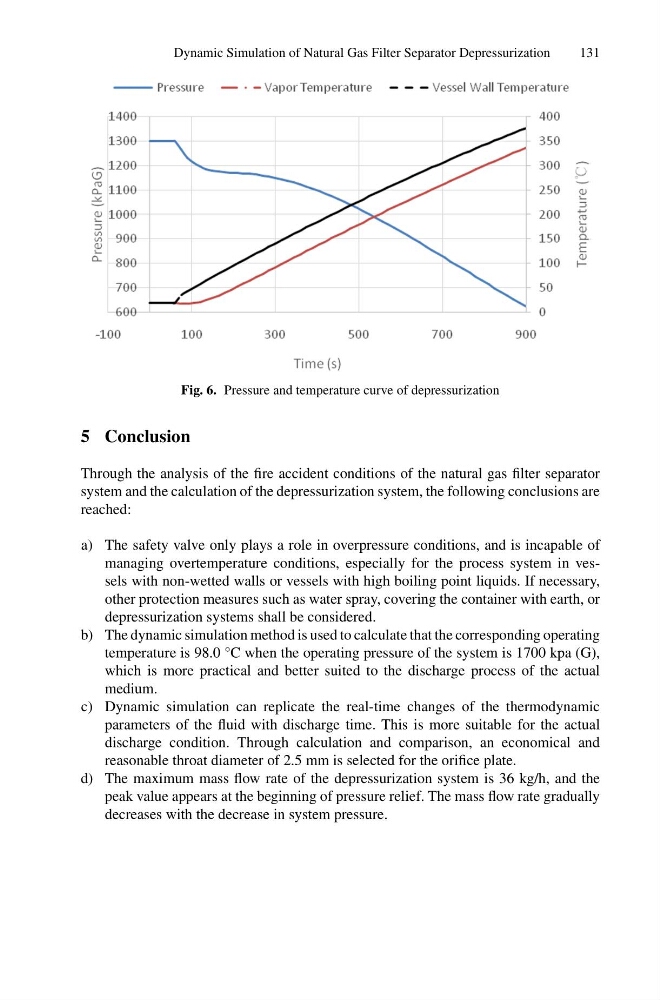
Fig. 6. Pressure and temperature curve of depressurization
5 Conclusion
Through the analysis of the fire accident conditions of the natural gas filter separator
system and the calculation of the depressurization system, the following conclusions are
reached:
a) The safety valve only plays a role in overpressure conditions, and is incapable of
managing overtemperature conditions, especially for the process system in vessels with non-wetted walls or vessels with high boiling point liquids. If necessary,
other protection measures such as water spray, covering the container with earth, or
depressurization systems shall be considered.
b) The dynamic simulation method is used to calculate that the corresponding operating
temperature is 98.0 °C when the operating pressure of the system is 1700 kpa (G),
which is more practical and better suited to the discharge process of the actual
medium.
c) Dynamic simulation can replicate the real-time changes of the thermodynamic
parameters of the fluid with discharge time. This is more suitable for the actual
discharge condition. Through calculation and comparison, an economical and
reasonable throat diameter of 2.5 mm is selected for the orifice plate.
d) The maximum mass flow rate of the depressurization system is 36 kg/h, and the
peak value appears at the beginning of pressure relief. The mass flow rate gradually
decreases with the decrease in system pressure.
131
Fig. 6. Pressure and temperature curve of depressurization
5 Conclusion
Through the analysis of the fire accident conditions of the natural gas filter separator
system and the calculation of the depressurization system, the following conclusions are
reached:
a) The safety valve only plays a role in overpressure conditions, and is incapable of
managing overtemperature conditions, especially for the process system in vessels with non-wetted walls or vessels with high boiling point liquids. If necessary,
other protection measures such as water spray, covering the container with earth, or
depressurization systems shall be considered.
b) The dynamic simulation method is used to calculate that the corresponding operating
temperature is 98.0 °C when the operating pressure of the system is 1700 kpa (G),
which is more practical and better suited to the discharge process of the actual
medium.
c) Dynamic simulation can replicate the real-time changes of the thermodynamic
parameters of the fluid with discharge time. This is more suitable for the actual
discharge condition. Through calculation and comparison, an economical and
reasonable throat diameter of 2.5 mm is selected for the orifice plate.
d) The maximum mass flow rate of the depressurization system is 36 kg/h, and the
peak value appears at the beginning of pressure relief. The mass flow rate gradually
decreases with the decrease in system pressure.