

(e.g., salt) to water can suppress the freezing point by exploiting colligative properties, but the addition of foreign substances can be detrimental in many biomedical
applications, and the amounts of the solute needed to achieve large freezing-point
depressions may be prohibitive.
Nature, however, uses two other approaches for suppressing or inhibiting the
freezing of water: (1) antifreeze proteins [100] that can adsorb to the surface of ice
crystals and prevent their growth and (2) nano-confinement that inhibits water
crystallization [101]. Attempts to mimic antifreeze properties based on confinement
require pore dimensions of <10 nm [101, 102] and have been mostly limited to
inorganic materials and carbon nanotubes that have well-defined pores. The size
scales at which ice is inhibited are a consequence of the requirement of a critical
volume (or number of water molecules) for water crystallization. Infrared spectroscopy studies of water clusters indicated that >275 water molecules are required for
ice formation [103].
The SAXs data in Fig. 1 indicate that the separation of the hydrophobic
nanodomains in the fluoroacrylate-containing amphiphilic hydrogels is <10 nm,
which suggests that the freezing of water contained within the space between
nanodomains may be affected by confinement. That was confirmed by the study
described in Ref. [16], which reported that when the confinement space between
hydrophobic nanodomains was ~2 nm, as much as 45 wt% of the water in the
hydrogel did not freeze at temperatures as low as 205 K. Figure 25 compares the
temperature dependence of the self-diffusion coefficient of water, D, in DF5, DF15,
and DF22 hydrogels, calculated from quasi-elastic neutron scattering data, with that
of neat supercooled water [104–106]. In DF5 and DF15, the motions of the protons
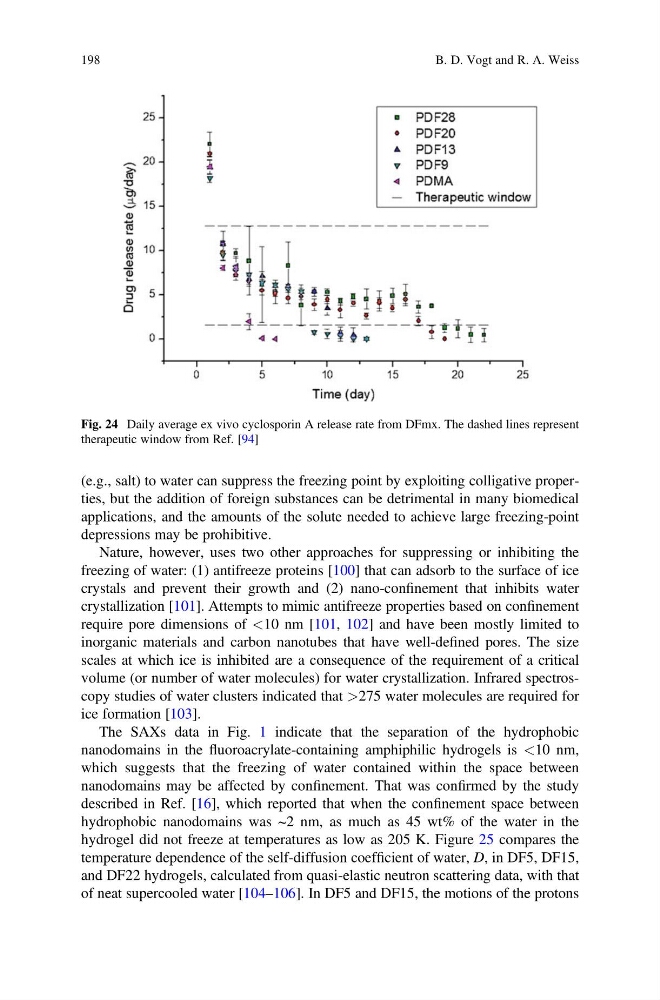
Fig. 24 Daily average ex vivo cyclosporin A release rate from DFmx. The dashed lines represent
therapeutic window from Ref. [94]
198
B. D. Vogt and R. A. Weiss
applications, and the amounts of the solute needed to achieve large freezing-point
depressions may be prohibitive.
Nature, however, uses two other approaches for suppressing or inhibiting the
freezing of water: (1) antifreeze proteins [100] that can adsorb to the surface of ice
crystals and prevent their growth and (2) nano-confinement that inhibits water
crystallization [101]. Attempts to mimic antifreeze properties based on confinement
require pore dimensions of <10 nm [101, 102] and have been mostly limited to
inorganic materials and carbon nanotubes that have well-defined pores. The size
scales at which ice is inhibited are a consequence of the requirement of a critical
volume (or number of water molecules) for water crystallization. Infrared spectroscopy studies of water clusters indicated that >275 water molecules are required for
ice formation [103].
The SAXs data in Fig. 1 indicate that the separation of the hydrophobic
nanodomains in the fluoroacrylate-containing amphiphilic hydrogels is <10 nm,
which suggests that the freezing of water contained within the space between
nanodomains may be affected by confinement. That was confirmed by the study
described in Ref. [16], which reported that when the confinement space between
hydrophobic nanodomains was ~2 nm, as much as 45 wt% of the water in the
hydrogel did not freeze at temperatures as low as 205 K. Figure 25 compares the
temperature dependence of the self-diffusion coefficient of water, D, in DF5, DF15,
and DF22 hydrogels, calculated from quasi-elastic neutron scattering data, with that
of neat supercooled water [104–106]. In DF5 and DF15, the motions of the protons
Fig. 24 Daily average ex vivo cyclosporin A release rate from DFmx. The dashed lines represent
therapeutic window from Ref. [94]
198
B. D. Vogt and R. A. Weiss