

covalent crosslinks on the modulus are expected to be small and may actually be
within the experimental error of the tensile property measurements. Similarly, the
tensile strengths of the DF9 and the two DFm10-Cx hybrid hydrogels were the same
within experimental error. There were no data for fracture toughness of the DFx
hydrogels, though the fracture toughness of the DFm9 hydrogel, which differs in
chemistry from DF9 only in the extra methyl group in the fluoroacrylate, and the
DFm10-C6 were similar (~100 kJ/m
3 ). The fracture energy of the DFm10 hydrogel,
however, was an order of magnitude less than that of the HFx hydrogels. One might
expect that the concentration of physical crosslinks, which are similar in the two
types of amphiphilic hydrogels, should regulate the fracture toughness, especially
since the microstructures are similar [18, 25]. That is, it was surprising that the
fracture toughness values for the DFm and HFx hydrogels were so different. This
may actually be the case, or the fracture toughness value for DFm9 in Ref. [18] may
be an outlier, since only one measurement was made. However, even though these
data do not adequately provide an answer to the question of the effect of adding
covalent crosslinks on fracture toughness, it is worth noting that the fracture toughness of the hybrid F10-C6 hydrogel (~100 kJ/m
3 ) is still at least an order of
magnitude greater than the toughness of conventional covalent hydrogels, without
any supramolecular crosslinks.
(a)
(b)
(c)
(d)
(before)
(after)
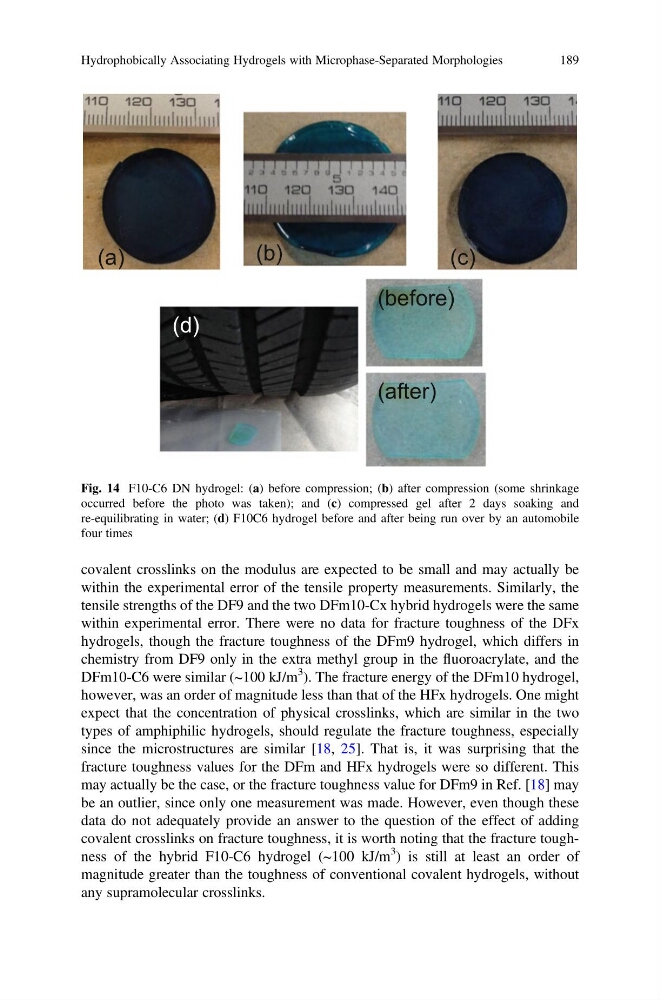
Fig. 14 F10-C6 DN hydrogel: (a) before compression; (b) after compression (some shrinkage
occurred before the photo was taken); and (c) compressed gel after 2 days soaking and
re-equilibrating in water; (d) F10C6 hydrogel before and after being run over by an automobile
four times
Hydrophobically Associating Hydrogels with Microphase-Separated Morphologies
189
within the experimental error of the tensile property measurements. Similarly, the
tensile strengths of the DF9 and the two DFm10-Cx hybrid hydrogels were the same
within experimental error. There were no data for fracture toughness of the DFx
hydrogels, though the fracture toughness of the DFm9 hydrogel, which differs in
chemistry from DF9 only in the extra methyl group in the fluoroacrylate, and the
DFm10-C6 were similar (~100 kJ/m
3 ). The fracture energy of the DFm10 hydrogel,
however, was an order of magnitude less than that of the HFx hydrogels. One might
expect that the concentration of physical crosslinks, which are similar in the two
types of amphiphilic hydrogels, should regulate the fracture toughness, especially
since the microstructures are similar [18, 25]. That is, it was surprising that the
fracture toughness values for the DFm and HFx hydrogels were so different. This
may actually be the case, or the fracture toughness value for DFm9 in Ref. [18] may
be an outlier, since only one measurement was made. However, even though these
data do not adequately provide an answer to the question of the effect of adding
covalent crosslinks on fracture toughness, it is worth noting that the fracture toughness of the hybrid F10-C6 hydrogel (~100 kJ/m
3 ) is still at least an order of
magnitude greater than the toughness of conventional covalent hydrogels, without
any supramolecular crosslinks.
(a)
(b)
(c)
(d)
(before)
(after)
Fig. 14 F10-C6 DN hydrogel: (a) before compression; (b) after compression (some shrinkage
occurred before the photo was taken); and (c) compressed gel after 2 days soaking and
re-equilibrating in water; (d) F10C6 hydrogel before and after being run over by an automobile
four times
Hydrophobically Associating Hydrogels with Microphase-Separated Morphologies
189