

strains (ε max ¼ 100, 200, 300, and 400%). Hysteresis is defined as the ratio of the
energy loss and the energy required to stretch the sample. The latter value is the area
under the loading curve, and the area of the hysteresis loop between the loading and
unloading curves is the energy dissipated per unit volume for the loading–unloading
cycle. The energy loss and the hysteresis of HF10 for the four values of ε max are
shown in Fig. 10b.
The hysteresis was remarkably high, varying from $50 to $80% as the maximum strain changed from 100 to 400%, Fig. 10b. The corresponding energy loss in
load/unload cycles was 0.201 to 2.13 MJ/m
3 . The other NFx and DFx hydrogels
exhibited similar hysteresis behavior. The hysteresis and energy loss increased with
increasing crosslink density of the physical network, which was proportional to the
fluoroacrylate concentration. The energy loss associated with the hysteresis of these
hydrogels represents how effective the physical crosslinks are at dissipating energy,
and the values for these hydrogels are comparable to those reported for other
supramolecular hydrogels, such as polyampholyte hydrogels ($1.5 MJ/m
3 for
ε max ¼ 1,200%) [59] and hybrid hydrogels that contain covalent and supramolecular
crosslinks ($1.0 MJ/m
3 at ε max ¼ 300%) [48].
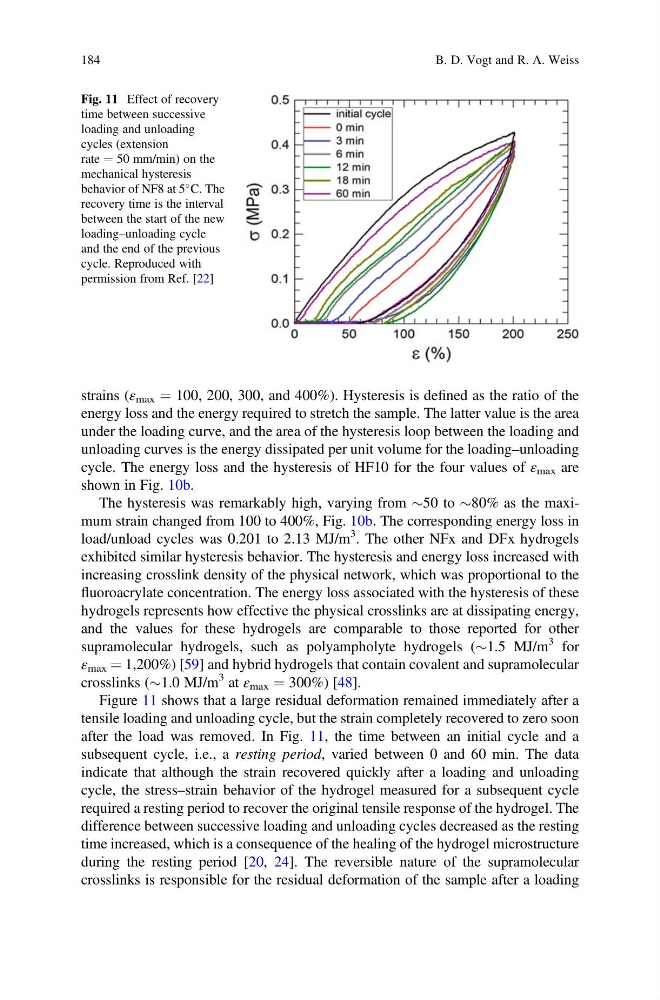
Figure 11 shows that a large residual deformation remained immediately after a
tensile loading and unloading cycle, but the strain completely recovered to zero soon
after the load was removed. In Fig. 11, the time between an initial cycle and a
subsequent cycle, i.e., a resting period, varied between 0 and 60 min. The data
indicate that although the strain recovered quickly after a loading and unloading
cycle, the stress–strain behavior of the hydrogel measured for a subsequent cycle
required a resting period to recover the original tensile response of the hydrogel. The
difference between successive loading and unloading cycles decreased as the resting
time increased, which is a consequence of the healing of the hydrogel microstructure
during the resting period [20, 24]. The reversible nature of the supramolecular
crosslinks is responsible for the residual deformation of the sample after a loading
Fig. 11 Effect of recovery
time between successive
loading and unloading
cycles (extension
rate ¼ 50 mm/min) on the
mechanical hysteresis
behavior of NF8 at 5
C. The
recovery time is the interval
between the start of the new
loading–unloading cycle
and the end of the previous
cycle. Reproduced with
permission from Ref. [22]
184
B. D. Vogt and R. A. Weiss
energy loss and the energy required to stretch the sample. The latter value is the area
under the loading curve, and the area of the hysteresis loop between the loading and
unloading curves is the energy dissipated per unit volume for the loading–unloading
cycle. The energy loss and the hysteresis of HF10 for the four values of ε max are
shown in Fig. 10b.
The hysteresis was remarkably high, varying from $50 to $80% as the maximum strain changed from 100 to 400%, Fig. 10b. The corresponding energy loss in
load/unload cycles was 0.201 to 2.13 MJ/m
3 . The other NFx and DFx hydrogels
exhibited similar hysteresis behavior. The hysteresis and energy loss increased with
increasing crosslink density of the physical network, which was proportional to the
fluoroacrylate concentration. The energy loss associated with the hysteresis of these
hydrogels represents how effective the physical crosslinks are at dissipating energy,
and the values for these hydrogels are comparable to those reported for other
supramolecular hydrogels, such as polyampholyte hydrogels ($1.5 MJ/m
3 for
ε max ¼ 1,200%) [59] and hybrid hydrogels that contain covalent and supramolecular
crosslinks ($1.0 MJ/m
3 at ε max ¼ 300%) [48].
Figure 11 shows that a large residual deformation remained immediately after a
tensile loading and unloading cycle, but the strain completely recovered to zero soon
after the load was removed. In Fig. 11, the time between an initial cycle and a
subsequent cycle, i.e., a resting period, varied between 0 and 60 min. The data
indicate that although the strain recovered quickly after a loading and unloading
cycle, the stress–strain behavior of the hydrogel measured for a subsequent cycle
required a resting period to recover the original tensile response of the hydrogel. The
difference between successive loading and unloading cycles decreased as the resting
time increased, which is a consequence of the healing of the hydrogel microstructure
during the resting period [20, 24]. The reversible nature of the supramolecular
crosslinks is responsible for the residual deformation of the sample after a loading
Fig. 11 Effect of recovery
time between successive
loading and unloading
cycles (extension
rate ¼ 50 mm/min) on the
mechanical hysteresis
behavior of NF8 at 5
C. The
recovery time is the interval
between the start of the new
loading–unloading cycle
and the end of the previous
cycle. Reproduced with
permission from Ref. [22]
184
B. D. Vogt and R. A. Weiss