

In order to describe the network evolution due to deformation, let us consider a
material point X and track a certain population of attached chains identified by a
small volume element dΥ r0 around the end-to-end vector r 0 in the chain space of the
reference configuration. Using the affine deformation assumption [1], one can write
that
r ¼ Fr 0 ,
ð63Þ
where r is the end-to-end vector for the same population of chains in the current
configuration. Recall that F is the deformation gradient tensor that transforms a
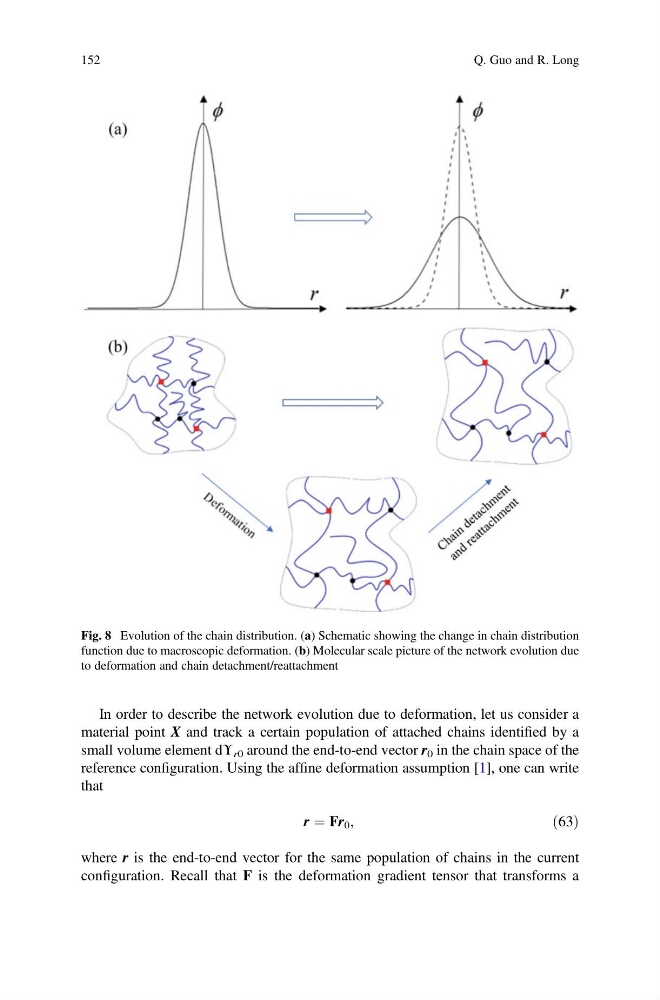
Fig. 8 Evolution of the chain distribution. (a) Schematic showing the change in chain distribution
function due to macroscopic deformation. (b) Molecular scale picture of the network evolution due
to deformation and chain detachment/reattachment
152
Q. Guo and R. Long
material point X and track a certain population of attached chains identified by a
small volume element dΥ r0 around the end-to-end vector r 0 in the chain space of the
reference configuration. Using the affine deformation assumption [1], one can write
that
r ¼ Fr 0 ,
ð63Þ
where r is the end-to-end vector for the same population of chains in the current
configuration. Recall that F is the deformation gradient tensor that transforms a
Fig. 8 Evolution of the chain distribution. (a) Schematic showing the change in chain distribution
function due to macroscopic deformation. (b) Molecular scale picture of the network evolution due
to deformation and chain detachment/reattachment
152
Q. Guo and R. Long