

typical timescale is shorter than the slowest relaxation time of the fibre;
ω ) ω 1 ¼ 0.013. As we increase the binding energy of the reversible bonds,
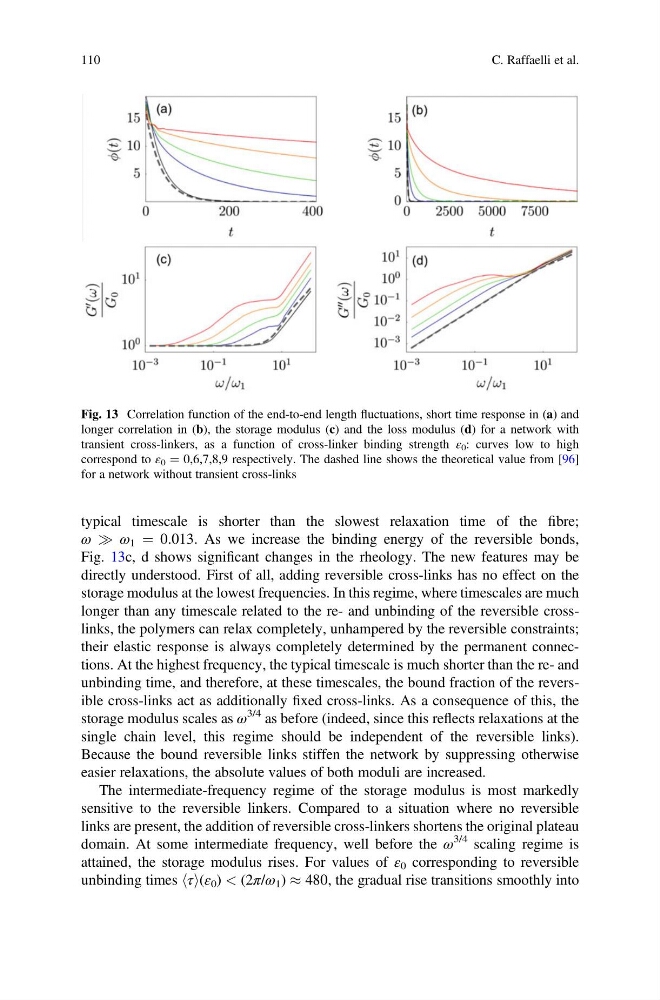
Fig. 13c, d shows significant changes in the rheology. The new features may be
directly understood. First of all, adding reversible cross-links has no effect on the
storage modulus at the lowest frequencies. In this regime, where timescales are much
longer than any timescale related to the re- and unbinding of the reversible crosslinks, the polymers can relax completely, unhampered by the reversible constraints;
their elastic response is always completely determined by the permanent connections. At the highest frequency, the typical timescale is much shorter than the re- and
unbinding time, and therefore, at these timescales, the bound fraction of the reversible cross-links act as additionally fixed cross-links. As a consequence of this, the
storage modulus scales as ω
3/4 as before (indeed, since this reflects relaxations at the
single chain level, this regime should be independent of the reversible links).
Because the bound reversible links stiffen the network by suppressing otherwise
easier relaxations, the absolute values of both moduli are increased.
The intermediate-frequency regime of the storage modulus is most markedly
sensitive to the reversible linkers. Compared to a situation where no reversible
links are present, the addition of reversible cross-linkers shortens the original plateau
domain. At some intermediate frequency, well before the ω
3/4 scaling regime is
attained, the storage modulus rises. For values of ε 0 corresponding to reversible
unbinding times hτi(ε 0 ) < (2π/ω 1 ) % 480, the gradual rise transitions smoothly into
Fig. 13 Correlation function of the end-to-end length fluctuations, short time response in (a) and
longer correlation in (b), the storage modulus (c) and the loss modulus (d) for a network with
transient cross-linkers, as a function of cross-linker binding strength ε 0 : curves low to high
correspond to ε 0 ¼ 0,6,7,8,9 respectively. The dashed line shows the theoretical value from [96]
for a network without transient cross-links
110
C. Raffaelli et al.
ω ) ω 1 ¼ 0.013. As we increase the binding energy of the reversible bonds,
Fig. 13c, d shows significant changes in the rheology. The new features may be
directly understood. First of all, adding reversible cross-links has no effect on the
storage modulus at the lowest frequencies. In this regime, where timescales are much
longer than any timescale related to the re- and unbinding of the reversible crosslinks, the polymers can relax completely, unhampered by the reversible constraints;
their elastic response is always completely determined by the permanent connections. At the highest frequency, the typical timescale is much shorter than the re- and
unbinding time, and therefore, at these timescales, the bound fraction of the reversible cross-links act as additionally fixed cross-links. As a consequence of this, the
storage modulus scales as ω
3/4 as before (indeed, since this reflects relaxations at the
single chain level, this regime should be independent of the reversible links).
Because the bound reversible links stiffen the network by suppressing otherwise
easier relaxations, the absolute values of both moduli are increased.
The intermediate-frequency regime of the storage modulus is most markedly
sensitive to the reversible linkers. Compared to a situation where no reversible
links are present, the addition of reversible cross-linkers shortens the original plateau
domain. At some intermediate frequency, well before the ω
3/4 scaling regime is
attained, the storage modulus rises. For values of ε 0 corresponding to reversible
unbinding times hτi(ε 0 ) < (2π/ω 1 ) % 480, the gradual rise transitions smoothly into
Fig. 13 Correlation function of the end-to-end length fluctuations, short time response in (a) and
longer correlation in (b), the storage modulus (c) and the loss modulus (d) for a network with
transient cross-linkers, as a function of cross-linker binding strength ε 0 : curves low to high
correspond to ε 0 ¼ 0,6,7,8,9 respectively. The dashed line shows the theoretical value from [96]
for a network without transient cross-links
110
C. Raffaelli et al.