

11 Experimental Study and Modelling of Particle …
399
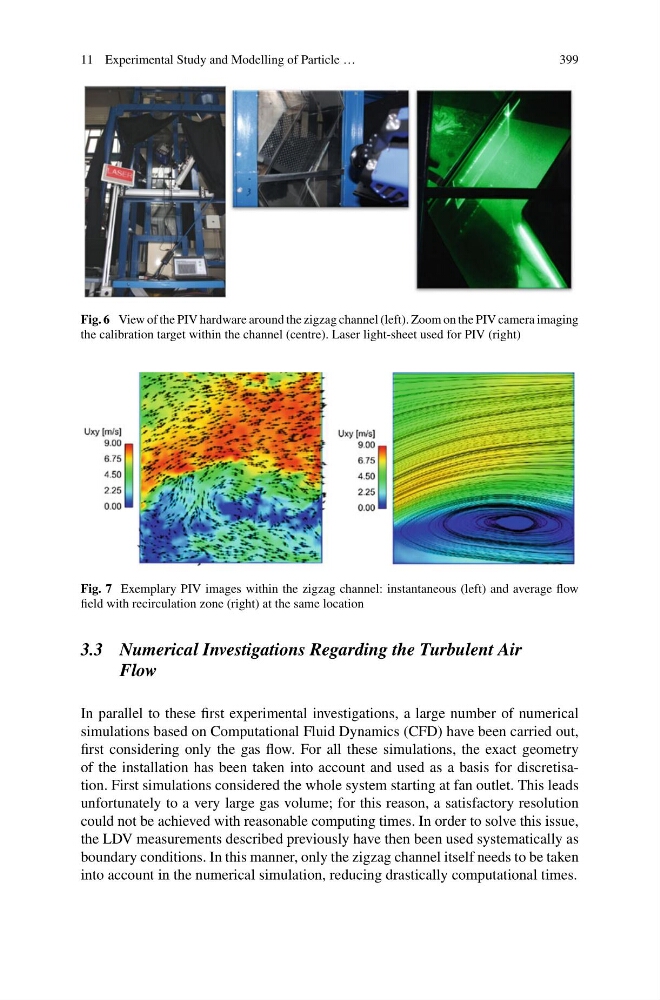
Fig. 6 View of the PIV hardware around the zigzag channel (left). Zoom on the PIV camera imaging
the calibration target within the channel (centre). Laser light-sheet used for PIV (right)
Fig. 7 Exemplary PIV images within the zigzag channel: instantaneous (left) and average flow
field with recirculation zone (right) at the same location
3.3 Numerical Investigations Regarding the Turbulent Air
Flow
In parallel to these first experimental investigations, a large number of numerical
simulations based on Computational Fluid Dynamics (CFD) have been carried out,
first considering only the gas flow. For all these simulations, the exact geometry
of the installation has been taken into account and used as a basis for discretisation. First simulations considered the whole system starting at fan outlet. This leads
unfortunately to a very large gas volume; for this reason, a satisfactory resolution
could not be achieved with reasonable computing times. In order to solve this issue,
the LDV measurements described previously have then been used systematically as
boundary conditions. In this manner, only the zigzag channel itself needs to be taken
into account in the numerical simulation, reducing drastically computational times.
399
Fig. 6 View of the PIV hardware around the zigzag channel (left). Zoom on the PIV camera imaging
the calibration target within the channel (centre). Laser light-sheet used for PIV (right)
Fig. 7 Exemplary PIV images within the zigzag channel: instantaneous (left) and average flow
field with recirculation zone (right) at the same location
3.3 Numerical Investigations Regarding the Turbulent Air
Flow
In parallel to these first experimental investigations, a large number of numerical
simulations based on Computational Fluid Dynamics (CFD) have been carried out,
first considering only the gas flow. For all these simulations, the exact geometry
of the installation has been taken into account and used as a basis for discretisation. First simulations considered the whole system starting at fan outlet. This leads
unfortunately to a very large gas volume; for this reason, a satisfactory resolution
could not be achieved with reasonable computing times. In order to solve this issue,
the LDV measurements described previously have then been used systematically as
boundary conditions. In this manner, only the zigzag channel itself needs to be taken
into account in the numerical simulation, reducing drastically computational times.